 Viberate
Günter Wand
 DEUClassical, Orchestral, Chamber Music
N/A monthly listeners
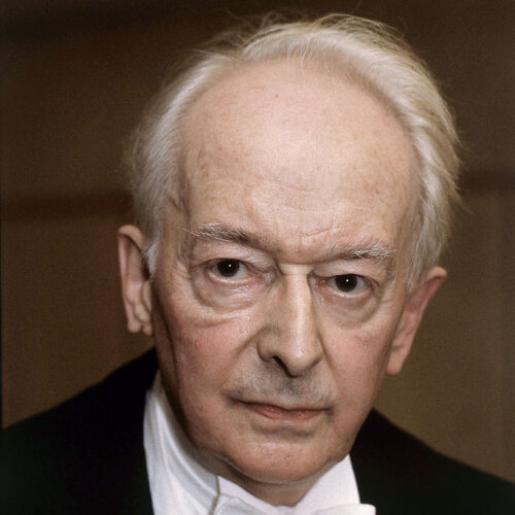 DEUClassical, Orchestral, Chamber Music

Famous German conductor and music director Günter Wand made a tremendous impact on the world of symphonic and classical music. Wand, a German conductor who was born in Wuppertal in 1912, was admired for his expressive and emotive conducting technique, which brought out the best in the music he conducted. His interpretations of pieces by Beethoven, Bruckner, and Schubert, among others, were particularly well-known.
In the 1940s, Wand began his career as a conductor. He later worked with some of Europe's most prominent orchestras, such as the Berlin Philharmonic, London Philharmonic, and Hamburg's NDR Symphony Orchestra. For his meticulous attention to detail, his love of the music, and his ability to highlight the subtleties of the score, he was well acclaimed by his fellow musicians and colleagues.
Günter Wand was dedicated to the art of classical and symphonic music throughout his lengthy and successful career, and he never stopped inspiring artists and music fans. His records and performances continue to be cherished by music lovers all across the world, carrying on his legacy.
The well-known German conductor of symphonic music, Günter Wand, is the author of several well-known songs that cover a wide range of musical genres. He is most known for his compositions such as "Symphony No. 9 in D minor, Op. 125: Presto," "Waldszenen, Op. 82: VII. Vogel als prophet," and "Symphony No. 2 in B flat major, D. 125: Andante." These songs highlight his extraordinary aptitude for leading orchestral and classical music.
"Symphony No. 9 in D Minor, WAB 109: II. Scherzo. Bewegt, lebhaft - Trio. Schnell - Live" is another one of Günter Wand's well-known songs. This song is a favorite among his followers since it perfectly reflects the feeling and vigor of the live performance. The tunes "Waldszenen, Op. 82: III. Einsame blumen" and "Waldszenen, Op. 82: IV. Verrufene stelle" further show Wand's talent for bringing classical music to life.
"Piano Concerto in A Minor, Op. 54: II. Intermezzo," "Symphony No. 33 in B-Flat Major, K. 319: 2c. Andante moderato - Pt. 3," and other works by Günter Wand. Other well-known songs that are adored by his followers are "Andantino grazioso," "Symphony No. 40 in G Minor, K. 550: 2a. Andante - Pt. 1," and "Waldszenen, Op. 82: IX. Abschied." Overall, Günter Wand's compositions are a testament to his great skill as a conductor and his capacity to enhance orchestral and classical music.
The German conductor Günter Wand, who is renowned for his performances of Bruckner and Beethoven, has recently put out a number of new CDs and singles. In 2023, "Bruckner: Symphonies 3-9," his most recent record, is scheduled for release. Fans of classical music are eagerly awaiting this album because Wand's past Bruckner recordings have earned positive reviews for their clarity and emotional depth. In a thorough compilation, the record promises to present Wand's version of Bruckner's symphonies.
Wand has recently released numerous singles in addition to his upcoming album. The 2014 recording "Johanna Martzy Plays Mendelssohn & Brahms" features violinist Johanna Martzy with conductor Wand leading the Berlin Radio Symphony Orchestra. The singles "Bruckner: Symphony No. 8, WAB 108," "Brahms: Symphony No. 4, Op. 98," and "Brahms: Symphony No. 2, Op. 73" were also published in 2013. It has been remarked that Wand's deft conducting brought out the subtleties of these traditional works and gave them a new perspective.
Overall, Günter Wand's most recent output shows his continuous commitment to classical music and his capacity to breathe new life into timeless compositions. Fans of Wand and classical music will both look forward to his new release.
Over the course of his career in symphonic and classical music, Günter Wand worked with a variety of players. One of the most illustrious partnerships was with Ludwig van Beethoven on the song "Symphony No. 9 in D minor, Op. 125: Presto." The concert, which is regarded as one of Wand's most significant collaborations, received high praise for its forceful and dramatic rendition of Beethoven's work.
Wand also worked closely with Robert Schumann and the Wiener Philharmoniker on the tracks "Waldszenen, Op. 82: VII. Vogel als prophet" and "Waldszenen, Op. 82: III. Einsame blumen." The performances were praised for their emotional depth and expressiveness, which effectively conveyed the spirit of Schumann's composition and brought it to life.
Additionally, Franz Schubert and Wand worked together on the song "Symphony No. 2 in B flat major, D. 125: Andante." The performance was praised for its accuracy and technical proficiency, demonstrating Wand's aptitude for understanding and masterfully performing Schubert's intricate pieces.
Overall, Günter Wand's associations with these esteemed performers contributed to his emergence as one of the most significant characters in classical and symphonic music. He was a true master of his art because of his ability to highlight the emotive elements of each piece he performed as well as his technical proficiency and accuracy.
Viberate is a professional music analytics service that provides a complete data overview of Günter Wand, covering audience data, Spotify playlists and stats, individual track performance, and cross-platform metrics including Spotify, YouTube, streaming, and radio airplay analytics. The platform also includes full social media analytics across Instagram, TikTok, and Facebook, as well as insights from Apple Music playlists, SoundCloud, Beatport, Shazam, and Deezer, alongside artist charts, streaming charts, genre charts, and genre analytics to support A&R discovery, benchmarking, and strategic decision-making.
