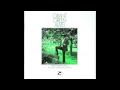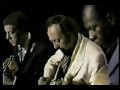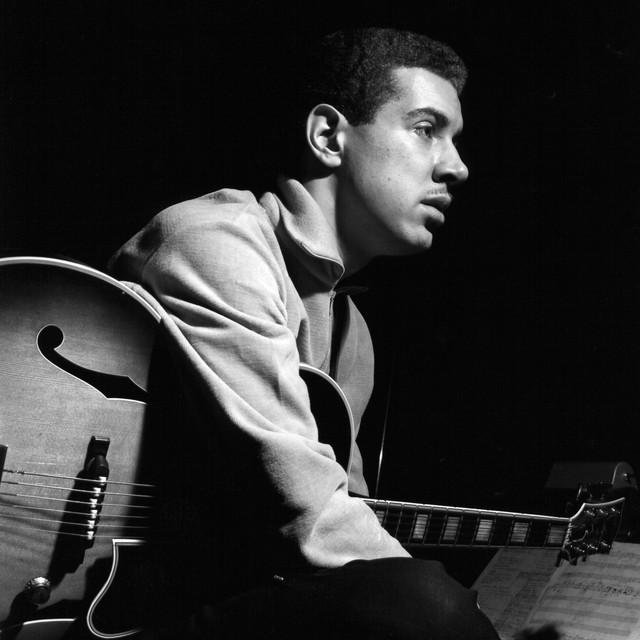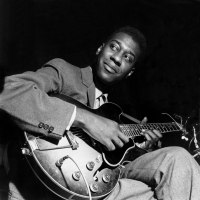
Grant Green

Jazz
Bebop
Jazz Fusion
 Viberate Rank: 47415
 Viberate Rank: 47415
 Monthly ListenersFollowers
 Subscribers
 Followers
 Followers
 FansTop Spotify Songs
| Track | 7-Day Streams | |
|---|---|---|
1 | 24.68K | |
2 | 24.64K | |
3 | 20.48K | |
4 | 17.33K | |
5 | 8.22K |
Top YouTube VideosMonthly ListenersFeatured in Playlists| Playlist | Followers | |
|---|---|---|
1 |  Jazz Classics Spotify | 5.08M |
2 |  Jazz Classics Blue Note Edition Spotify | 549.36K |
3 |  Dark Academia Jazz Spotify | 282.85K |
4 |  Jazz Bar Spotify | 208.13K |
5 |  Just Jazz Spotify | 173.67K |
Audience| City | Monthly Listeners | |
|---|---|---|
1 | | 5.55K |
2 | | 5.04K |
3 |  | 4.46K |
4 | | 4.30K |
5 | | 3.60K |
See full performance history, audience data, playlist activity, rankings, comparisons, and more in Viberate music analytics. Start with a free trial, then continue with a paid plan.
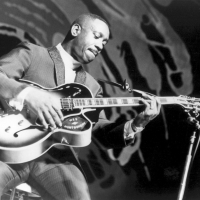
Grant Green’s Spotify BioA severely underrated player during his lifetime, Grant Green is one of the great unsung heroes of jazz guitar. He combined an extensive foundation in R&B with a mastery of bebop and simplicity that put expressiveness ahead of technical expertise. Green was a superb blues interpreter, and while his later material was predominantly blues and R&B, he was also a wondrous ballad and standards soloist. He was a particular admirer of Charlie Parker, and his phrasing often reflected it.
Grant Green was born in St. Louis in 1935 (although many records during his lifetime incorrectly listed 1931). He learned his instrument in grade school from his guitar-playing father, and was playing professionally by the age of thirteen with a gospel group. He worked gigs in his home town and in East St. Louis, Illinois -- playing in the '50s with Jimmy Forrest, Harry Edison, and Lou Donaldson -- until he moved to New York in 1960 at the suggestion of Donaldson. Green told Dan Morgenstern in a Down Beat… interview: "The first thing I learned to play was boogie-woogie. Then I had to do a lot of rock & roll. It's all blues, anyhow."
During the early '60s, both his fluid, tasteful playing in organ/guitar/drum combos and his other dates for Blue Note established Green as a star, though he seldom got the critical respect given other players. He collaborated with many organists, among them Brother Jack McDuff, Sam Lazar, Baby Face Willette, Gloria Coleman, Big John Patton, and Larry Young. He was off the scene for a bit in the mid-'60s, but came back strong in the late '60s and '70s. Green played with Stanley Turrentine, Dave Bailey, Yusef Lateef, Joe Henderson, Hank Mobley, Herbie Hancock, McCoy Tyner, and Elvin Jones.
Sadly, drug problems interrupted his career in the '60s, and undoubtedly contributed to the illness he suffered in the late '70s. Green was hospitalized in 1978 and died a year later. Despite some rather uneven LPs near the end of his career, the great body of his work represents marvelous soul-jazz, bebop, and blues.
Although he mentions Charlie Christian and Jimmy Raney as influences, Green always claimed he listened to horn players (Charlie Parker and Miles Davis) and not other guitar players, and it shows. No other player has this kind of single-note linearity (he avoids chordal playing). There is very little of the intellectual element in Green's playing, and his technique is always at the service of his music. And it is music, plain and simple, that makes Green unique.
Green's playing is immediately recognizable -- perhaps more than any other guitarist. Green has been almost systematically ignored by jazz buffs with a bent to the cool side, and he has only recently begun to be appreciated for his incredible musicality. Perhaps no guitarist has ever handled standards and ballads with the brilliance of Grant Green. Mosaic, the nation's premier jazz reissue label, issued a wonderful collection The Complete Blue Note Recordings with Sonny Clark, featuring prime early '60s Green albums plus unissued tracks. Some of the finest examples of Green's work can be found there. ~ Michael Erlewine & Ron Wynn, Rovi
Viberate is a music analytics platform built for A&Rs, artist managers, labels, booking agents, marketers, and artists.
It helps music professionals track artist growth, analyze audience data, monitor playlist activity, compare artists, follow song performance, and identify opportunities across the music market.
Public artist pages provide a free preview of selected artist data. Paid plans provide access to deeper analytics, historical data, charts, comparisons, playlist tools, exports, alerts, reports, and additional professional features.
Yes. Public Viberate artist pages provide selected artist analytics and music data for free.
Viberate also offers a 7-day free trial of the full platform. A credit card is required to start the trial. The trial includes access to the complete product so users can test deeper artist analytics, historical views, playlist insights, comparisons, charts, exports, alerts, and reporting features before choosing a paid plan.
Viberate provides artist analytics across streaming, playlists, social media, video, radio airplay, songs, and audience markets.
Users can analyze Spotify performance, Spotify and Apple Music playlists, YouTube activity, TikTok and Instagram growth, radio spins, song performance, audience locations, demographics, rankings, and overall artist momentum.
Artist profiles also connect to music charts, similar artists, and comparison tools, helping users benchmark performance and evaluate artists in context.
Viberate updates key artist and track data daily.
For followed artists and tracks, selected data is refreshed multiple times per day. This helps teams monitor playlist changes, streaming movement, audience growth, releases, and campaign performance with more current data.
Update frequency can vary depending on the metric and data source.
Yes. Viberate lets users compare up to five artists side by side across streaming, social media, audience, and engagement metrics.
Users can compare fanbase growth, audience demographics, locations, Spotify performance, social metrics, and other artist data over selected time periods.
Artist comparison can be used for A&R scouting, benchmarking, booking decisions, campaign planning, and evaluating artists with similar audiences or market positions.