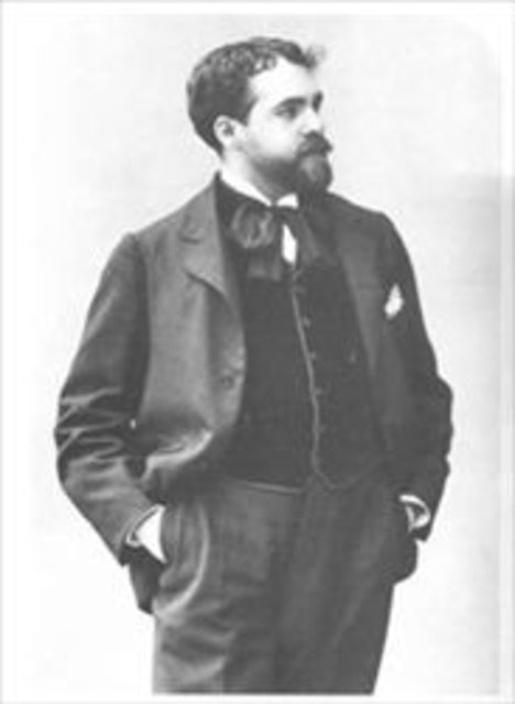
Giovanni Sgambati

Classical
Chamber Music
Orchestral
 Viberate Rank: 396929
 Viberate Rank: 396929
 Monthly ListenersFollowers
 Subscribers
 Followers
 Followers
 FansTop Spotify SongsTop YouTube VideosMonthly ListenersFeatured in Playlists
| Playlist | Followers | |
|---|---|---|
1 |  Classical Garden Spotify | 244.62K |
2 |  Classical Study Music for Focus 🎻🎶 Prime Feelings | 191.88K |
3 |  Classical in the Background Spotify | 177.98K |
4 |  Focus Music - Work | Studying | Concentration Kroschi | 112.12K |
5 |  Piyano🎼 Sesinden Hatıralar | 24.15K |
Audience| City | Monthly Listeners | |
|---|---|---|
1 |  | 391 |
2 |  | 356 |
3 |  | 351 |
4 |  | 294 |
5 |  | 271 |
See full performance history, audience data, playlist activity, rankings, comparisons, and more in Viberate music analytics. Start with a free trial, then continue with a paid plan.
Giovanni Sgambati’s Spotify BioA child prodigy, Giovanni Sgambati was playing piano in public at age 6, and composing shortly thereafter. His family lived in Trevi in the 1850s; there he pursued musical studies before moving back to Rome, his birthplace, in 1860 for advanced study at the Santa Cecilia Academy (which awarded him a diploma in 1866). Sgambati met Franz Liszt in 1862 and fell under the older master's spell, becoming a pupil and close friend. Liszt, for his part, saw in Sgambati an opportunity to groom a talented Italian musician for a career in instrumental music rather than opera, which obsessed most other Italians. For his part, Sgambati promoted Liszt's music and that of other contemporary foreigners, not only as a pianist but also as a conductor; he directed the first Italian performances of Liszt's Dante Symphony and a portion of his Christus.
All the while, Sgambati was making a name for himself on the international piano circuit, taking opportunities while on the road to hear new works by the… period's most innovative composers, including Richard Wagner. Sgambati finally met Wagner in 1876, and Wagner was so impressed that he helped Sgambati find a publisher for his piano quintets.
Sgambati had known Anton Rubinstein since 1869, and in 1881 he was offered a teaching position at the Moscow Conservatory; this he refused, preferring to do similar work in Rome. In 1869, he had established in his home a free music school for poor students; in 1877 it became an official institution, ultimately known as the Santa Cecilia Conservatory (related to but not the same as the Academy, where Sgambati had studied). Sgambati taught there for the rest of his life.
Sgambati's compositions are rather difficult to characterize, mingling Italianate, cantabile melodies with devices borrowed from Liszt, Chopin, Mendelssohn, and Schumann. Many of his piano compositions are charming but are a bit too similar to salon pieces for the comfort of the most demanding pianists and listeners, and he seems to get lost in the larger structures of his chamber and orchestral music. Nevertheless, his Requiem has long been used at Italian funerals, his C minor String Quartet was once reasonably popular, and every generation or so a leading pianist is inspired to resurrect Sgambati's Piano Concerto. As an Italian instrumental composer, Sgambati was perhaps more important than individual.
Viberate is a music analytics platform built for A&Rs, artist managers, labels, booking agents, marketers, and artists.
It helps music professionals track artist growth, analyze audience data, monitor playlist activity, compare artists, follow song performance, and identify opportunities across the music market.
Public artist pages provide a free preview of selected artist data. Paid plans provide access to deeper analytics, historical data, charts, comparisons, playlist tools, exports, alerts, reports, and additional professional features.
Yes. Public Viberate artist pages provide selected artist analytics and music data for free.
Viberate also offers a 7-day free trial of the full platform. A credit card is required to start the trial. The trial includes access to the complete product so users can test deeper artist analytics, historical views, playlist insights, comparisons, charts, exports, alerts, and reporting features before choosing a paid plan.
Viberate provides artist analytics across streaming, playlists, social media, video, radio airplay, songs, and audience markets.
Users can analyze Spotify performance, Spotify and Apple Music playlists, YouTube activity, TikTok and Instagram growth, radio spins, song performance, audience locations, demographics, rankings, and overall artist momentum.
Artist profiles also connect to music charts, similar artists, and comparison tools, helping users benchmark performance and evaluate artists in context.
Viberate updates key artist and track data daily.
For followed artists and tracks, selected data is refreshed multiple times per day. This helps teams monitor playlist changes, streaming movement, audience growth, releases, and campaign performance with more current data.
Update frequency can vary depending on the metric and data source.
Yes. Viberate lets users compare up to five artists side by side across streaming, social media, audience, and engagement metrics.
Users can compare fanbase growth, audience demographics, locations, Spotify performance, social metrics, and other artist data over selected time periods.
Artist comparison can be used for A&R scouting, benchmarking, booking decisions, campaign planning, and evaluating artists with similar audiences or market positions.