Gil Shaham

Classical
Chamber Music
 Viberate Rank: 148176
 Viberate Rank: 148176
 Monthly ListenersFollowers
 Subscribers
 Followers
 Followers
 FansTop Spotify SongsTop YouTube Videos
| Video | 7-Day Views | |
|---|---|---|
1 | 2.47K | |
2 | 1.42K | |
3 | 1.30K | |
4 | 908 | |
5 | 778 |
Monthly ListenersFeatured in Playlists| Playlist | Followers | |
|---|---|---|
1 |  This is Gershwin Spotify | 96.72K |
2 |  1000 Recordings to Hear Before You Die (Tom Moon): Album Index Ulysses' Classical | 94.29K |
3 |  This Is Paganini Spotify | 79.81K |
4 |  Best of Movie, TV & Game Soundtracks by GuiguiF Guillaume Flahaut | 53.67K |
5 |  Schubert - Best of Deutsche Grammophon (DG) | 31.36K |
Audience| City | Monthly Listeners | |
|---|---|---|
1 |  | 806 |
2 |  | 767 |
3 | | 658 |
4 |  | 520 |
5 |  | 519 |
See full performance history, audience data, playlist activity, rankings, comparisons, and more in Viberate music analytics. Start with a free trial, then continue with a paid plan.
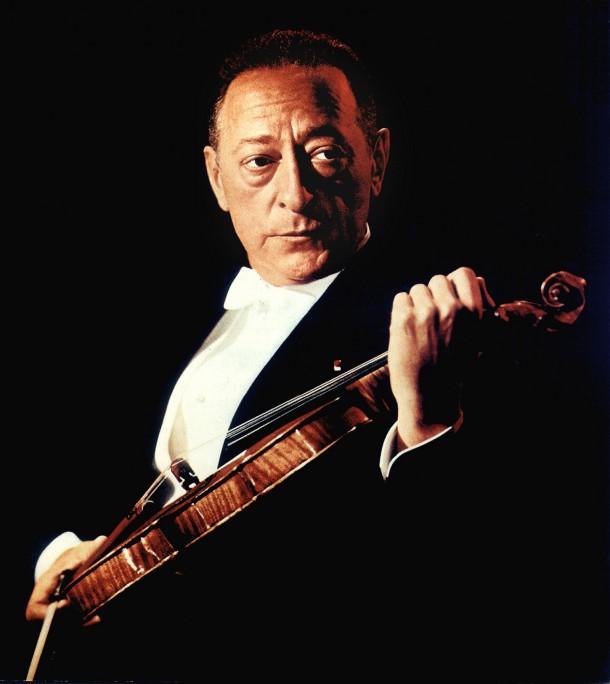
Gil Shaham’s Spotify BioViolinist Gil Shaham entered the international spotlight in the 1990s as one of several young solo violinists vying for the attention of audiences the world over. Aided by positive publicity and an enviable recording contract with Deutsche Grammophon, Shaham proved, as a recitalist and through guest appearances with major orchestras, that he was an artist beyond the need for public relations buildup -- an artist whose musical gifts would assure him an ongoing presence among the world's leading string players.
Shaham was born on February 19, 1971, in Champaign-Urbana, Illinois, but moved at the age of two with his parents to Israel. At the age of seven, he began studies with Samuel Bernstein at the Rubin Academy of Music. Soon he was awarded the first of a series of annual scholarships granted through the American Israel Cultural Foundation. In 1981, he made debuts with both the Israel Philharmonic and the Jerusalem Symphony. The following year, he placed first in the Claremont… Competition in Israel and left to enter the Juilliard School of Music in New York as a scholarship student and, later, to attend Columbia University. In 1990, Shaham earned the Avery Fisher Career Grant before embarking on a performing career. During the 1998-1999 season, Shaham participated in a two-week series of concerts by Pierre Boulez and the Chicago Symphony Orchestra devoted to the music of Béla Bartók. Resulting from this mini-festival was a recording of Bartók's Violin Concerto No. 2 and the two Rhapsodies for Violin and Orchestra. In 1998, he undertook a tour of mainland China which included performances with principal orchestras in Beijing and Shanghai. His seriousness as a musician has made him a favored partner for the world's leading conductors, and other instrumentalists have been eager to collaborate with him in chamber music performances.
His relationship with Deutsche Grammophon produced many distinguished recordings, including a Grammy Award for a solo disc with pianist André Previn, which included a new sonata written by Previn for Shaham. His Grammy-nominated coupling of the Barber and Korngold concertos was done in collaboration with Previn and the London Symphony Orchestra, as was a release offering the first and second Prokofiev concertos, also a Grammy nominee. Best-selling collections have included Dvorák for Two, with accompaniment by Shaham's sister, pianist Orli Shaham, and Paganini for Two, performed with guitarist Göran Söllscher. Another remarkable success was a recording of Vivaldi's Four Seasons with the Orpheus Chamber Orchestra. In 2001, Deutsche Grammophon released a recording of Shaham performing John Williams' Violin Concerto with the composer conducting the Boston Symphony Orchestra. He founded the Canary Classics label in 2004 and has since issued most of his recordings under that label. Shaham was awarded the Avery Fisher Prize in 2008 and was named Instrumentalist of the Year in 2012 by Musical America. In 2021, he teamed with Eric Jacobsen and the Knights orchestra for a recording of violin concertos by Beethoven and Brahms, which earned a Grammy nomination. The following year, he was backed by Nicholas McGegan and the SWR Symphonieorchester in a recording of works for violin and orchestra by Mozart.
Shaham lives in New York with his wife, violinist Adele Anthony. The instrument he has played for his recordings and public performances is a Stradivarius, the 1699 "Countess Polignac." ~ Erik Eriksson
Viberate is a music analytics platform built for A&Rs, artist managers, labels, booking agents, marketers, and artists.
It helps music professionals track artist growth, analyze audience data, monitor playlist activity, compare artists, follow song performance, and identify opportunities across the music market.
Public artist pages provide a free preview of selected artist data. Paid plans provide access to deeper analytics, historical data, charts, comparisons, playlist tools, exports, alerts, reports, and additional professional features.
Yes. Public Viberate artist pages provide selected artist analytics and music data for free.
Viberate also offers a 7-day free trial of the full platform. A credit card is required to start the trial. The trial includes access to the complete product so users can test deeper artist analytics, historical views, playlist insights, comparisons, charts, exports, alerts, and reporting features before choosing a paid plan.
Viberate provides artist analytics across streaming, playlists, social media, video, radio airplay, songs, and audience markets.
Users can analyze Spotify performance, Spotify and Apple Music playlists, YouTube activity, TikTok and Instagram growth, radio spins, song performance, audience locations, demographics, rankings, and overall artist momentum.
Artist profiles also connect to music charts, similar artists, and comparison tools, helping users benchmark performance and evaluate artists in context.
Viberate updates key artist and track data daily.
For followed artists and tracks, selected data is refreshed multiple times per day. This helps teams monitor playlist changes, streaming movement, audience growth, releases, and campaign performance with more current data.
Update frequency can vary depending on the metric and data source.
Yes. Viberate lets users compare up to five artists side by side across streaming, social media, audience, and engagement metrics.
Users can compare fanbase growth, audience demographics, locations, Spotify performance, social metrics, and other artist data over selected time periods.
Artist comparison can be used for A&R scouting, benchmarking, booking decisions, campaign planning, and evaluating artists with similar audiences or market positions.