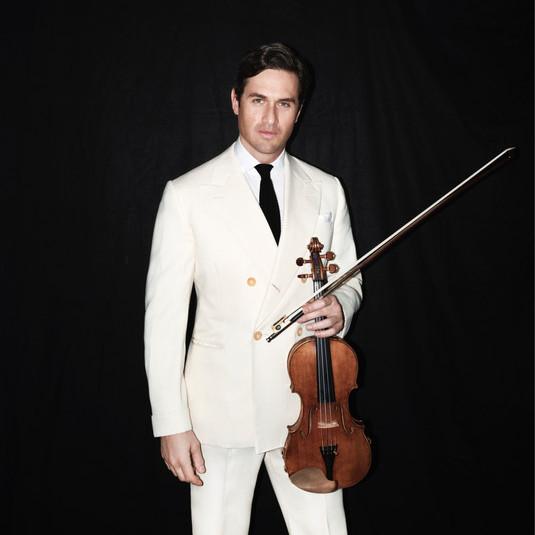
Georges Auric

Classical
Chamber Music
Orchestral
 Viberate Rank: 258571
 Viberate Rank: 258571
 Monthly ListenersFollowers
 Subscribers
 Followers
 Followers
 FansTop Spotify Songs
| Track | 7-Day Streams | |
|---|---|---|
1 | 17.03K | |
2 | 4.10K | |
3 | 655 | |
4 | 655 | |
5 | 399 |
Top YouTube VideosMonthly ListenersFeatured in Playlists| Playlist | Followers | |
|---|---|---|
1 |  Classical Romance Spotify | 467.42K |
2 |  Classical Wedding Spotify | 189.86K |
3 | André Rieu Grandes Exitos 12161235594 | 24.13K |
4 | 1200 Years of Women Composers Ulysses' Classical | 14.93K |
5 |  JAL ジェットストリーム JET STREAM 城達也 福山雅治 映画 音楽 Film Music ムード AOR ポールモーリア Easy listening イージーリスニング BGM nekoni_konbanwa | 6.88K |
Audience| City | Monthly Listeners | |
|---|---|---|
1 |  | 586 |
2 |  | 454 |
3 |  | 431 |
4 | | 398 |
5 |  | 371 |
See full performance history, audience data, playlist activity, rankings, comparisons, and more in Viberate music analytics. Start with a free trial, then continue with a paid plan.
Georges Auric’s Spotify BioMore than the other members of the group of French composers known as Les Six, Georges Auric made his mark as a composer of incidental and dramatic music. His early encounter with ballet impresario Serge Diaghilev resulted in commissions for a number of dance scores. Among them were the slightly acerbic, mock-Romantic confections Les Fâcheux (1924) and Les Matelots (1925). The bulk of his ballet work, for Diaghilev and others, was produced between 1924 and 1934, and then between 1949 and 1952. Auric was also an early specialist in music for movies, a pursuit that occupied him primarily between his two ballet phases. His first film score was for Jean Cocteau's notorious 1930 Surrealist opus Le Sang d'un poète, and his score for the 1932 film A nous la liberté also gained currency as a symphonic suite. Film fanciers will have certainly encountered Auric's scores for the 1949-1950 Cocteau creations Les parents terribles and Orphée. And his Moulin Rouge, music for the popular 1952 film… about Toulouse-Lautrec, even produced a pop hit, "Where Is Your Heart?"
Born in 1899, Auric began his studies at the Montpellier Conservatory, then went on to the Paris Conservatory and the Schola Cantorum, where he studied with d'Indy and Roussel. By the time he was 16, he had written Gaspard et Zoé, music for a magic lantern show, as well as some 300 songs and piano pieces; at 18 came the ballet Les noces de Gamache. He turned to comic opera at 20, with La Reine de coeur, a work he later destroyed. As part of the disillusioned young generation that survived World War I, he joined the anti-Romantic movement that was forming around Satie and Cocteau. The ideal was the new, the innovative, the urban, the American (in the rather limited and romanticized French understanding of America), and Satie's concept of music as something that should produce "auditory pleasure without demanding disproportionate attention from the listener." Auric found himself lounging around Satie in the company of five other young composers: Poulenc, Milhaud, Honegger, Durey, and Tailleferre. The group was initially called "Les nouveaux jeunes"; in 1920, critic Henri Collet dubbed them Les Six, although each member followed a largely independent aesthetic path. Overall, there is much musical irony in Auric's works, in which popular tunes are combined with advanced harmony. Because his music is most easily described by what it is not -- not as lighthearted and tender as Poulenc's, not as dour as Honegger's, not as exuberant with polyrhythmy and polytonality as Milhaud's -- Auric, like Durey and Tailleferre, never gained the popularity and respect of his three more famous compatriots. Nevertheless, as critic Boris de Schloezer remarked in 1926, Auric's conscious, self-ironic efforts to create the impression of superficiality, may conceal a profound musical impulse. In fact, in 1930, the year he composed the score for Le sang de poète, Auric wrote his Sonata for piano in F, a serious, lyrically expressive work that may seem at odds with the composer's public image. In his later years, Auric assumed a number of administrative responsibilities. From 1962 to 1968, he was the general administrator of the Opéra and Opéra Comique in Paris. This was right in the middle of the his tenure, from 1954 to 1977, as president of the French Union of Composers and Authors. He also wrote music criticism for Marianne, Paris-Soir, and Nouvelles Littéraires. Auric died in 1983. ~ James Reel, Rovi
Viberate is a music analytics platform built for A&Rs, artist managers, labels, booking agents, marketers, and artists.
It helps music professionals track artist growth, analyze audience data, monitor playlist activity, compare artists, follow song performance, and identify opportunities across the music market.
Public artist pages provide a free preview of selected artist data. Paid plans provide access to deeper analytics, historical data, charts, comparisons, playlist tools, exports, alerts, reports, and additional professional features.
Yes. Public Viberate artist pages provide selected artist analytics and music data for free.
Viberate also offers a 7-day free trial of the full platform. A credit card is required to start the trial. The trial includes access to the complete product so users can test deeper artist analytics, historical views, playlist insights, comparisons, charts, exports, alerts, and reporting features before choosing a paid plan.
Viberate provides artist analytics across streaming, playlists, social media, video, radio airplay, songs, and audience markets.
Users can analyze Spotify performance, Spotify and Apple Music playlists, YouTube activity, TikTok and Instagram growth, radio spins, song performance, audience locations, demographics, rankings, and overall artist momentum.
Artist profiles also connect to music charts, similar artists, and comparison tools, helping users benchmark performance and evaluate artists in context.
Viberate updates key artist and track data daily.
For followed artists and tracks, selected data is refreshed multiple times per day. This helps teams monitor playlist changes, streaming movement, audience growth, releases, and campaign performance with more current data.
Update frequency can vary depending on the metric and data source.
Yes. Viberate lets users compare up to five artists side by side across streaming, social media, audience, and engagement metrics.
Users can compare fanbase growth, audience demographics, locations, Spotify performance, social metrics, and other artist data over selected time periods.
Artist comparison can be used for A&R scouting, benchmarking, booking decisions, campaign planning, and evaluating artists with similar audiences or market positions.