Garrison Fewell

Jazz
Smooth Jazz
Free Jazz
 Viberate Rank: 848163
 Viberate Rank: 848163
 Monthly ListenersFollowers
 Subscribers
 Followers
 Followers
 FansTop Spotify Songs
| Track | 7-Day Streams | |
|---|---|---|
1 | 3 | |
2 | 2 | |
3 | 2 | |
4 | 1 |
Top YouTube VideosMonthly ListenersFeatured in PlaylistsAudience| City | Monthly Listeners | |
|---|---|---|
1 |  | 3 |
See full performance history, audience data, playlist activity, rankings, comparisons, and more in Viberate music analytics. Start with a free trial, then continue with a paid plan.
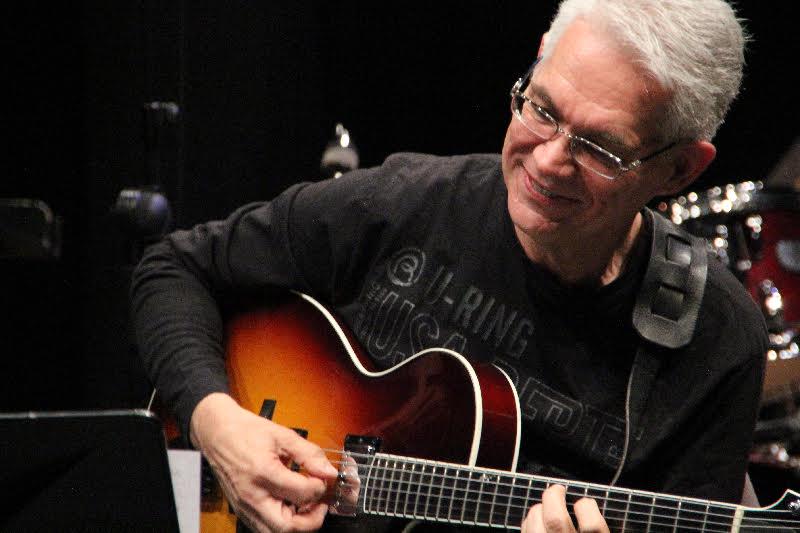
Garrison Fewell’s Spotify BioEuropeans knew about Garrison Fewell's jazz talent long before his fellow Americans discovered him. The Virginia native began his love affair with Europe on a visit to Marseille, France, in 1983. He went on to play hot jazz venues all over the continent, including Paris, Milan, Amsterdam, and Brussels. While the Europeans were learning about Fewell, he was busy learning their languages, becoming fluent in Italian and French. His relative obscurity in his homeland changed, however, with the release from Accurate Records of his first album in 1993. A Blue Deeper Than the Blue brought him to the attention of jazz lovers in the States and earned him a number of honors. Coda Magazine and United Press International included the recording on their lists of the year's ten best. The Boston Music Awards named the debut Best Jazz Album of the Year.
Although the guitarist was born in the Virginia city of Charlottesville, he was raised in Philadelphia, PA. He started playing the stride guitar when… he was 11 years old. Interested in acoustic blues, he turned to the music of Reverend Gary Davis, Fred McDowell, and Mississippi John Hurt. During the early '70s, Fewell embarked on a tour that took him to Pakistan, Iran, Turkey, and Afghanistan. He came home to the States in 1973 and became a jazz student of Pat Martino and Lenny Breau. At the Berklee College of Music, he earned a performance degree and by 1977, he was teaching at his alma mater. As part of a new exchange program set up between the Boston music school and Holland's Rotterdam Conservatory in 1988, Fewell spent time teaching overseas. While in Rotterdam, he had the opportunity to work with Dutch musicians, including Cees Slinger. Paired with Dave Frank, he performed during the North Sea Jazz Festival. The guitarist settled in Paris the following year, playing jazz and teaching, this time as an American School of Modern Music instructor. That same year he played the Umbria Jazz Festival.
Fewell and Alex Ulanowsky, who worked as a department chairman at the Berklee School of Music, established a musical partnership. The duo developed a method of improvisation and theory instruction. They taught together and performed together, giving workshops in Switzerland and Italy and touring Holland, Austria, and Belgium. The National Endowment for the Arts gifted Fewell with a grant that allowed him to travel to Germany in 1991 and teach in the cities of Weimar, Leipzig, and Freiburg. The following year he taught in Aachen and Cologne, and performed in Freiburg with David Friesen during the Zelt Music Festival. Beginning in 1994, he spent six summers teaching at the Polish Jazz Society. In 1996, Guitar Player Magazine proclaimed Fewell's Are You Afraid of the Dark? Best Record of the Year. The Philadelphia Inquirer in 1997 included his next release, Reflection of a Clear Moon, among the Top Ten Jazz Albums of the Year. Beginning in 1995, the guitarist gave workshops and played the Montreux Jazz Festival for five consecutive years. ~ Linda Seida, Rovi
Viberate is a music analytics platform built for A&Rs, artist managers, labels, booking agents, marketers, and artists.
It helps music professionals track artist growth, analyze audience data, monitor playlist activity, compare artists, follow song performance, and identify opportunities across the music market.
Public artist pages provide a free preview of selected artist data. Paid plans provide access to deeper analytics, historical data, charts, comparisons, playlist tools, exports, alerts, reports, and additional professional features.
Yes. Public Viberate artist pages provide selected artist analytics and music data for free.
Viberate also offers a 7-day free trial of the full platform. A credit card is required to start the trial. The trial includes access to the complete product so users can test deeper artist analytics, historical views, playlist insights, comparisons, charts, exports, alerts, and reporting features before choosing a paid plan.
Viberate provides artist analytics across streaming, playlists, social media, video, radio airplay, songs, and audience markets.
Users can analyze Spotify performance, Spotify and Apple Music playlists, YouTube activity, TikTok and Instagram growth, radio spins, song performance, audience locations, demographics, rankings, and overall artist momentum.
Artist profiles also connect to music charts, similar artists, and comparison tools, helping users benchmark performance and evaluate artists in context.
Viberate updates key artist and track data daily.
For followed artists and tracks, selected data is refreshed multiple times per day. This helps teams monitor playlist changes, streaming movement, audience growth, releases, and campaign performance with more current data.
Update frequency can vary depending on the metric and data source.
Yes. Viberate lets users compare up to five artists side by side across streaming, social media, audience, and engagement metrics.
Users can compare fanbase growth, audience demographics, locations, Spotify performance, social metrics, and other artist data over selected time periods.
Artist comparison can be used for A&R scouting, benchmarking, booking decisions, campaign planning, and evaluating artists with similar audiences or market positions.