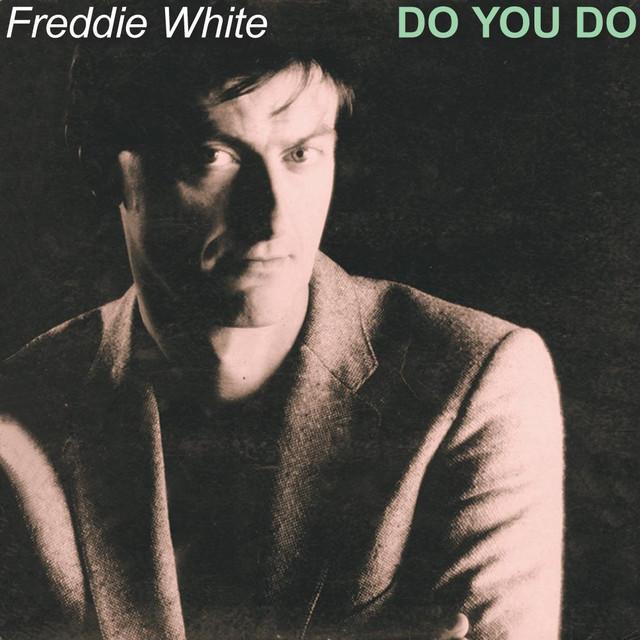
Freddie White

Jazz
Swing
Indie Pop
 Viberate Rank: 353307
 Viberate Rank: 353307
 Monthly ListenersFollowers
 Subscribers
 Followers
 Followers
 FansTop Spotify Songs
| Track | 7-Day Streams | |
|---|---|---|
1 | 511 | |
2 | 499 | |
3 | 325 | |
4 | 256 | |
5 | 171 |
Top YouTube Videos| Video | 7-Day Views | |
|---|---|---|
1 | 83 |
Monthly ListenersFeatured in Playlists| Playlist | Followers | |
|---|---|---|
1 |  Joni Mitchell ~ Court and Spark Sessions Martin Robert Taylor | 1.46K |
2 | Sad so sad Dietmar Werseck | 1.27K |
3 | Stuart Maconie's Freak Zone 🔊 (BBC 6 Music) reacharound98 | 1.12K |
4 | Ultimate Bob Dylan Covers- The Original zenreader | 1.04K |
Audience| City | Monthly Listeners | |
|---|---|---|
1 |  | 656 |
2 | | 85 |
3 |  | 82 |
4 | | 44 |
5 | | 44 |
See full performance history, audience data, playlist activity, rankings, comparisons, and more in Viberate music analytics. Start with a free trial, then continue with a paid plan.
Freddie White’s Spotify BioFreddie White is one of Ireland's foremost contemporary singer/songwriters. A founding member of Scullion, the Fake, and the Freddie White Band, White has continued to explore new musical realms as a soloist. Hot Press praised him for his "left-field sense of humor and sophisticated lyrics," while www.findthefun.com proclaimed him "one of Ireland's prime underground eclectic performers." A native of Cobh, County Cork, White was born to a musical family; his father played piano, mandolin, concertina, and guitar and his mother sang with a jazz combo. Acquiring a guitar as a Christmas gift at the age of 13, White soon mastered the instrument, performing with a series of high school and local bands. Following his graduation, he temporarily moved to London where he sharpened his skills as a performer in the city's subway stations. Returning to Cork in 1974, White moved to Dublin a year later. Shortly after his arrival in Dublin, he joined with Philip King and Sonny Cordell to form the… short-lived, trad rock band Scullion. Following the group's disbanding, he formed the Fake. Described as "one of the best Irish bands of the late '70s," the Fake recorded one single -- "Down on Main" b/w "Green Light." Together with the Freddie White Band, which he formed in 1978, White attracted international attention as the opening act for Eric Clapton's tour of England. He continued to perform as a soloist, as well. His debut solo album, Live on Tour, was recorded while touring as the opening act for Clannad. An extremely eclectic recording, the album included jazz-pop standards by Fats Waller and Jerome Kern, folk-pop tunes by Randy Newman and Guy Clark, and a unique rendition of Frank Zappa's "Po-Jama People." His second solo album, Do You Do, was released in 1981 and featured his interpretation of Zappa's "Dirty Love." With his third solo album, Long Distance Runner, released in 1985, White took his first steps as a songwriter, co-writing the hit single "Frozen Heart" with Johnny Duhan. His subsequent albums have focused on his original songs. His 1999 album, My Country, featured tunes co-written with his wife, Ann O'Sullivan, based on the poetry of her brother, the late rover/poet Don O'Sullivan. ~ Craig Harris, Rovi
Viberate is a music analytics platform built for A&Rs, artist managers, labels, booking agents, marketers, and artists.
It helps music professionals track artist growth, analyze audience data, monitor playlist activity, compare artists, follow song performance, and identify opportunities across the music market.
Public artist pages provide a free preview of selected artist data. Paid plans provide access to deeper analytics, historical data, charts, comparisons, playlist tools, exports, alerts, reports, and additional professional features.
Yes. Public Viberate artist pages provide selected artist analytics and music data for free.
Viberate also offers a 7-day free trial of the full platform. A credit card is required to start the trial. The trial includes access to the complete product so users can test deeper artist analytics, historical views, playlist insights, comparisons, charts, exports, alerts, and reporting features before choosing a paid plan.
Viberate provides artist analytics across streaming, playlists, social media, video, radio airplay, songs, and audience markets.
Users can analyze Spotify performance, Spotify and Apple Music playlists, YouTube activity, TikTok and Instagram growth, radio spins, song performance, audience locations, demographics, rankings, and overall artist momentum.
Artist profiles also connect to music charts, similar artists, and comparison tools, helping users benchmark performance and evaluate artists in context.
Viberate updates key artist and track data daily.
For followed artists and tracks, selected data is refreshed multiple times per day. This helps teams monitor playlist changes, streaming movement, audience growth, releases, and campaign performance with more current data.
Update frequency can vary depending on the metric and data source.
Yes. Viberate lets users compare up to five artists side by side across streaming, social media, audience, and engagement metrics.
Users can compare fanbase growth, audience demographics, locations, Spotify performance, social metrics, and other artist data over selected time periods.
Artist comparison can be used for A&R scouting, benchmarking, booking decisions, campaign planning, and evaluating artists with similar audiences or market positions.