François Le Roux

Classical
Opera
Orchestral
 Viberate Rank: 221437
 Viberate Rank: 221437
 Monthly ListenersFollowers
 Subscribers
 Followers
 Followers
 FansTop Spotify Songs
| Track | 7-Day Streams | |
|---|---|---|
1 | 28.95K | |
2 | 16.99K | |
3 | 6.94K | |
4 | 2.37K | |
5 | 1.75K |
Top YouTube Videos| Video | 7-Day Views | |
|---|---|---|
1 | 32 | |
2 | 19 | |
3 | 8 | |
4 | 5 | |
5 | 5 |
Monthly ListenersFeatured in Playlists| Playlist | Followers | |
|---|---|---|
1 |  Opera Classics Spotify | 605.55K |
2 |  Disney Francais 🪝 | 248.90K |
3 | Les meilleures chansons Disney en français ❤️ Coco_music | 43.22K |
4 |  TOP 100 CHANSONS DISNEY Mélanie | 41.49K |
5 |  Disney le TOP Rosspider | 35.63K |
Audience| City | Monthly Listeners | |
|---|---|---|
1 | | 4.95K |
2 | | 1.88K |
3 | | 1.73K |
4 |  | 1.17K |
5 |  | 1.04K |
See full performance history, audience data, playlist activity, rankings, comparisons, and more in Viberate music analytics. Start with a free trial, then continue with a paid plan.
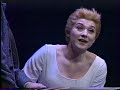
François Le Roux’s Spotify BioFrançois Le Roux is a leading French baritone, considered the finest interpreter of Debussy's role of Pélleas in his time.
After studying science and English at university, he switched to vocal studies at the age of nineteen. His main teachers were François Loup, Vera Rozsa, and Elisabeth Grümmer, the latter two at the Opéra Studio of Paris.
He won the Barcelona Maria Canals Competition and the international competition of Rio de Janeiro and in 1980 became a member of the Lyon Opera Company, where he remained until 1985.
He became a full-time freelance singer in 1985 and immediately started filling numerous invitations to sing at major opera companies and the leading European music festivals. In addition, in 1985 he sang the role of Pélleas for the first time and was proclaimed the "greatest Pélleas since Jacques Jansen." He has sung the role over a hundred times around the world and recorded it on Deutsche Grammophon with Claudio Abbado conducting. In 1998, for the first time, he sang… the role of Golaud rather than Pélleas in the opera, at the Paris Opéra-Comique and the Teatro Colón in Buenos Aires.
Among his notable appearances are as Ramiro in Ravel's L'Heure Espagnole (Glyndebourne), Marcello in La Bohème (Oslo and Hamburg), Orestes in Gluck's Iphigénie en Tauride (Frankfurt), Lescaut in Massenet's Manon (Royal Opera House, Covent Garden), Papageno in The Magic Flute, and Figaro in Rossini's Barber of Seville.
His Paris Opéra debut in 1988 was in the role of Valentine in Gounod's Faust. His portrayal of Mozart's Don Giovanni on the same stage brought him the "Prix de Révélation de l'Année of the French Music Critics. He has frequently sung the Don on several other major stages.
His operatic repertoire is varied and includes operas from all eras. From the Baroque, he sings, for instance, the title role of Tancrède by Campra, the title role of Monteverdi's Orfeo, and Pollux in Castor and Pollux by Rameau. He sings all the major baritone parts in Mozart operas, Rossini's Figaro, Malatesta, Prinz Ottokar in Der Freischütz, and Marcello. His twentieth-century parts include The Clock and The Cat in Ravel's L'Enfant et les Sortiléges, Rivière in Dallapiccola's Vole di Notte, Der Prinz von Homburg by Henze, and Birtwistle's Gawain, David Lang's Modern Painters (as John Ruskin) and Von Bose's Die Leiden des jungen Werthers (the last three being world premieres).
He is also a renowned recital and concert artist. He has recorded the complete songs of Duparc and Fauré, and won the French Record Academy Award for his Fables of de La Fontaine on EMI. He sings Berlioz's L'Enfance du Christ, which he has recorded with Charles Dutoit and the Montréal Symphony Orchestra on Decca, and has released sets of songs by Severac (Hyperion), Poulenc (Decca), Roussel (BMG-RCA), and other recordings for Erato, and REM. His frequent accompanists include Irwin Gage, Graham Johnson, and Roger Vignoles.
Le Roux is the Artistic Director of the Académie Francis Poulenc in Tours, where every August he teaches a master course in French song interpretation.
He has been chosen Musical Personality of the Year 1997 by the French Critics Union, and been awarded the rank of Chevalier of the French National Order of Arts and Letters (1996).
Viberate is a music analytics platform built for A&Rs, artist managers, labels, booking agents, marketers, and artists.
It helps music professionals track artist growth, analyze audience data, monitor playlist activity, compare artists, follow song performance, and identify opportunities across the music market.
Public artist pages provide a free preview of selected artist data. Paid plans provide access to deeper analytics, historical data, charts, comparisons, playlist tools, exports, alerts, reports, and additional professional features.
Yes. Public Viberate artist pages provide selected artist analytics and music data for free.
Viberate also offers a 7-day free trial of the full platform. A credit card is required to start the trial. The trial includes access to the complete product so users can test deeper artist analytics, historical views, playlist insights, comparisons, charts, exports, alerts, and reporting features before choosing a paid plan.
Viberate provides artist analytics across streaming, playlists, social media, video, radio airplay, songs, and audience markets.
Users can analyze Spotify performance, Spotify and Apple Music playlists, YouTube activity, TikTok and Instagram growth, radio spins, song performance, audience locations, demographics, rankings, and overall artist momentum.
Artist profiles also connect to music charts, similar artists, and comparison tools, helping users benchmark performance and evaluate artists in context.
Viberate updates key artist and track data daily.
For followed artists and tracks, selected data is refreshed multiple times per day. This helps teams monitor playlist changes, streaming movement, audience growth, releases, and campaign performance with more current data.
Update frequency can vary depending on the metric and data source.
Yes. Viberate lets users compare up to five artists side by side across streaming, social media, audience, and engagement metrics.
Users can compare fanbase growth, audience demographics, locations, Spotify performance, social metrics, and other artist data over selected time periods.
Artist comparison can be used for A&R scouting, benchmarking, booking decisions, campaign planning, and evaluating artists with similar audiences or market positions.