Francois K

Electronic
House
Tech House
Downtempo
 Viberate Rank: 73872
 Viberate Rank: 73872
 Monthly ListenersFollowers
 Subscribers
 Followers
 Followers
 FansTop Spotify SongsTop YouTube VideosMonthly ListenersFeatured in Playlists
| Playlist | Followers | |
|---|---|---|
1 |  Best House & Club Tracks | Defected Defected Records | 109.22K |
2 | Berghain Music Roman Wäger | 39.72K |
3 |  Late Night Tales: The Collection Late Night Tales | 32.82K |
4 |  Larry Levan at Paradise Garage Honey-K | 29.29K |
5 |  Hed Kandi Classics Ryan Cardiff | 26.11K |
Audience| City | Monthly Listeners | |
|---|---|---|
1 |  | 2.34K |
2 |  | 2.06K |
3 |  | 1.51K |
4 |  | 1.22K |
5 |  | 1.21K |
See full performance history, audience data, playlist activity, rankings, comparisons, and more in Viberate music analytics. Start with a free trial, then continue with a paid plan.
Francois K’s Spotify BioOnly Frankie Knuckles can lay claim to straddling a longer span of time in the thick of dance music than François Kevorkian. And though his name is no more than vaguely familiar to many dance fans, Kevorkian's influence is immense. Beginning with his production work for the crucial disco label Prelude during the late '70s and extending through an immense quantity of remixes and productions for legions of pop bands during the following decade, few producers did more to mechanize and refine the disco template into music clearly recognizable as house. After moving from his native France to New York City in the mid-'70s, Kevorkian learned the art of mixing from the era's most influential DJs (Walter Gibbons, Jellybean, Larry Levan). He began producing early reel-to-reel cut-ups, patterned on dub techniques, which pushed bouts of much-needed experimentalism into disco. He then brought the dance treatment to scores of alternative bands and pop stars who needed it during the '80s and '90s.… Unfortunately, Kevorkian never spent as much time on his own productions, releasing very few singles though he helmed his own imprint, Wave Records.
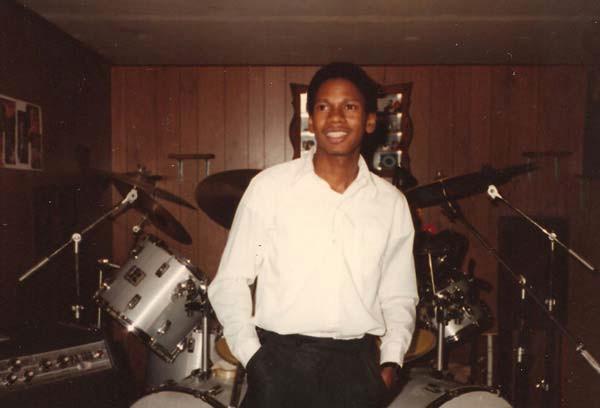
Born in Rodez, France in the mid-'50s, Kevorkian grew up in the suburbs of Paris, playing drums in several bands while studying biochemical engineering and pharmacy in college. After deciding to chuck in his studies, he moved to New York and began playing with any pick-up bands he could find. His first important work in the club scene came when Kevorkian took a part-time gig at the club Galaxy 21, providing live fill-in drums for the DJ, Walter Gibbons. Though the club later closed, Kevorkian moved on to another named Experiment Four and became friends with its resident, Jellybean Benitez.
Kevorkian soon began producing his own tracks after he learned that Benitez owned a four-track reel-to-reel machine. Hoping to warp tracks for maximum dancefloor consumption, Kevorkian recorded dub-inspired cut-and-paste megamixes with splice and edit techniques, even adding special effects gained from movies and other sources. (One of his first productions, a version of "Happy Song and Dance" by Rare Earth, was a New York club staple for years afterward.) In mid-1977, he started DJing at a club known as New York, New York -- the premiere disco spot after Studio 54. While working there, Kevorkian met DJ legend Larry Levan and the two became fast friends. After Kevorkian was tapped for an A&R position at the disco label Prelude, he began working at the label's studios with Levan, creating mixes for the West End and Salsoul imprints as well as Prelude. Kevorkian's mix for Musique's 1978 single "Push Push (In the Bush)" went gold -- despite an obvious lack of chart action -- and his productions for another Prelude act, D-Train, resulted in additional club hits like "You're the One for Me," "Music," and "Keep On."
A talent for studio mixing and his requisite dancefloor credentials made François Kevorkian one of the most in-demand producers during the '80s. An increased momentum during the decade for general dance music pushed labels to request special nightclub versions of pop songs for the dance crowd, and Kevorkian obliged hundreds of times, for such groups as Yaz, the Smiths, Depeche Mode, Diana Ross, Adam Ant, U2, Kraftwerk, Matthew Sweet, the Pet Shop Boys, Thomas Dolby, Ashford & Simpson, and Erasure, among many others. In 1987, he founded Axis Studios as well, which provided a home for recordings by Madonna, C+C Music Factory, Mariah Carey, and Deee-Lite.
Given his busy studio schedule, it's no wonder Kevorkian neglected his DJing during most of the '80s. He returned to form in 1990, and traveled to Japan with Larry Levan for several high-profile gigs. Kevorkian became a label owner himself in the '90s; his Wave imprint provided a home for several of his own productions, including 1997's pioneering FK-EP. The best document of his DJing skills, Essential Mix, appeared in 2000. ~ John Bush, Rovi
Viberate is a music analytics platform built for A&Rs, artist managers, labels, booking agents, marketers, and artists.
It helps music professionals track artist growth, analyze audience data, monitor playlist activity, compare artists, follow song performance, and identify opportunities across the music market.
Public artist pages provide a free preview of selected artist data. Paid plans provide access to deeper analytics, historical data, charts, comparisons, playlist tools, exports, alerts, reports, and additional professional features.
Yes. Public Viberate artist pages provide selected artist analytics and music data for free.
Viberate also offers a 7-day free trial of the full platform. A credit card is required to start the trial. The trial includes access to the complete product so users can test deeper artist analytics, historical views, playlist insights, comparisons, charts, exports, alerts, and reporting features before choosing a paid plan.
Viberate provides artist analytics across streaming, playlists, social media, video, radio airplay, songs, and audience markets.
Users can analyze Spotify performance, Spotify and Apple Music playlists, YouTube activity, TikTok and Instagram growth, radio spins, song performance, audience locations, demographics, rankings, and overall artist momentum.
Artist profiles also connect to music charts, similar artists, and comparison tools, helping users benchmark performance and evaluate artists in context.
Viberate updates key artist and track data daily.
For followed artists and tracks, selected data is refreshed multiple times per day. This helps teams monitor playlist changes, streaming movement, audience growth, releases, and campaign performance with more current data.
Update frequency can vary depending on the metric and data source.
Yes. Viberate lets users compare up to five artists side by side across streaming, social media, audience, and engagement metrics.
Users can compare fanbase growth, audience demographics, locations, Spotify performance, social metrics, and other artist data over selected time periods.
Artist comparison can be used for A&R scouting, benchmarking, booking decisions, campaign planning, and evaluating artists with similar audiences or market positions.