Forget Cassettes

Rock
Alternative Rock
Indie Rock
Other Electronic Music
 Viberate Rank: 513806
 Viberate Rank: 513806
 Monthly ListenersFollowers
 Subscribers
 Followers
 Followers
 FansTop Spotify Songs
| Track | 7-Day Streams | |
|---|---|---|
1 | 46 | |
2 | 37 | |
3 | 32 | |
4 | 29 | |
5 | 24 |
Top YouTube VideosMonthly ListenersFeatured in Playlists| Playlist | Followers | |
|---|---|---|
1 |  female/nb fronted emo SpvceGhxst | 2.10K |
2 | 97X WOXY Final Modern Rock 500 techskirt | 1.85K |
3 |  Coarse Pressurized Carbon khraun | 1.47K |
Audience| City | Monthly Listeners | |
|---|---|---|
1 | | 12 |
2 | | 8 |
3 | | 6 |
4 | | 6 |
5 | | 6 |
See full performance history, audience data, playlist activity, rankings, comparisons, and more in Viberate music analytics. Start with a free trial, then continue with a paid plan.
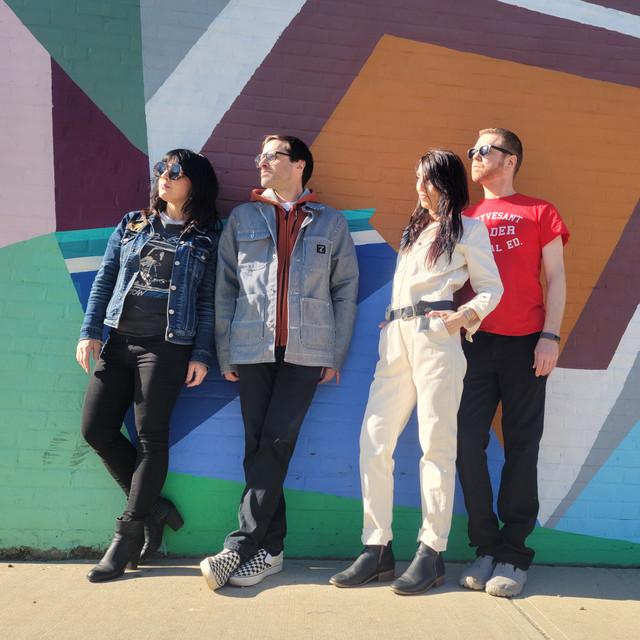
Forget Cassettes’ Spotify BioFounded and led by the expressive vocalist/songwriter/guitarist Beth Cameron, the Nashville-based Forget Cassettes specialize in alternative rock/indie rock that is angst-ridden and emotionally intense yet highly melodic. Despite having a Nashville address, Forget Cassettes have nothing whatsoever to do with country music, Americana, or roots rock; their material is alternative rock all the way, drawing on direct or indirect influences that have ranged from PJ Harvey to Tori Amos to Sleater-Kinney, Nirvana, and Hole. Forget Cassettes thrives on contrasts; a Cameron performance can be reflective (in a dark, brooding way) one minute and turn into a passionate, aggressive, cathartic outburst the next.
Forget Cassettes was formed in May 2002, when Cameron joined forces with drummer Doni Schroeder (who also plays keyboards). Forget Cassettes was not Cameron's first musical experience with Schroeder; they had spent two years playing together in a predominantly female, Nashville-based group… called Fair Verona, who were originally known as Calypso and should not be confused with an all-female Dublin, Ireland-based trio of the same name (Ireland's Fair Verona was originally known as Femme Fatale and was still together in early 2007, whereas Nashville's Fair Verona broke up in 2001 -- and it should be noted that another one of Cameron's bandmates in Nashville's Fair Verona was singer/guitarist Shawna Potter, who went on to join the Baltimore-based alterna-rock combo Avec in 2003). As a duo, Cameron and Schroeder recorded Forget Cassettes' debut album, Instruments of Action, in 2002; the disc was released by the independent, Nashville-based Theory 8 label in 2003.
When Schroeder left Forget Cassettes in late 2004 to tour with an Austin, TX-based alternative rock band called ...And You Will Know Us by the Trail of Dead, Cameron decided to take a break from music for a few months. Some fans feared that Forget Cassettes would be discontinued permanently and go down in history as a one-album wonder, but in 2005 Cameron put together a new Forget Cassettes lineup and made the group a trio, recruiting drummer Aaron Ford (who was also an ex-member of Nashville's Fair Verona and had played with a band called the Sincerity Guild) and multi-instrumentalist Jay Leo Phillips (who had been with the band Apollo Up! and plays bass, drums, and guitar). Because Forget Cassettes were a half-male, half-female duo in 2002, 2003, and 2004, some people compared them to the White Stripes, but those White Stripes comparisons went away when Forget Cassettes became a trio.
Salt, Forget Cassettes' second album, was released by Theory 8 in 2006. After that, Schroeder rejoined Forget Cassettes on some gigs, making them a quartet at times -- and when Phillips and Ford were busy with other musical activities, Forget Cassettes reverted to the original Cameron/Schroeder lineup. But whatever the lineup, Cameron has always been the constant in Forget Cassettes; she is the person who has done the most to shape and define the group's sound. In 2007, Forget Cassettes landed a European distribution deal with the London-based One Little Indian Records/Tangled Up Recordings. ~ Alex Henderson, Rovi
Viberate is a music analytics platform built for A&Rs, artist managers, labels, booking agents, marketers, and artists.
It helps music professionals track artist growth, analyze audience data, monitor playlist activity, compare artists, follow song performance, and identify opportunities across the music market.
Public artist pages provide a free preview of selected artist data. Paid plans provide access to deeper analytics, historical data, charts, comparisons, playlist tools, exports, alerts, reports, and additional professional features.
Yes. Public Viberate artist pages provide selected artist analytics and music data for free.
Viberate also offers a 7-day free trial of the full platform. A credit card is required to start the trial. The trial includes access to the complete product so users can test deeper artist analytics, historical views, playlist insights, comparisons, charts, exports, alerts, and reporting features before choosing a paid plan.
Viberate provides artist analytics across streaming, playlists, social media, video, radio airplay, songs, and audience markets.
Users can analyze Spotify performance, Spotify and Apple Music playlists, YouTube activity, TikTok and Instagram growth, radio spins, song performance, audience locations, demographics, rankings, and overall artist momentum.
Artist profiles also connect to music charts, similar artists, and comparison tools, helping users benchmark performance and evaluate artists in context.
Viberate updates key artist and track data daily.
For followed artists and tracks, selected data is refreshed multiple times per day. This helps teams monitor playlist changes, streaming movement, audience growth, releases, and campaign performance with more current data.
Update frequency can vary depending on the metric and data source.
Yes. Viberate lets users compare up to five artists side by side across streaming, social media, audience, and engagement metrics.
Users can compare fanbase growth, audience demographics, locations, Spotify performance, social metrics, and other artist data over selected time periods.
Artist comparison can be used for A&R scouting, benchmarking, booking decisions, campaign planning, and evaluating artists with similar audiences or market positions.