Food

Jazz
Avant-garde Jazz
Free Jazz
 Viberate Rank: 430166
 Viberate Rank: 430166
 Monthly ListenersFollowers
 Subscribers
 Followers
 Followers
 FansTop Spotify Songs
| Track | 7-Day Streams | |
|---|---|---|
1 | 115 | |
2 | 47 | |
3 | 42 | |
4 | 29 | |
5 | 21 |
Top YouTube VideosMonthly ListenersFeatured in Playlists| Playlist | Followers | |
|---|---|---|
1 |  ECM Yves Riviere | 5.39K |
2 |  Ambient Jazz’s Quiet, Forceful Return Pitchfork | 3.37K |
3 |  ECM Records: 2001 - 2603 Ulysses' Classical | 2.92K |
4 | ECM Records Ambient Jazz Arya Boustani | 2.51K |
5 |  Audio Gold Expanding Jukebox audio-gold | 1.90K |
Audience| City | Monthly Listeners | |
|---|---|---|
1 |  | 20 |
2 |  | 17 |
3 |  | 15 |
4 | | 14 |
5 |  | 11 |
See full performance history, audience data, playlist activity, rankings, comparisons, and more in Viberate music analytics. Start with a free trial, then continue with a paid plan.
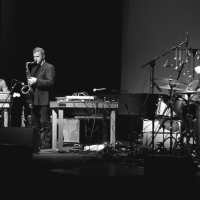
Food’s Spotify BioAvant jazz and improvisational group Food were founded in 1998 as a collaborative effort between British saxophonist Iain Ballamy and Norwegian drummer Thomas Strønen after a chance meeting. By the time they began recording, they had expanded to a quartet that also included trumpeter Arve Henricksen and bassist Mats Eilertsen. Their self-titled debut offering, as well as Organic & GM Food, appeared on the Feral label in 1999 and 2001, respectively. By the time they released Veggie in 2002 and Last Supper in 2004, they had moved on to Rune Grammophon.
The band was pared down to the original duo of Bellamy and Strønen for 2007's Molecular Gastronomy. After numerous tours and festival appearances as both a duo and in collaboration with other musicians, Food signed with ECM for 2010's Quiet Inlet. The addition of Christian Fennesz on guitar and electronics and Nils Petter Molvær on trumpet and electronics expanded the group to a quartet once more. For 2012's Mercurial Balm (also on ECM),… the lineup expanded further, adding Prakash Sontakke on slide guitar and vocals and Evind Aarset on electric guitar and electronics.
Food played a series of European dates in the wake of the album's release. Strønen and Ballamy along with Fennesz reconvened in engineer Ulf Holand's (David Bowie, Satyricon, Motorpsycho) Oslo studio in June of 2013. They recorded a wealth of material. Strønen took the tapes and worked on them alone for five months, radically reshaping what the group had cut. The end result more directly referenced rock and driving electronica. Label head Manfred Eicher mixed the tapes while the bandmembers were rehearsing to perform the material live. This Is Not a Miracle was released by ECM in November of 2015, while Food were on tour. ~ Thom Jurek, Rovi
Viberate is a music analytics platform built for A&Rs, artist managers, labels, booking agents, marketers, and artists.
It helps music professionals track artist growth, analyze audience data, monitor playlist activity, compare artists, follow song performance, and identify opportunities across the music market.
Public artist pages provide a free preview of selected artist data. Paid plans provide access to deeper analytics, historical data, charts, comparisons, playlist tools, exports, alerts, reports, and additional professional features.
Yes. Public Viberate artist pages provide selected artist analytics and music data for free.
Viberate also offers a 7-day free trial of the full platform. A credit card is required to start the trial. The trial includes access to the complete product so users can test deeper artist analytics, historical views, playlist insights, comparisons, charts, exports, alerts, and reporting features before choosing a paid plan.
Viberate provides artist analytics across streaming, playlists, social media, video, radio airplay, songs, and audience markets.
Users can analyze Spotify performance, Spotify and Apple Music playlists, YouTube activity, TikTok and Instagram growth, radio spins, song performance, audience locations, demographics, rankings, and overall artist momentum.
Artist profiles also connect to music charts, similar artists, and comparison tools, helping users benchmark performance and evaluate artists in context.
Viberate updates key artist and track data daily.
For followed artists and tracks, selected data is refreshed multiple times per day. This helps teams monitor playlist changes, streaming movement, audience growth, releases, and campaign performance with more current data.
Update frequency can vary depending on the metric and data source.
Yes. Viberate lets users compare up to five artists side by side across streaming, social media, audience, and engagement metrics.
Users can compare fanbase growth, audience demographics, locations, Spotify performance, social metrics, and other artist data over selected time periods.
Artist comparison can be used for A&R scouting, benchmarking, booking decisions, campaign planning, and evaluating artists with similar audiences or market positions.