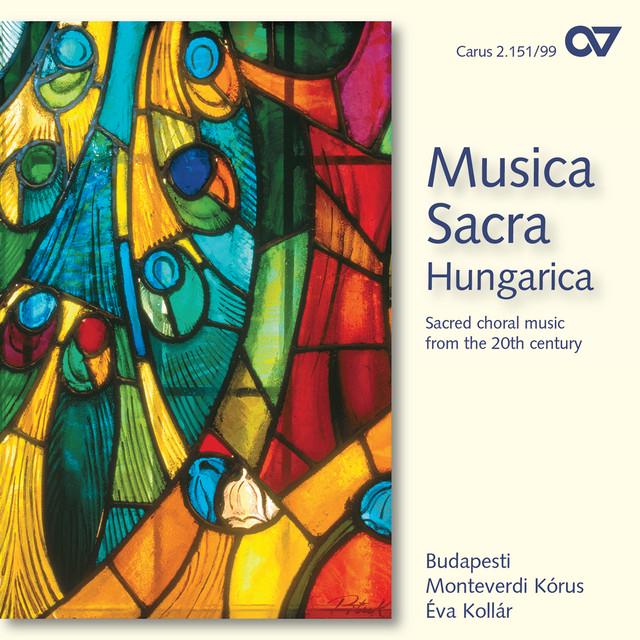
Ferenc Farkas

Classical
Orchestral
 Viberate Rank: 603400
 Viberate Rank: 603400
 Monthly ListenersFollowers
 Subscribers
 Followers
 Followers
 FansTop Spotify Songs
| Track | 7-Day Streams | |
|---|---|---|
1 | 61 | |
2 | 42 | |
3 | 35 | |
4 | 33 | |
5 | 30 |
Top YouTube VideosMonthly ListenersFeatured in Playlists| Playlist | Followers | |
|---|---|---|
1 |  Hooked on Classics Upbeat Instrumental for Work & Studying 1228799150 | 3.64K |
2 |  Concentratie & focus met klassieke muziek | NPO Klassiek NPO Klassiek | 1.94K |
3 |  Fit op 4: Hardlopen op klassieke muziek | AVROTROS & NPO Klassiek NPO Klassiek | 1.74K |
4 |  Magyar népdalok (Hungarian Folk Music) Meli | 1.49K |
5 | Saxophone Quartet nateroon | 1.43K |
Audience| City | Monthly Listeners | |
|---|---|---|
1 | | 125 |
2 |  | 16 |
3 | | 13 |
4 |  | 11 |
5 | | 10 |
See full performance history, audience data, playlist activity, rankings, comparisons, and more in Viberate music analytics. Start with a free trial, then continue with a paid plan.
Ferenc Farkas’ Spotify BioIn a life extending nearly the entire breadth of the twentieth century, Hungarian composer Ferenc Farkas fashioned a personal idiom of refreshing vitality. In form, largely diatonic, it spoke a richer language, one of harmonic variety, rhythmic energy, and melodic appeal. In addition to his career as a creative musician, he was a respected pedagogue whose pupils included György Ligeti, Sándor Szokolay, and György Kurtág. Further, he wrote on musical subjects for various publications, particularly on issues of folk music.
Beginning his piano training at age eight, Farkas studied privately at first, later at the National Conservatory in Budapest. After completion of his secondary education, he studied composition with Albert Sikós and Leó Weiner at the Budapest Academy of Music, receiving his diploma in 1927. For two years he served as an assistant conductor at Budapest's Municipal Theatre. Winning a state-funded scholarship, he was then able to journey to Italy to participate in advanced… composition courses taught by Ottorino Respighi at Rome's Accademia di Santa Cecilia. Apart from his studies, he seized the opportunity to travel in Italy and through the Iberian peninsula. When Farkas returned to Budapest in 1930, he made his professional debut performing a recital of his own compositions. In 1933, he traveled once more, this time to Vienna. The following year, he went to Denmark to work in film scoring for the Nordisk Company. Another journey took him to Paris before he was appointed in 1935 to be instructor of composition at Budapest's advanced Municipal Music School. After serving as professor of music at Kolozsvár's Conservatory of Music beginning in 1941, Farkas was appointed the institution's director in 1943. A similar position at Székesfehérvar in 1946 preceded his appointment as professor of music at the Budapest Academy of Music, a post he held until his retirement in 1975. Much honored, Farkas was awarded the Hungarian Liszt Prize in 1933, the Ferenc Jóseph Prize in 1934, the Klebelsberg Prize in 1943, and in 1950, Hungary's highest honor for artistic achievement: the Kossuth Prize. From 1932 to 1973, Farkas contributed scores to 29 films. Five operas occupied him between 1942 and 1980, The Magic Cupboard first among them. His incidental music for plays, especially those by Shakespeare, remains significant.
Viberate is a music analytics platform built for A&Rs, artist managers, labels, booking agents, marketers, and artists.
It helps music professionals track artist growth, analyze audience data, monitor playlist activity, compare artists, follow song performance, and identify opportunities across the music market.
Public artist pages provide a free preview of selected artist data. Paid plans provide access to deeper analytics, historical data, charts, comparisons, playlist tools, exports, alerts, reports, and additional professional features.
Yes. Public Viberate artist pages provide selected artist analytics and music data for free.
Viberate also offers a 7-day free trial of the full platform. A credit card is required to start the trial. The trial includes access to the complete product so users can test deeper artist analytics, historical views, playlist insights, comparisons, charts, exports, alerts, and reporting features before choosing a paid plan.
Viberate provides artist analytics across streaming, playlists, social media, video, radio airplay, songs, and audience markets.
Users can analyze Spotify performance, Spotify and Apple Music playlists, YouTube activity, TikTok and Instagram growth, radio spins, song performance, audience locations, demographics, rankings, and overall artist momentum.
Artist profiles also connect to music charts, similar artists, and comparison tools, helping users benchmark performance and evaluate artists in context.
Viberate updates key artist and track data daily.
For followed artists and tracks, selected data is refreshed multiple times per day. This helps teams monitor playlist changes, streaming movement, audience growth, releases, and campaign performance with more current data.
Update frequency can vary depending on the metric and data source.
Yes. Viberate lets users compare up to five artists side by side across streaming, social media, audience, and engagement metrics.
Users can compare fanbase growth, audience demographics, locations, Spotify performance, social metrics, and other artist data over selected time periods.
Artist comparison can be used for A&R scouting, benchmarking, booking decisions, campaign planning, and evaluating artists with similar audiences or market positions.