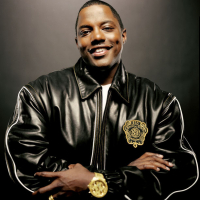
Fabolous

Hip Hop
Contemporary Hip Hop
Alternative Hip Hop
 Viberate Rank: 1654
 Viberate Rank: 1654
 Monthly ListenersFollowers
 Subscribers
 Followers
 Followers
 FansTop Spotify Songs
| Track | 7-Day Streams | |
|---|---|---|
1 | 1.22M | |
2 | 864.39K | |
3 | 521.83K | |
4 | 514.65K | |
5 | 374.78K |
Top YouTube Videos| Video | 7-Day Views | |
|---|---|---|
1 | 265.40K | |
2 | 217.01K | |
3 | 120.97K | |
4 | 103.40K | |
5 | 89.71K |
Monthly ListenersFeatured in Playlists| Playlist | Followers | |
|---|---|---|
1 |  I Love My '00s R&B Spotify | 4.81M |
2 |  Gold School Spotify | 4.00M |
3 |  R&B Classics 90s & 2000s - Best Old School RnB Hits Playlist - Usher, Chris Brown, Ne-Yo, Mario Esydia | 1.79M |
4 |  Kitchen Swagger Spotify | 1.14M |
5 |  mid:nite storm Spotify | 1.00M |
Audience| City | Monthly Listeners | |
|---|---|---|
1 |  | 112.47K |
2 |  | 110.89K |
3 | | 105.76K |
4 | | 102.90K |
5 | | 74.66K |
See full performance history, audience data, playlist activity, rankings, comparisons, and more in Viberate music analytics. Start with a free trial, then continue with a paid plan.
Fabolous’ Spotify BioFabolous scored his first Top 40 pop hit, "Can't Deny It," right out of the gate in 2001, instantly establishing himself as a rising East Coast rap star with a combination of street-savvy toughness and crossover appeal. The Brooklyn rapper was one of the first East Coast MCs to embrace the bling mentality of the South as well as the gangsta swagger of the West Coast, all the while incorporating a subtle undercurrent of pop into his music. Among the first of a new breed of New York City rappers, later and most notably to include 50 Cent, who were able to cross over without losing street cred, Fabolous put together a streak of five Top Ten albums throughout the 2000s. These include the platinum pair of Ghetto Fabolous (2001) and Street Dreams (2003), and the chart-topping Loso's Way (2009), featuring the Grammy-nominated "Money Goes, Honey Stay." A Def Jam affiliate since 2007, Fab has eased into veteran mode with a couple of proper albums amid several mixtapes. He tallied additional Top… Ten projects with the Jadakiss collaboration Friday on Elm Street (2017) and Summertime Shootout 3: Coldest Summer Ever (2019). "Say Less" (2022) followed numerous featured apperances as Fabolous' first headlining single of the 2020s.
The rapper born John David Jackson got his break when he performed on DJ Clue's Hot 97 radio show. Signed to Clue's then Elektra-supported Desert Storm label, he hit number 25 on the Billboard Hot 100 with his 2001 debut single, "Can't Deny It," a Rick Rock production featuring a 2Pac sample and a Nate Dogg vocal. It preceded his debut album, Ghetto Fabolous (2001), which reached the Top Ten of the Billboard 200 and included a second Top 40 single, "Young'n (Holla Back)." When Fabolous returned with Street Dreams (2003), he capitalized on his initial renown, racking up three major hits: "Trade It All" (originally from the Barbershop soundtrack), "Can't Let You Go," and "Into You." The latter two both climbed to number four on the Hot 100. By the end of 2003, Fab's first two albums were certified platinum. He also issued More Street Dreams, Pt. 2: The Mixtape in time for the holiday season. Comprising various street-level recordings originally released on mixtapes, it reaffirmed Fabolous' hip-hop credentials in the wake of his pop crossover singles. The following year brought with it another album, Real Talk (2004), which boasted a monster Just Blaze production, "Breathe," Fabolous' toughest Top Ten pop hit.
Meanwhile, Fabolous' hits as a featured artist were piling up. He was on Lil' Mo's Top 40 hits "Superwoman, Pt. 2" and "4Ever," but Christina Millian's "Dip It Low" was even bigger, reaching number four in 2004 and nominated for a Grammy in the category of Best Rap/Sung Collaboration. Although Fab seemed to be peaking commercially, he was relatively quiet during 2005 and 2006. Shortly before the scheduled release of his next album in late 2006, he made headlines when he was shot in the leg and subsequently charged with weapons possession. Def Jam, which signed Fabolous after sending Musiq Soulchild to Atlantic in a unique artist-trade situation, released From Nothin' to Somethin' (2007). The album debuted at number two on the Billboard 200 and spawned a series of singles, including the Top Ten hit "Make Me Better" featuring Ne-Yo. After he appeared on Lil Wayne's Tha Carter III, a Grammy Album of the Year nominee, Fab closed out the decade with Loso's Way (2009), a loosely conceptual full-length inspired by the film Carlito's Way. It not only continued his streak of Top Ten Billboard 200 LPs, but also topped the chart. "Money Goes, Honey Stay," featuring Jay-Z, was up for a Grammy in the rap field, Fabolous' first nomination as a headliner.
Fabolous began the next decade with There Is No Competition 2: The Grieving Music (2010), a "concept mixtape" aimed to bury rival rappers. An assortment of tapes followed the next couple years. Although a pair of singles was released in 2013 to promote Loso's Way 2, including the charting Chris Brown collaboration "Ready," the album was eventually scrapped after continual delays. Fabolous continued instead with The Young OG Project (2014), packed tight with guest appearances from the likes of Rich Homie Quan, French Montana, and Chris Brown. Fab's sixth proper album, it peaked at number 12 on the Billboard 200. A few more tapes and a couple EPs, including the first two installments in the Def Jam-released Summertime Shootout series, followed into 2016. After a Top Ten full-length collaboration with Jadakiss, Friday on Elm Street (2017), he put together Summertime Shootout 3: Coldest Summer Ever. Classified as a proper album, it entered the Billboard 200 at number seven, pushed forward by tracks such as "Ooh Yeah" (with Ty Dolla $ign) and "Choosy" (featuring Jeremih and Davido).
Into the 2020s, Fabolous was heard mostly through guest appearances and other collaborations. "Brick After Brick," recorded for the television series Godfather of Harlem, paired him with Westside Gunn. Fab contributed to Snoop Dogg Presents Algorithm on "Make Some Money." After these and other featured verses, Fabolous returned in 2022, joined by French Montana, with "Say Less," his first headlining single in a few years. ~ Andy Kellman & Jason Birchmeier, Rovi
Viberate is a music analytics platform built for A&Rs, artist managers, labels, booking agents, marketers, and artists.
It helps music professionals track artist growth, analyze audience data, monitor playlist activity, compare artists, follow song performance, and identify opportunities across the music market.
Public artist pages provide a free preview of selected artist data. Paid plans provide access to deeper analytics, historical data, charts, comparisons, playlist tools, exports, alerts, reports, and additional professional features.
Yes. Public Viberate artist pages provide selected artist analytics and music data for free.
Viberate also offers a 7-day free trial of the full platform. A credit card is required to start the trial. The trial includes access to the complete product so users can test deeper artist analytics, historical views, playlist insights, comparisons, charts, exports, alerts, and reporting features before choosing a paid plan.
Viberate provides artist analytics across streaming, playlists, social media, video, radio airplay, songs, and audience markets.
Users can analyze Spotify performance, Spotify and Apple Music playlists, YouTube activity, TikTok and Instagram growth, radio spins, song performance, audience locations, demographics, rankings, and overall artist momentum.
Artist profiles also connect to music charts, similar artists, and comparison tools, helping users benchmark performance and evaluate artists in context.
Viberate updates key artist and track data daily.
For followed artists and tracks, selected data is refreshed multiple times per day. This helps teams monitor playlist changes, streaming movement, audience growth, releases, and campaign performance with more current data.
Update frequency can vary depending on the metric and data source.
Yes. Viberate lets users compare up to five artists side by side across streaming, social media, audience, and engagement metrics.
Users can compare fanbase growth, audience demographics, locations, Spotify performance, social metrics, and other artist data over selected time periods.
Artist comparison can be used for A&R scouting, benchmarking, booking decisions, campaign planning, and evaluating artists with similar audiences or market positions.