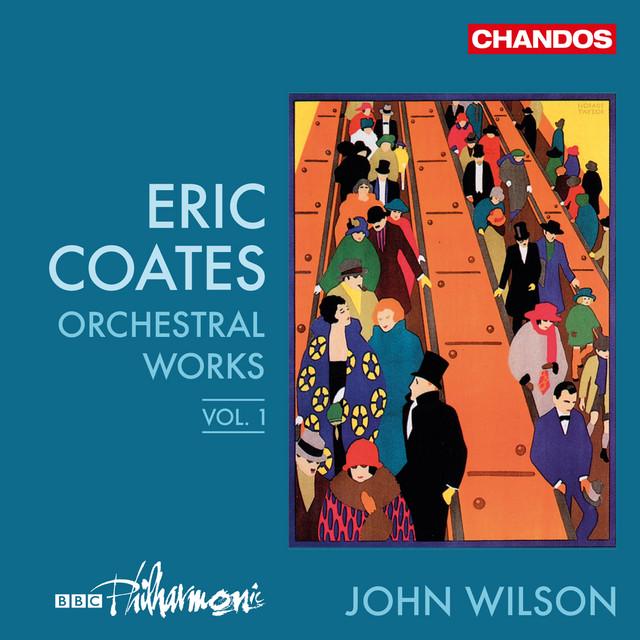
Eric Coates

Classical
Orchestral
 Viberate Rank: 227016
 Viberate Rank: 227016
 Monthly ListenersFollowers
 Subscribers
 Followers
 Followers
 FansTop Spotify Songs
| Track | 7-Day Streams | |
|---|---|---|
1 | 12.57K | |
2 | 5.56K | |
3 | 4.21K | |
4 | 3.66K | |
5 | 3.59K |
Top YouTube VideosMonthly ListenersFeatured in Playlists| Playlist | Followers | |
|---|---|---|
1 |  Classical Essentials Spotify | 3.82M |
2 |  Iconic Soundtracks Spotify | 1.37M |
3 |  EN TU CASA O EN LA MÍA uDiscover España | 177.83K |
4 | Beautiful, Calming Classical Music vcmstow | 72.62K |
5 | Classical & Symphony Orchestra Adriansyah Wijaya | 47.77K |
Audience| City | Monthly Listeners | |
|---|---|---|
1 | | 2.57K |
2 |  | 1.00K |
3 | | 945 |
4 |  | 925 |
5 |  | 907 |
See full performance history, audience data, playlist activity, rankings, comparisons, and more in Viberate music analytics. Start with a free trial, then continue with a paid plan.
Eric Coates’ Spotify BioEric Coates was perhaps the most important composer of symphonic light music in the first half of the twentieth century outside the Viennese sphere. He took the music genre and made it into as bona fide and influential an art form as that created by any member of the Strauss family. He is often regarded as the Mozart of a music world whose generally light emotional expression is colored by splashy orchestration and perky rhythms. Yet, his music featured an elegance and aristocratic air and could capture moods and, in stage works, story lines with deftly vivid imagery. Among his important compositions are the 1930 ballet Snow White and the Seven Dwarfs, revised eight years later and re-titled The Enchanted Garden; and Springtime Suite from 1937. Even though Coates composed music in a less serious genre, he must be regarded nearly as highly as England's other important figures from his time, Vaughan Williams, Sir Arnold Bax, and Gustav Holst.
The youngest of five children, whose physician… father was an amateur flutist and whose mother was an accomplished pianist, Eric began study on the violin at age six. Later on he took up the viola. He showed no serious interest in composing until age 20 when he entered the Royal Academy of Music, where he studied viola with Lionel Tertis and composition with Frederick Corder.
In the period between 1908 and 1909, he wrote his first vocal works: Four old English Songs and Stonecracker John. In 1910 he began playing the viola in the Beecham Symphony Orchestra and shortly afterward got a similar post in the Queen's Hall Orchestra, under Sir Henry Wood. He turned out his first orchestral work, the Miniature Suite, in 1911. Two years later, Coates married 18-year-old Phyllis Black, who would write lyrics for him and be of immense help to him throughout his career. Because of a progressive neuritis in his left hand and arm, Coates was exempt from military service during the war years. By 1919, however, the condition forced him to give up his first-chair viola post in the Queen's Hall Orchestra.
In 1927, Coates composed his orchestral suite Four Ways, which achieved considerable popularity. Perhaps his greatest success, though, came with the 1933 London Suite, which contained a section called "Knightsbridge," a march that took on a life apart from the suite when it was used to introduce the BBC radio program In Town Tonight, which became familiar to virtually every British listener during its 27-year run.
When his wife began working for the Red Cross in 1940, Coates was moved to write Calling All Workers, whose theme was subsequently used by the BBC for another radio show, Music While You Work. The orchestral suites Four Centuries (1942) and Three Elizabeths (1944) merely solidified his position now as the composer of the most familiar British music of all time.
In the postwar years, Coates continued to turn out popular scores, like Music Everywhere (1949). The composer continued to be active as a conductor in his last years, taking up the baton at one notable Promenade concert in August 1956, after Sir Malcolm Sargent had led the orchestra in a Tchaikovsky work. The 70-year-old Coates led the ensemble in his Four Centuries Suite and drew an enthusiastic response from the audience. Coates suffered a stroke and died on December 23, 1957.
Viberate is a music analytics platform built for A&Rs, artist managers, labels, booking agents, marketers, and artists.
It helps music professionals track artist growth, analyze audience data, monitor playlist activity, compare artists, follow song performance, and identify opportunities across the music market.
Public artist pages provide a free preview of selected artist data. Paid plans provide access to deeper analytics, historical data, charts, comparisons, playlist tools, exports, alerts, reports, and additional professional features.
Yes. Public Viberate artist pages provide selected artist analytics and music data for free.
Viberate also offers a 7-day free trial of the full platform. A credit card is required to start the trial. The trial includes access to the complete product so users can test deeper artist analytics, historical views, playlist insights, comparisons, charts, exports, alerts, and reporting features before choosing a paid plan.
Viberate provides artist analytics across streaming, playlists, social media, video, radio airplay, songs, and audience markets.
Users can analyze Spotify performance, Spotify and Apple Music playlists, YouTube activity, TikTok and Instagram growth, radio spins, song performance, audience locations, demographics, rankings, and overall artist momentum.
Artist profiles also connect to music charts, similar artists, and comparison tools, helping users benchmark performance and evaluate artists in context.
Viberate updates key artist and track data daily.
For followed artists and tracks, selected data is refreshed multiple times per day. This helps teams monitor playlist changes, streaming movement, audience growth, releases, and campaign performance with more current data.
Update frequency can vary depending on the metric and data source.
Yes. Viberate lets users compare up to five artists side by side across streaming, social media, audience, and engagement metrics.
Users can compare fanbase growth, audience demographics, locations, Spotify performance, social metrics, and other artist data over selected time periods.
Artist comparison can be used for A&R scouting, benchmarking, booking decisions, campaign planning, and evaluating artists with similar audiences or market positions.