Emilio Navaira

Latin
Regional Mexican Music
Other Latin Music
 Viberate Rank: 32898
 Viberate Rank: 32898
 Monthly ListenersFollowers
 Subscribers
 Followers
 Followers
 FansTop Spotify Songs
| Track | 7-Day Streams | |
|---|---|---|
1 | 66.61K | |
2 | 56.35K | |
3 | 36.72K | |
4 | 27.61K | |
5 | 24.74K |
Top YouTube VideosMonthly ListenersFeatured in Playlists| Playlist | Followers | |
|---|---|---|
1 |  Éxito de Selena Quintanilla Óscar Iván B E | 262.14K |
2 |  Tejano Classics Spotify | 254.54K |
3 |  Corazón Regio Spotify | 180.85K |
4 |  Lo mejor de Selena Quintanilla ' La Reina del Tex-Mex' Yajaira Pereira | 93.50K |
5 |  Cumbias Matonas Spot Media | 63.76K |
Audience| City | Monthly Listeners | |
|---|---|---|
1 |  | 102.71K |
2 | | 25.79K |
3 | | 20.32K |
4 | | 19.22K |
5 | | 18.55K |
See full performance history, audience data, playlist activity, rankings, comparisons, and more in Viberate music analytics. Start with a free trial, then continue with a paid plan.
Emilio Navaira’s Spotify BioWith the exception of Selena, Emilio Navaira did more than anyone to popularize tejano music during the early to mid-'90s, and though his popularity waned in the wake of his 1995 crossover into the country music market with the English-language album Life Is Good (1995), he remained influential and was rightfully regarded as a tejano legend. Navaira first established himself as the lead singer of David Lee Garza y los Musicales. During his tenure with the group from 1984 until 1988, Garza y los Musicales regularly took home Tejano Music Awards, winning Album of the Year honors in 1985, 1987, and 1989. Following the group's most popular album to date, Tour '88 (1988), Navaira split from los Musicales and formed his own band, Rio, with his brother Raúl. Navaira and Rio debuted in 1989 and, over the next five years, enjoyed remarkable success, commercially as well as critically. His 1995 country crossover album, Life Is Good, was perhaps his greatest success, but his popularity began to… wane in its wake. In subsequent years, Navaira continued to perform and record new albums, and though they didn't rival the popularity of his earlier efforts, they were critically acclaimed, regularly being nominated for Grammy Awards (and, in the case of Acuérdate [2002], winning one). After years of fading stardom, a 2008 tour bus crash in which Navaira was driving thrust him back into the spotlight and triggered a reevaluation of his illustrious career and his role as a tejano trailblazer.
Born Emilio Navaira III on August 23, 1962, in San Antonio, Texas, he was of Mexican heritage, the son of Emilio Navaira, Jr., and Mary Navaira, the latter a bilingual teacher's assistant. Growing up on the south side of San Antonio, Navaira found early influence in not only tejano legends such as Little Joe y la Familia, Ramón Ayala, and Pedro Infante, but also Lone Star country music heroes such as Willie Nelson, Bob Wills, and George Strait. There was no market for Hispanic country music singers, however, so he focused on performing regional Mexican music in order to get club gigs. As a student, he graduated from McCollum High School in 1980, received a music scholarship to Southwest Texas State University in San Marcos, and majored in music with plans to become a teacher. He also performed as an actor, starring as the character Fredrick in a revival of The Sound of Music staged at the Fiesta Dinner Theater in San Antonio.
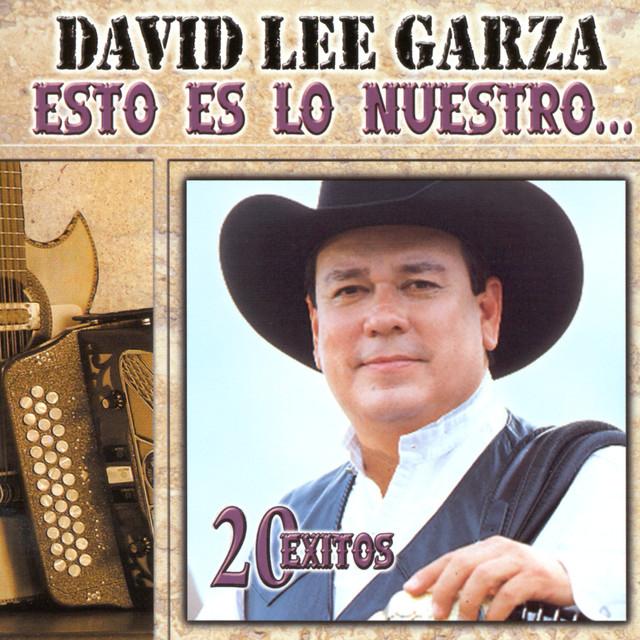
In 1984 Navaira made his recording debut as the lead vocalist of David Lee Garza y los Musicales on their fourth album, Las Canciones Que Te Canto. He was also featured as lead vocalist on subsequent albums by David Lee Garza y los Musicales, namely Cuantas Veces (1984), Totally Yours (1985), Award Winning (1986), Dejame Quererte (1987), and Tour '88 (1988). Garza y los Musicales were a leading tejano act of the era, winning Tejano Music Awards in 1983 (Most Promising Band of the Year), 1984 (Conjunto Album of the Year), 1985 (Conjunto Album of the Year), 1987 (Conjunto Album of the Year), 1988 (Conjunto Album of the Year), and 1989 (Conjunto Album of the Year; Single of the Year).
In the wake of the Tour '88 album and its award-winning hit single, "Me Quieres Tu y Te Quiero Yo," Navaira left Garza y los Musicales at the height of group's popularity. He formed his own group, Rio, featuring his brother Raúl (aka Raulito), and signed a recording contract with CBS Records. The group's eponymous 1989 debut album proved popular, breaking into the Top Ten of the regional Mexican chart, and was nominated for a 1989 Grammy Award in the category of Best Mexican-American Performance, ultimately losing to Los Lobos' La Pistola y el Corazon. At the 1990 Tejano Music Awards, he took home both Conjunto Album of the Year and Most Promising Band of the Year. Navaira's second album, Sensaciones (1990), also won Album of the Year at the Tejano Music Awards.
In 1991 Navaira switched from CBS Records to EMI for Shoot It!, yet another Tejano Music Award winner for Conjunto Album of the Year. The accolades continued as subsequent albums Unsung Highways (1992), Shuffle Time (1992), Live (1992), Southern Exposure (1993), and SoundLife (1994) kept Navaira firmly lodged on the regional Mexican albums chart: in 1993 he won Tejano Music Awards for Male Entertainer of the Year and Progressive Album of the Year; in 1994 he won Male Vocalist of the Year, Male Entertainer of the Year, and Progressive Album of the Year; and in 1995 he won Male Vocalist of the Year, Male Entertainer of the Year, Vocal Duo of the Year (in conjunction with Roberto Pulido), and Video of the Year.
The release of Life Is Good in 2005 marked a turning point in Navaira's recording career. Released a half-year after Selena's tragic death shone a national spotlight on the tejano scene, the English-language Life Is Good was oriented toward the national country music market rather than the regional Mexican scene. The lead single, "It's Not the End of the World," was released in both English- and Spanish-language versions and became a Top 30 country hit. The album itself debuted at number 12 on the country albums chart. A series of follow-up singles -- "Even If I Tried," "I Think We're on to Something," and "Have I Told You Lately" -- also charted (at numbers 41, 56, and 62, respectively). In 1996 Navaira took home the Tejano Music Award for Male Entertainer of the Year for the fourth straight time; he also won Male Vocalist of the Year, Vocal Duo of the Year (in conjunction with his brother Raúl), Progressive Album of the Year, and Tejano Country Song of the Year.
In the wake of his country crossover, Navaira's popularity began to wane, but not immediately: Quédate, his 1996 return to tejano, was a Top Ten hit on the Latin albums chart, spawning two Top 40 hits, "Quédate" and "Hoy Me Siento Feliz." His pair of 1997 albums -- It's on the House, his English-language country music follow-up, and A Mi Gente, a tejano album -- were much less successful, neither breaking into the Top 40 of its respective market and neither spawning a Top 40 hit ("I'd Love You to Love Me" and "She Gives," from It's on the House, came closest, at number 56 and 73, respectively). Following the relative disappointment of his 1997 pair of albums, Navaira took a three-year break from recording. A few greatest-hits collections were issued in his absence -- Lo Mejor de Lo Mejor: 12 Super Éxitos (1997), Mano a Mano (1998), and Mi Primer Amor: 10 Aniversario (1999) -- and he was honored as Humanitarian of the Year at the 1998 Tejano Music Awards.
When Navaira returned to the consumer marketplace in 2000 with El Rey del Rodeo, he was on a new record label, having left EMI and switched to BMG. Though El Rey del Rodeo failed to chart, it spawned Navaira's first hit single in three years, "Esperando Su Llamada," which broke into the Top 40, and received a Grammy Award nomination for Best Tejano Album. His next BMG album, Lo Dice Tu Mirada (2001), met a similar reception, itself failing to chart yet spawning a Top 40 hit, "Lo Dice Tu Mirada," and receiving a Latin Grammy Award nomination. In 2002 Navaira won his first Grammy Award, taking home the honor of Best Tejano Album for Acuérdate (2002), an album that was also nominated for a Latin Grammy Award; however, despite the critical accolades, Navaira was attracting little recognition commercially. His next album, Entre Amigos (2003), performed similarly, earning a nomination at the 2005 Grammy Awards for Best Tejano Album yet failing to do well commercially. In 2007, after another extended period out of the consumer marketplace, Navaira re-emerged with a new album, De Nuevo, on a new record label, Universal Music Group.
Roughly a half-year after the release of De Nuevo, Navaira and his band were touring in support of the album, and on the morning of March 23, 2008, his 26,000-pound tour bus slammed into traffic barrels on a highway southwest of Houston. Navaira, who was driving the bus at the time, was ejected from the vehicle through the windshield and was critically injured. He was rushed to Memorial Hermann Hospital, where doctors removed a clot from the surface of his brain and placed him in a medically induced coma. In April Navaira was upgraded to fair condition and began rehabilitative therapy; the following month it was revealed that he had been intoxicated when driving at the time of the crash and, in fact, was not licensed to drive a bus. (He subsequently pleaded guilty to DWI charges.) In September of 2008 Emilio and his wife, Maria, were involved in another crash when their car, driven by Maria and waiting in a turn lane, was hit by a truck. They had been returning home from rehabilitation therapy related to the March crash when the September crash occurred; both Emilio and Maria were released from the hospital the following day. Eight years later, in May 2016, Navaira was found unresponsive by his wife at their Texas home and died at the age of 53. ~ Jason Birchmeier, Rovi
Viberate is a music analytics platform built for A&Rs, artist managers, labels, booking agents, marketers, and artists.
It helps music professionals track artist growth, analyze audience data, monitor playlist activity, compare artists, follow song performance, and identify opportunities across the music market.
Public artist pages provide a free preview of selected artist data. Paid plans provide access to deeper analytics, historical data, charts, comparisons, playlist tools, exports, alerts, reports, and additional professional features.
Yes. Public Viberate artist pages provide selected artist analytics and music data for free.
Viberate also offers a 7-day free trial of the full platform. A credit card is required to start the trial. The trial includes access to the complete product so users can test deeper artist analytics, historical views, playlist insights, comparisons, charts, exports, alerts, and reporting features before choosing a paid plan.
Viberate provides artist analytics across streaming, playlists, social media, video, radio airplay, songs, and audience markets.
Users can analyze Spotify performance, Spotify and Apple Music playlists, YouTube activity, TikTok and Instagram growth, radio spins, song performance, audience locations, demographics, rankings, and overall artist momentum.
Artist profiles also connect to music charts, similar artists, and comparison tools, helping users benchmark performance and evaluate artists in context.
Viberate updates key artist and track data daily.
For followed artists and tracks, selected data is refreshed multiple times per day. This helps teams monitor playlist changes, streaming movement, audience growth, releases, and campaign performance with more current data.
Update frequency can vary depending on the metric and data source.
Yes. Viberate lets users compare up to five artists side by side across streaming, social media, audience, and engagement metrics.
Users can compare fanbase growth, audience demographics, locations, Spotify performance, social metrics, and other artist data over selected time periods.
Artist comparison can be used for A&R scouting, benchmarking, booking decisions, campaign planning, and evaluating artists with similar audiences or market positions.