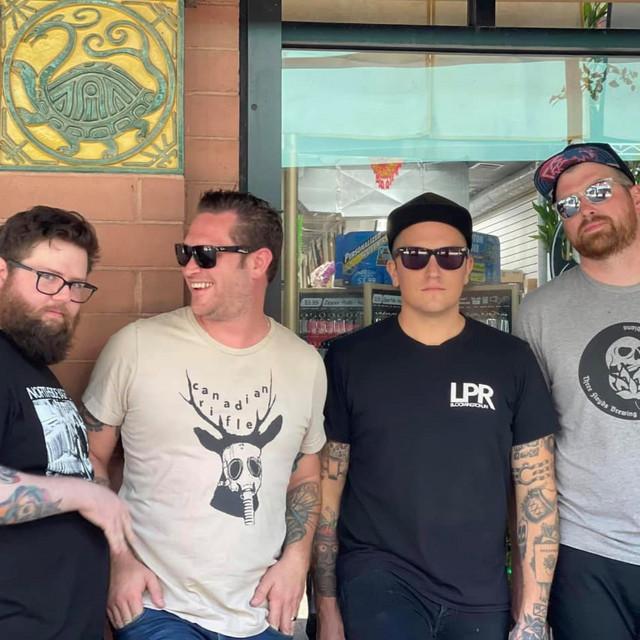
Elway

Punk
Punk Rock
Hardcore Punk
 Viberate Rank: 267480
 Viberate Rank: 267480
 Monthly ListenersFollowers
 Subscribers
 Followers
 Followers
 FansTop Spotify Songs
| Track | 7-Day Streams | |
|---|---|---|
1 | 699 | |
2 | 580 | |
3 | 421 | |
4 | 395 | |
5 | 345 |
Top YouTube VideosMonthly ListenersFeatured in Playlists| Playlist | Followers | |
|---|---|---|
1 |  Melodic Punk Rock funnypunk | 9.62K |
2 | POPPUNK Kevin McLaughlin | 8.53K |
3 |  PUNK ROCK sebastien.gautier | 8.46K |
4 |  All New Pop Punk 2026 (PUNKERS HUB) PUNKLOID | 4.74K |
5 |  Teenage Anthems Peter van den Hout | 3.59K |
Audience| City | Monthly Listeners | |
|---|---|---|
1 | | 207 |
2 | | 123 |
3 | | 115 |
4 |  | 89 |
5 | | 77 |
See full performance history, audience data, playlist activity, rankings, comparisons, and more in Viberate music analytics. Start with a free trial, then continue with a paid plan.
Elway’s Spotify BioOscar Wilde once quipped that “art is the only serious thing in the world, and the artist is the only person who is never serious,” reflecting on the importance of the fruits of creative impulse while cautioning against allowing that impulse turn to self-importance.
If Elway were sober enough to have pondered that quote during their formation in the fall of 2007, perhaps it would have been their mantra.
Elway began their ‘career’ as 10-4 Eleanor, slugging it out in the basements of punk houses and the local dives in Fort Collins, Colorado. Their inebriated take on indie-tinged four chord punk via debut album “...Too Bad” gained them enough niche market acclaim to tour the country a few times before landing a record deal with Chicago’s Red Scare Industries in 2010.
With the new label came a new name, and Elway released “Delusions” in 2011. The next few years would see the band expand, with hundreds of shows across the North America, the UK, and Europe, the release of 1 EP (“Hence My… Optimism”) in 2012, and 4 LPs (“Leavetaking,” “Better Whenever,” "For The Sake of the Bit," and "The Best of all Possible Worlds") in 2013, 2015, 2018, and 2022 respectively.
Elway owes their longevity and ability to thrive on their own terms to commitment to friendship and fun before the preening, posturing world of the aspirational punk band. To Elway, self-absorption is a slow, hilarious suicide they have no intention of committing and, sooner or later, they’ll get around to proving it.
Viberate is a music analytics platform built for A&Rs, artist managers, labels, booking agents, marketers, and artists.
It helps music professionals track artist growth, analyze audience data, monitor playlist activity, compare artists, follow song performance, and identify opportunities across the music market.
Public artist pages provide a free preview of selected artist data. Paid plans provide access to deeper analytics, historical data, charts, comparisons, playlist tools, exports, alerts, reports, and additional professional features.
Yes. Public Viberate artist pages provide selected artist analytics and music data for free.
Viberate also offers a 7-day free trial of the full platform. A credit card is required to start the trial. The trial includes access to the complete product so users can test deeper artist analytics, historical views, playlist insights, comparisons, charts, exports, alerts, and reporting features before choosing a paid plan.
Viberate provides artist analytics across streaming, playlists, social media, video, radio airplay, songs, and audience markets.
Users can analyze Spotify performance, Spotify and Apple Music playlists, YouTube activity, TikTok and Instagram growth, radio spins, song performance, audience locations, demographics, rankings, and overall artist momentum.
Artist profiles also connect to music charts, similar artists, and comparison tools, helping users benchmark performance and evaluate artists in context.
Viberate updates key artist and track data daily.
For followed artists and tracks, selected data is refreshed multiple times per day. This helps teams monitor playlist changes, streaming movement, audience growth, releases, and campaign performance with more current data.
Update frequency can vary depending on the metric and data source.
Yes. Viberate lets users compare up to five artists side by side across streaming, social media, audience, and engagement metrics.
Users can compare fanbase growth, audience demographics, locations, Spotify performance, social metrics, and other artist data over selected time periods.
Artist comparison can be used for A&R scouting, benchmarking, booking decisions, campaign planning, and evaluating artists with similar audiences or market positions.