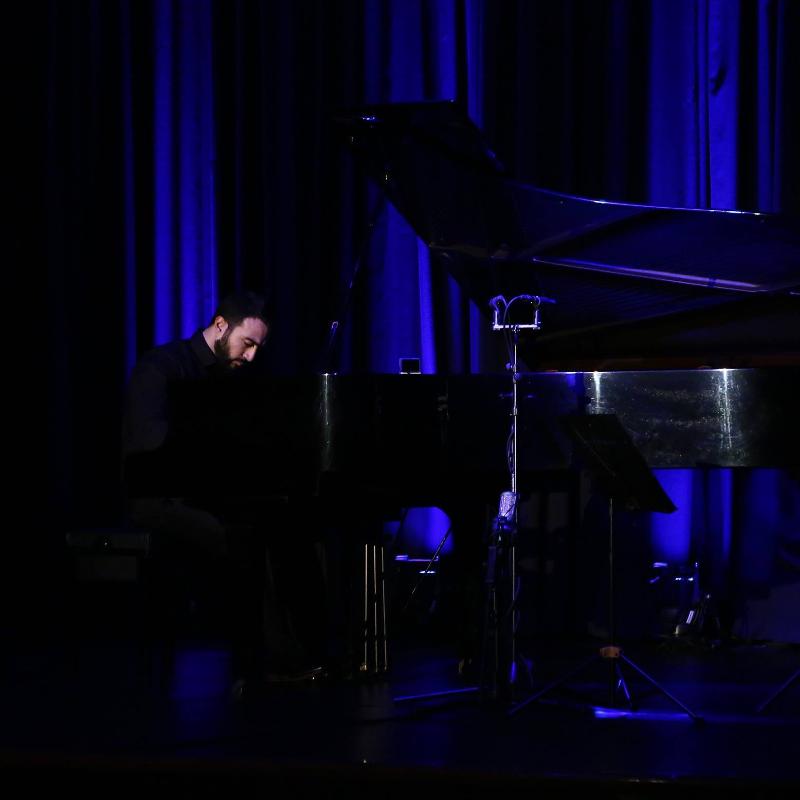
Elias Haddad

Blues
Classic Blues
 Viberate Rank: 357075
 Viberate Rank: 357075
 Monthly ListenersFollowers
 Subscribers
 Followers
 Followers
 FansTop Spotify Songs
| Track | 7-Day Streams | |
|---|---|---|
1 | 634 | |
2 | 413 | |
3 | 69 | |
4 | 59 | |
5 | 39 |
Top YouTube VideosMonthly ListenersFeatured in Playlists| Playlist | Followers | |
|---|---|---|
1 |  Movie Soundtracks & Cinematic Music (Classical & Instrumental) Tobias Schneider | 217.42K |
2 |  Reading Music (Instrumentals) Trevor Reeves | 123.98K |
3 |  Concentration (Piano, Classic & Instrumental) RÆV | 39.93K |
4 |  Classical Movie Soundtracks Dan Debnam | 28.09K |
5 | New Age Piano Top 100 Brian Crain | 23.25K |
Audience| City | Monthly Listeners | |
|---|---|---|
1 |  | 45 |
2 |  | 43 |
3 | | 42 |
4 | | 27 |
5 |  | 26 |
See full performance history, audience data, playlist activity, rankings, comparisons, and more in Viberate music analytics. Start with a free trial, then continue with a paid plan.
Elias Haddad’s Spotify BioElias Haddad is an award winning pianist, and composer. The instrumental music that he creates can be considered as progressive as he synthesizes and tries to build on influences from various musical styles ranging progressive rock/metal/jazz, classical romantic, impressionist, and minimalist music.
A stubborn classically trained piano student, Elias disliked taking piano lessons as a child but preferred improvising and playing the tunes that sing from within.
Elias moved away from music for many years during his late teens and early twenties, but the obsession with music came back later to completely take over his life. He later completed his Masters at the Royal Northern College of Music under the supervision of Professor Adam Gorb. He moved to Toronto to continue his D.M.A under the supervision of Professor Christos Hatzis at the University of Toronto.
His influences are numerous and from all kinds of musical worlds ranging from classical to progressive metal and jazz to modern day… minimalists like John Adams, Steve Reich, and Philip Glass. The wide range of influences along with the free will of Elias and his unwillingness to follow a certain set of rules or guidelines in creating music results in truly free sounding compositions.
Viberate is a music analytics platform built for A&Rs, artist managers, labels, booking agents, marketers, and artists.
It helps music professionals track artist growth, analyze audience data, monitor playlist activity, compare artists, follow song performance, and identify opportunities across the music market.
Public artist pages provide a free preview of selected artist data. Paid plans provide access to deeper analytics, historical data, charts, comparisons, playlist tools, exports, alerts, reports, and additional professional features.
Yes. Public Viberate artist pages provide selected artist analytics and music data for free.
Viberate also offers a 7-day free trial of the full platform. A credit card is required to start the trial. The trial includes access to the complete product so users can test deeper artist analytics, historical views, playlist insights, comparisons, charts, exports, alerts, and reporting features before choosing a paid plan.
Viberate provides artist analytics across streaming, playlists, social media, video, radio airplay, songs, and audience markets.
Users can analyze Spotify performance, Spotify and Apple Music playlists, YouTube activity, TikTok and Instagram growth, radio spins, song performance, audience locations, demographics, rankings, and overall artist momentum.
Artist profiles also connect to music charts, similar artists, and comparison tools, helping users benchmark performance and evaluate artists in context.
Viberate updates key artist and track data daily.
For followed artists and tracks, selected data is refreshed multiple times per day. This helps teams monitor playlist changes, streaming movement, audience growth, releases, and campaign performance with more current data.
Update frequency can vary depending on the metric and data source.
Yes. Viberate lets users compare up to five artists side by side across streaming, social media, audience, and engagement metrics.
Users can compare fanbase growth, audience demographics, locations, Spotify performance, social metrics, and other artist data over selected time periods.
Artist comparison can be used for A&R scouting, benchmarking, booking decisions, campaign planning, and evaluating artists with similar audiences or market positions.