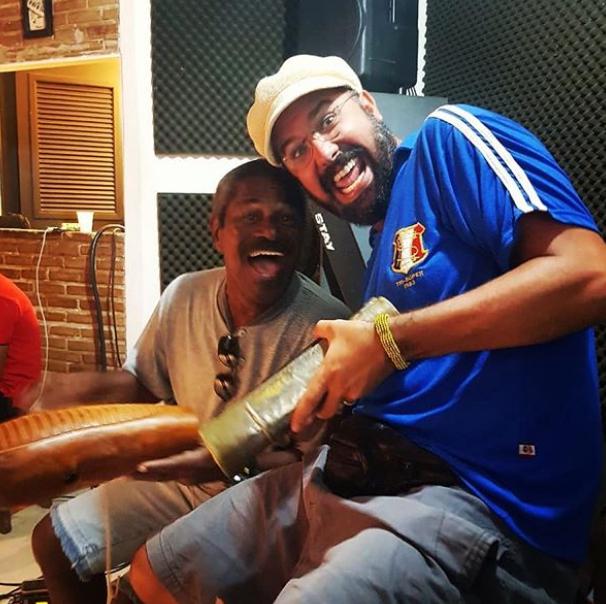
Edil Pacheco

Latin
Samba
 Viberate Rank: 418710
 Viberate Rank: 418710
 Monthly ListenersFollowers
 Subscribers
 Followers
 Followers
 FansTop Spotify Songs
| Track | 7-Day Streams | |
|---|---|---|
1 | 571 | |
2 | 77 | |
3 | 22 | |
4 | 18 | |
5 | 7 |
Top YouTube VideosMonthly ListenersFeatured in Playlists| Playlist | Followers | |
|---|---|---|
1 |  Grandes Clássicos do Samba Jorge Seraphim | 3.32K |
2 |  OCUPAÇÃO IBORU sinistro67 | 2.58K |
3 |  MARCELO D2 E UM PUNHADO DE BAMBA Antonele Valcareggi | 1.69K |
4 | +100 Ijexás camila casseano | 1.43K |
Audience| City | Monthly Listeners | |
|---|---|---|
1 | | 270 |
2 | | 230 |
3 | | 181 |
4 | | 58 |
5 | | 38 |
See full performance history, audience data, playlist activity, rankings, comparisons, and more in Viberate music analytics. Start with a free trial, then continue with a paid plan.
Edil Pacheco’s Spotify BioEdil Pacheco is a composer and performer faithfully dedicated to the best Bahian tradition. Writer of over 250 songs, he had a good deal of them recorded by Wilson Simonal, Luís Vieira, João Nogueira ("De Amor é Bom," "Se Segura Segurança"), Gilberto Gil ("Ojuabá"), Gal Costa ("Estamos Aí"), Alcione ("Araketu," "Luandê," "Lua Menina"), Fafá de Belém ("Siriê"), Clara Nunes ("Ijexá"), Margareth Menezes, Luís Caldas, Lazzo, Agepê ("Ilê Aiyê," "Forró em Cachoeira"), Baby do Brasil, Ederaldo Gentil, Beth Carvalho ("Encanto do Gantois"), Moraes Moreira, Elza Soares, the Trio Elétrico Dodô e Osmar, Virgínia Rodrigues, and others. His musical partners include Batatinha, Cid Seixas, Ederaldo Gentil, Paulo César Pinheiro, Moraes Moreira, Capinam, and Luís Melodia.
Of humble origins, he spent his childhood in his upcountry town and began to learn the violão in his teens. At 18, he moved to Salvador, where he studied at night and worked during the day at a bakery, later at a bank, and at a… transportation company. In 1963, Pacheco became acquainted with Moraes Moreira, Luis Galvão, Ederaldo Gentil, Celeste, Cid Seixas, and singer/composer Oscar da Penha, the Batatinha. The latter became his supporter and urged him to become a professional. In 1965, as an accompanist he played in the show Eu Sou, Tu és, Nós Somos: Gente, which included two of his songs. In 1969, he was advised by journalist Fernando Vita and the singer Eliana Pittman recorded his "Fim de Tarde" (with Luiz Galvão, later Os Novos Baianos) and "Passatempo" (with Batatinha/Cid Seixas). The latter song was censored by the military regimen. Jair Rodrigues recorded in 1970 "Alô Madrugada" (with Ederaldo Gentil) with national success. Participating in the weekly musical Improviso show (Teatro Vila Velha), was invited to write a song for the play A Morte de Quincas Berro D'Água. It yielded an album with five songs where Pacheco recorded as a singer for the first time. In July 1975, he and Batatinha and Ederaldo Gentil opened the show O Samba Nasceu na Bahia, which had local success. The first solo album, Pedras Afiadas, came in 1977. In 1984, he recorded Estamos Aí. In 1988, with all songs in partnership with Paulo César Pinheiro, he recorded Afros e Afoxés da Bahia (all through Polygram), a tribute to the Bahian blocos afro and afoxés, which garnered him several prizes. In 1985, Clara Nunes recorded with success his "Ijexá" and João Nogueira, "De Amor é Bom." Alcione recorded "Siriê" and "Lua Menina," and Luís Caldas recorded "Dengo." As a producer, he realized the CD Ederaldo Gentil -- Pérolas Finas, a tribute to the important Bahian samba composer, with interpreters Gilberto Gil, Beth Carvalho, Jair Rodrigues, Luís Melodia, Jussara Silveira, Elza Soares, Paulinho Boca de Cantor, and others. In 1996, he released Dom de passarinho. In July 2000, he developed the show O Samba Nasceu na Bahia, his solo album O samba me pegou with the Bahian samba in several styles, since the samba de roda of the region of the recôncavo until the samba arrasta-povo. He worked on the double CD 100 Anos de Música Baiana -- Do Lundu ao Axé, a research project with Paulinho Boca de Cantor telling Bahian music history since 19th century singer Xisto Bahia and going until Carlinhos Brown' Timbalada through important interpreters. ~ Alvaro Neder, Rovi
Viberate is a music analytics platform built for A&Rs, artist managers, labels, booking agents, marketers, and artists.
It helps music professionals track artist growth, analyze audience data, monitor playlist activity, compare artists, follow song performance, and identify opportunities across the music market.
Public artist pages provide a free preview of selected artist data. Paid plans provide access to deeper analytics, historical data, charts, comparisons, playlist tools, exports, alerts, reports, and additional professional features.
Yes. Public Viberate artist pages provide selected artist analytics and music data for free.
Viberate also offers a 7-day free trial of the full platform. A credit card is required to start the trial. The trial includes access to the complete product so users can test deeper artist analytics, historical views, playlist insights, comparisons, charts, exports, alerts, and reporting features before choosing a paid plan.
Viberate provides artist analytics across streaming, playlists, social media, video, radio airplay, songs, and audience markets.
Users can analyze Spotify performance, Spotify and Apple Music playlists, YouTube activity, TikTok and Instagram growth, radio spins, song performance, audience locations, demographics, rankings, and overall artist momentum.
Artist profiles also connect to music charts, similar artists, and comparison tools, helping users benchmark performance and evaluate artists in context.
Viberate updates key artist and track data daily.
For followed artists and tracks, selected data is refreshed multiple times per day. This helps teams monitor playlist changes, streaming movement, audience growth, releases, and campaign performance with more current data.
Update frequency can vary depending on the metric and data source.
Yes. Viberate lets users compare up to five artists side by side across streaming, social media, audience, and engagement metrics.
Users can compare fanbase growth, audience demographics, locations, Spotify performance, social metrics, and other artist data over selected time periods.
Artist comparison can be used for A&R scouting, benchmarking, booking decisions, campaign planning, and evaluating artists with similar audiences or market positions.