Edgar Winter

Blues
Blues Rock
Alternative Rock
 Viberate Rank: 52222
 Viberate Rank: 52222
 Monthly ListenersFollowers
 Subscribers
 Followers
 Followers
 FansTop Spotify Songs
| Track | 7-Day Streams | |
|---|---|---|
1 | 4.15K | |
2 | 1.84K | |
3 | 1.26K | |
4 | 1.23K | |
5 | 1.02K |
Top YouTube VideosMonthly ListenersFeatured in Playlists| Playlist | Followers | |
|---|---|---|
1 | Classic Rock Greatest Hits Scott Pruden | 341.38K |
2 |  Woodstock Spotify | 233.84K |
3 | Ethan Maxwell | 91.94K |
4 |  Boerderij van Dorst BNNVARA | 47.46K |
5 | Blues Classics StevieAnn | 35.56K |
Audience| City | Monthly Listeners | |
|---|---|---|
1 | | 7.55K |
2 | | 4.75K |
3 | | 4.66K |
4 | | 4.63K |
5 | | 4.21K |
See full performance history, audience data, playlist activity, rankings, comparisons, and more in Viberate music analytics. Start with a free trial, then continue with a paid plan.
Edgar Winter’s Spotify BioThe brother of Texas guitar legend Johnny Winter, Edgar Winter shared his sibling's love of the blues, but he never let that limit his musical world view. Edgar scored a massive hit single in 1972 with "Frankenstein," a hard rock instrumental from the Edgar Winter Group's album They Only Come Out at Night that became his signature, and as a bandleader and keyboard and sax player, he showed he was just as adept at jazz, funk, R&B, and progressive rock accents on LPs like Entrance (1970) and Edgar Winter's White Trash (1971). Edgar's strongest blues recordings were his collaborations with brother Johnny on Together – Live (1976) and Winter Blues (1999, with Johnny guesting along with Dr. John and Leon Russell), while he indulged his taste for smooth jazz with the science fiction-themed Mission Earth (1986) and the more conventional Jazzin' the Blues (2004). Edgar's time as a major rock star was relatively short, but his estimable instrumental skills made him a valued sideman (he spent… several years as part of Ringo Starr's All-Starr Band) and he always had a loyal fan following, with projects like the R&B-influenced rock of Rebel Road (2008), his collaboration with Toto guitarist Steve Lukather, The Odd Couple Live (2011), and his tribute to his late sibling, Brother Johnny (2022).
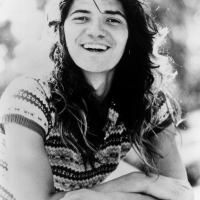
Edgar Winter was born in Beaumont, Texas on December 28, 1946, when his brother Johnny was almost three years old. Like his brother, Edgar was born with albinism, making them very recognizable with their pale skin and white hair. Their father played sax in a jazz combo and was an amateur vocalist, singing in a barbershop quartet and the choir at their church. Following his dad's example, Edgar developed a keen interest in music as a child, and when he was four years old, he appeared with Johnny on a local radio show, harmonizing with his brother as Johnny played ukulele. Edgar was something of a prodigy, and he taught himself to play keyboards, sax, bass, guitar, and percussion. As teenagers, the brothers played in a number of rock and R&B combos, including Johnny & the Jammers, the Black Plague, and the Crystaliers. By 1968, Johnny had put his focus on the blues, and in 1968, he cut an album for a small Texas label called The Progressive Blues Experiment. After Rolling Stone ran a piece on the Texas blues scene citing Johnny as a talent to watch, he suddenly had several major labels vying for his services, and after signing with Columbia Records, he enlisted his younger brother to join his band in the studio and on the road.
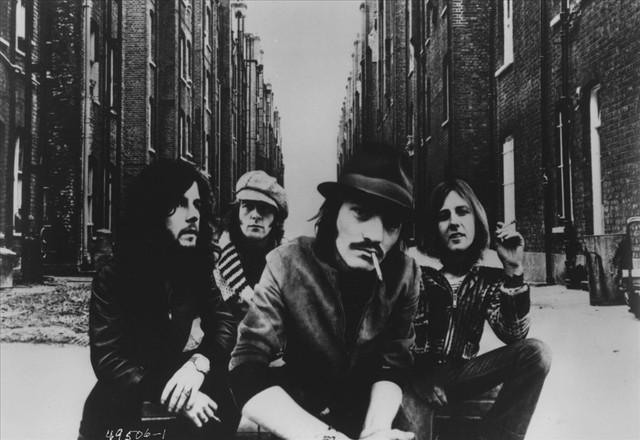
Edgar's work did not go unnoticed, and he landed his own solo contract with Columbia's sibling label, Epic. His debut album, 1970's Entrance, confirmed he was a major talent with a musical world view that encompassed jazz, R&B, and rock & roll, and the album featured a minor hit in his cover of J.D. Loudermilk's "Tobacco Road." Edgar next formed a road band with a horn section, White Trash, and he took them into the studio for his second LP, 1971's Edgar Winter's White Trash. a live album from the group, Roadwork, followed in 1972, and included a guest spot from Johnny, as well as guitar work from Rick Derringer. White Trash came apart following the Roadwork tour, though Edgar would reassemble the band for the 1977 album Recycled. With Dan Hartman (bass and guitar), Ronnie Montrose (guitar), and Chuck Ruff (drums and percussion), he formed the Edgar Winter Group, and their 1972 album They Only Come Out at Night was a major commercial success, spawning a pair of hit singles – "Frankenstein" and "Free Ride" – and selling over two million copies. The album also saw Edgar experimenting with synthesizers and their creative possibilities, and he devised a system where he could carry a keyboard controller around using a shoulder strap, much like a guitarist, allowing him free movement on-stage. The keyboard setup would become one of his trademarks, and was part of the shows he played in support of 1974's Shock Treatment, the second Edgar Winter Group album. The LP didn't feature a breakout hit, and didn't sell as well as its predecessor. The group teamed up with one-time White Trash guitarist Rick Derringer for 1975's The Edgar Winter Group with Rick Derringer. (Edgar would contribute to several of Derringer's albums in the '70s.) It was the final Edgar Winter Group LP and before the year was out, Edgar cut a jazz-oriented solo record, Jasmine Nightdreams, which was his first for the Sony-distributed Blue Sky label, which was also Johnny's recording home.
During his downtime from his own projects, Edgar often contributed keyboards to his brother's albums, and the two teamed up for a joint concert tour. 1976's Together – Live preserved highlights from the shows. After a short-lived White Trash reunion (which saw them play several opening dates on Lynyrd Skynyrd's doomed Street Survivors tour) and playing sax on Meat Loaf's breakthrough Bat Out of Hell album, Edgar reaffirmed himself as a solo artist with 1979's The Edgar Winter Album, and 1981's Standing on Rock included the songs "Star Garbage" and "Martians," where he began indulging his interest in science fiction themes. Standing on Rock closed out Edgar's contract with Blue Sky, and for the next several years his studio work was on sessions for other artists, including Michael McDonald (1982's If That's What It Takes), Nils Lofgren (1983's Wonderland), and David Lee Roth (1985's Crazy from the Heat). Edgar's next solo project was an unusual one -- 1985's Mission Earth was a sci-fi concept album, with all eight songs written by novelist and Scientology founder L. Ron Hubbard. More session work followed, with appearances on albums by Tina Turner (1989's Foreign Affair), Leon Russell (1992's Anything Can Happen), and, of course, Johnny Winter (1992's Hey Where's Your Brother?). 1994's Not a Kid Anymore was a rock- and R&B-oriented set that found Edgar back on familiar ground, and 1996's The Real Deal saw him collaborating with a roster of friends and fans, including Jeff "Skunk" Baxter, Jermaine Jackson, Ronnie Montrose, and Rick Derringer.
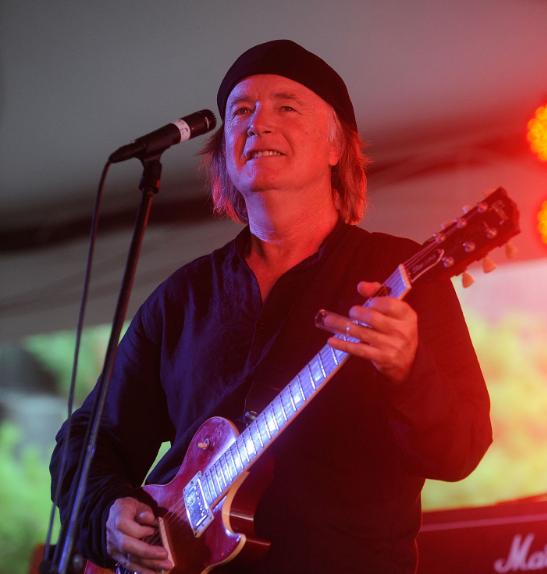
Winter's public profile got a boost when he appeared in a beer commercial that suggested he and the famously tan actor George Hamilton were twins, and it led to a new record deal with Rhino Records, which released Winter Blues in 1999. The following year, he contributed sax on Cinematix, a solo effort from Doors guitarist Robbie Kreiger. One of Edgar's White Trash tracks, "Dying to Live," gained a new life when a sample was featured in the song "Runnin' (Dying to Live)," a posthumous Tupac Shakur track produced by Eminem for the soundtrack to the 2003 documentary Tupac: Resurrection. Edgar's next solo effort was 2004's Jazzin' the Blues, with Robben Ford, Hiram Bullock, and Gregg Bissonette lending their talents. In 2006, he joined the ninth lineup of Ringo Starr and His All-Starr Band for touring, with his bandmates including Billy Squier, Sheila E., Rod Argent (of the Zombies), and Hamish Stuart (of the Average White Band). Edgar would stay in the group until 2011 and returned in 2022. Despite his All-Starr Band commitments, he found enough time in his schedule to complete 2006's The Better Deal, an "Edgar Winter and Friends" effort that included contributions from Todd Rundgren, as well as a cover of Pink Floyd's "Money." 2008's Rebel Road was a straightforward rock album that recalled Edgar's work of the '70s, he and Toto guitarist Steve Lukather brought out a live set in 2011, The Odd Couple Live, and in 2013 he popped up on Ponder the Mystery, a prog-influenced album from actor William Shatner. Touring commitments and session work occupied his time until he completed 2022's Brother Johnny, a tribute to his brother who had died in 2014. The LP featured a who's-who of blues talent including Joe Bonamassa, Kenny Wayne Shepherd, John McVie, Warren Haynes, and Bobby Rush, as well as Foo Fighters' drummer Taylor Hawkins and his sometimes-bandmate Ringo Starr. ~ Mark Deming, Rovi
Viberate is a music analytics platform built for A&Rs, artist managers, labels, booking agents, marketers, and artists.
It helps music professionals track artist growth, analyze audience data, monitor playlist activity, compare artists, follow song performance, and identify opportunities across the music market.
Public artist pages provide a free preview of selected artist data. Paid plans provide access to deeper analytics, historical data, charts, comparisons, playlist tools, exports, alerts, reports, and additional professional features.
Yes. Public Viberate artist pages provide selected artist analytics and music data for free.
Viberate also offers a 7-day free trial of the full platform. A credit card is required to start the trial. The trial includes access to the complete product so users can test deeper artist analytics, historical views, playlist insights, comparisons, charts, exports, alerts, and reporting features before choosing a paid plan.
Viberate provides artist analytics across streaming, playlists, social media, video, radio airplay, songs, and audience markets.
Users can analyze Spotify performance, Spotify and Apple Music playlists, YouTube activity, TikTok and Instagram growth, radio spins, song performance, audience locations, demographics, rankings, and overall artist momentum.
Artist profiles also connect to music charts, similar artists, and comparison tools, helping users benchmark performance and evaluate artists in context.
Viberate updates key artist and track data daily.
For followed artists and tracks, selected data is refreshed multiple times per day. This helps teams monitor playlist changes, streaming movement, audience growth, releases, and campaign performance with more current data.
Update frequency can vary depending on the metric and data source.
Yes. Viberate lets users compare up to five artists side by side across streaming, social media, audience, and engagement metrics.
Users can compare fanbase growth, audience demographics, locations, Spotify performance, social metrics, and other artist data over selected time periods.
Artist comparison can be used for A&R scouting, benchmarking, booking decisions, campaign planning, and evaluating artists with similar audiences or market positions.