Eddie Adcock

Country
Bluegrass
 Viberate Rank: 400942
 Viberate Rank: 400942
 Monthly ListenersFollowers
 Subscribers
 Followers
 Followers
 FansTop Spotify Songs
| Track | 7-Day Streams | |
|---|---|---|
1 | 438 | |
2 | 438 | |
3 | 438 | |
4 | 438 | |
5 | 330 |
Top YouTube VideosMonthly ListenersFeatured in Playlists| Playlist | Followers | |
|---|---|---|
1 | Hayden Eldridge | 13.26K |
2 | bluegrass classics Kingsley | 8.11K |
3 | Bluegrass 1258178990 | 7.83K |
4 |  Traditional Bluegrass Seneca Creek Bluegrass | 4.67K |
5 | CATTLEMAN’S | 4.10K |
Audience| City | Monthly Listeners | |
|---|---|---|
1 | | 67 |
2 | | 49 |
3 | | 49 |
4 |  | 45 |
5 | | 45 |
See full performance history, audience data, playlist activity, rankings, comparisons, and more in Viberate music analytics. Start with a free trial, then continue with a paid plan.
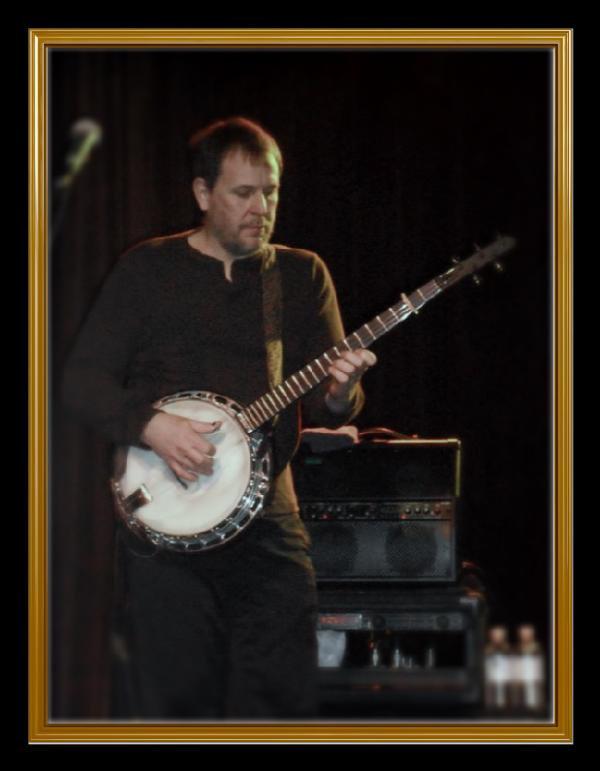
Eddie Adcock’s Spotify BioAmong the major-league talent emerging from the folk music boom of the late '50s were the Country Gentlemen, a D.C.-based quartet that introduced bluegrass to a generation of city folks and college students, people who had never heard of Flatt & Scruggs or Bill Monroe or the Stanley Brothers. The Gentlemen, in playing the old bluegrass standards but playing them "different," were in a sense the first newgrass group. Eddie Adcock was the band's banjo player and he was a player of distinction -- his style was as innovative as Don Reno's. Adcock's considerable talent spread to other stringed instruments when he left the Gentlemen in 1970 and began exploring new musical genres. For the next three decades, Eddie Adcock remained one of the most popular musicians in bluegrass.
Adcock was born and raised in Scottsville, VA. He bought his first banjo as child and began performing with his brother Frank shortly afterward. The duo would sing in local churches and radio stations based in the nearby… Charlottesville. In his teens, he played in a band called the James River Playboys and worked at a theater in his hometown, where he had the opportunity to see major country artists of the day, including Wilma Lee and Stoney Cooper. At the age of 14, he left home after a family crisis and supported himself through semi-professional boxing. For the next seven years, he boxed and played music at nights. A few years later, he began racing cars. As a racer, Adcock racked up 34 straight wins with his car, which he named Mr. Banjo; he also had set two track records at Manassas, VA. Not only did he box and race, he also performed various blue-collar jobs to pay the rent. All the time, he played music at night.
Eddie Adcock didn't begin his professional musical career until 1953, when he joined Smokey Graves & His Blue Star Boys, who had a regular show at a radio station in Crewe, VA. His exposure with Graves led to jobs with other musicians, including Mac Wiseman, Bill Harrell, and Buzz Busby. Between 1953 and 1957, he floated between different bands. Bill Monroe offered a job to Adcock in 1957, and he played with the Blue Grass Boys for a short time -- Monroe had to let him go because the band simply wasn't earning enough money to employ him. Adcock returned to working day jobs, but that was short-lived. After he started working in a sheet metal factory, Jim Cox, John Duffey, and Charlie Waller asked him to join their new band, the Country Gentlemen.
The Country Gentlemen became one of the most popular and respected bluegrass bands of the late '50s and '60s, as well as one of the most progressive. They expanded the repertoire of bluegrass bands to include contemporary country, folk, and rock songwriters, most notably Bob Dylan; usually they added this material at the urging of Adcock. The Country Gentlemen rode to popularity in the late '50s as part of the folk boom and continued to be one of the most popular bluegrass/folk bands in the country throughout the '60s.
At the end of the '60s, Adcock began to feel constrained by the Country Gentlemen. He wanted to experiment with different musical genres, which he felt the band wasn't willing to do. Consequently, he quit the Gentlemen and moved to California, where he formed a country-rock band called the Clinton Special. While he performed with the group he used the pseudonym Clinton Codack. The band recorded only one single, "Just as You Are I Love You"/"Blackberry Fence," which was released on MGM Records; the A-side of the single was featured in the 1971 film The Horsemen.
After the Clinton Special fell apart, Adcock headed back east, where he formed another group, II Generation with Bob White, A.L. Wood, Wendy Thatcher, and Jimmy Gaudreau, who used to play with the Country Gentlemen. II Generation's lineup changed frequently during the '70s, but it gelled around 1974 when Martha Hearon joined the group. Hearon played guitar for the band and wrote a good share of its material; she also married Adcock soon after she joined. II Generation was active throughout the '70, releasing a handful of albums on the Rome, Rebel, and CMH labels.
Adcock and Hearon disbanded the group in 1980 and moved to Tennessee, where they formed a trio called Talk of the Town with bassist Missy Raines. In the mid-'80s, Adcock launched a solo career, releasing a series of cassette-only collections on CMH. In the '90s, he began releasing albums on compact disc, as well as performing with an all-star bluegrass outfit called the Masters. After nearly 40 years in the music business, Eddie Adcock remained as popular as he ever was, touring all around the world. ~ Stephen Thomas Erlewine & David Vinopal, Rovi
Viberate is a music analytics platform built for A&Rs, artist managers, labels, booking agents, marketers, and artists.
It helps music professionals track artist growth, analyze audience data, monitor playlist activity, compare artists, follow song performance, and identify opportunities across the music market.
Public artist pages provide a free preview of selected artist data. Paid plans provide access to deeper analytics, historical data, charts, comparisons, playlist tools, exports, alerts, reports, and additional professional features.
Yes. Public Viberate artist pages provide selected artist analytics and music data for free.
Viberate also offers a 7-day free trial of the full platform. A credit card is required to start the trial. The trial includes access to the complete product so users can test deeper artist analytics, historical views, playlist insights, comparisons, charts, exports, alerts, and reporting features before choosing a paid plan.
Viberate provides artist analytics across streaming, playlists, social media, video, radio airplay, songs, and audience markets.
Users can analyze Spotify performance, Spotify and Apple Music playlists, YouTube activity, TikTok and Instagram growth, radio spins, song performance, audience locations, demographics, rankings, and overall artist momentum.
Artist profiles also connect to music charts, similar artists, and comparison tools, helping users benchmark performance and evaluate artists in context.
Viberate updates key artist and track data daily.
For followed artists and tracks, selected data is refreshed multiple times per day. This helps teams monitor playlist changes, streaming movement, audience growth, releases, and campaign performance with more current data.
Update frequency can vary depending on the metric and data source.
Yes. Viberate lets users compare up to five artists side by side across streaming, social media, audience, and engagement metrics.
Users can compare fanbase growth, audience demographics, locations, Spotify performance, social metrics, and other artist data over selected time periods.
Artist comparison can be used for A&R scouting, benchmarking, booking decisions, campaign planning, and evaluating artists with similar audiences or market positions.