Easy Action

Rock
Hard Rock
Pop Rock
 Viberate Rank: 333807
 Viberate Rank: 333807
 Monthly ListenersFollowers
 Subscribers
 Followers
 Followers
 FansTop Spotify Songs
| Track | 7-Day Streams | |
|---|---|---|
1 | 361 | |
2 | 180 | |
3 | 117 | |
4 | 89 | |
5 | 80 |
Top YouTube Videos| Video | 7-Day Views | |
|---|---|---|
1 | 150 |
Monthly ListenersFeatured in Playlists| Playlist | Followers | |
|---|---|---|
1 | Så mycket bättre 2024 – Låtarna & Originalen Filtr Sweden | 10.74K |
2 | AOR / Melodic Rock Magnus Olsson | 6.17K |
3 |  Sweden Rock Festival 5-8 June 2019 Sweden Rock Festival | 3.99K |
4 |  Track Of The Day Rocknytt | 3.22K |
5 |  AOR / Melodic Rock / Westcoast - The Ultimate Collection Rocknytt | 1.61K |
Audience| City | Monthly Listeners | |
|---|---|---|
1 | | 326 |
2 | | 169 |
3 | | 91 |
4 |  | 46 |
5 | | 37 |
See full performance history, audience data, playlist activity, rankings, comparisons, and more in Viberate music analytics. Start with a free trial, then continue with a paid plan.
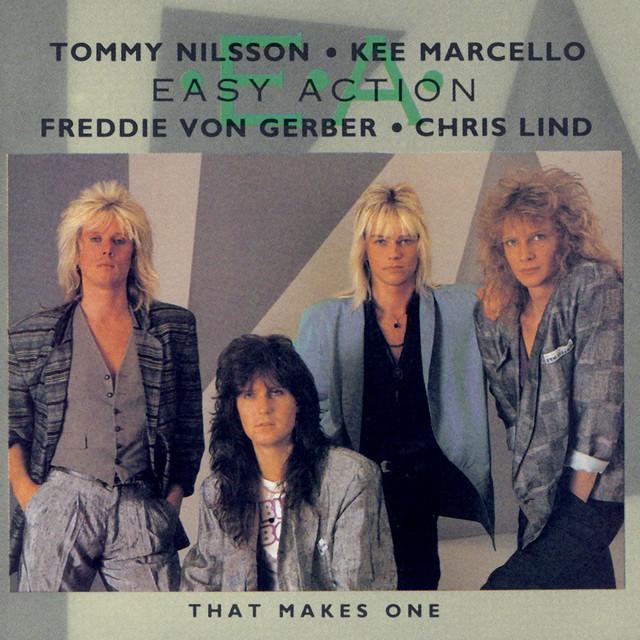
Easy Action’s Spotify BioSwedish hard rock act Easy Action formed in the early 80s, with the original line-up comprising Zinny J. Zan (b. Bo Stagman, Sweden; vocals), Kee Marcello (b. Kjell Hilding Lövbom, 20 February 1960, Ludvika, Sweden; guitar), Danny Wilde (guitar), Alex Tyrone (b. Peo Thyren; bass), and Freddie Von Gerber (drums). They made their recording debut in 1983 with a powerful self-titled collection that predominantly looked to US radio rock for its inspiration. The album came to the attention of Sire Records and was re-released the following year with a new cover and slightly altered tracklisting, and with Wilde replaced by Chris Lynn (b. Christoffer Lind, Sweden) in the credits. However, the band was dropped by Sire because of disappointing sales, and they moved to the independent KGR Records with Tommy Nilsson (b. 11 March 1960, Sweden) brought in as a replacement for the departing Zan and Tyrone. That Makes One (1986) saw them adopt more contemporary elements such as the ‘sleaze rock’ of… Hanoi Rocks, but overall, the record failed to gel as effectively as their debut. When Marcello left the band to join platinum-sellers Europe, Easy Action foundered. Marcello and Zan revived the band in 2006, playing a number of live festivals and returning to the studio to record a new album.
Viberate is a music analytics platform built for A&Rs, artist managers, labels, booking agents, marketers, and artists.
It helps music professionals track artist growth, analyze audience data, monitor playlist activity, compare artists, follow song performance, and identify opportunities across the music market.
Public artist pages provide a free preview of selected artist data. Paid plans provide access to deeper analytics, historical data, charts, comparisons, playlist tools, exports, alerts, reports, and additional professional features.
Yes. Public Viberate artist pages provide selected artist analytics and music data for free.
Viberate also offers a 7-day free trial of the full platform. A credit card is required to start the trial. The trial includes access to the complete product so users can test deeper artist analytics, historical views, playlist insights, comparisons, charts, exports, alerts, and reporting features before choosing a paid plan.
Viberate provides artist analytics across streaming, playlists, social media, video, radio airplay, songs, and audience markets.
Users can analyze Spotify performance, Spotify and Apple Music playlists, YouTube activity, TikTok and Instagram growth, radio spins, song performance, audience locations, demographics, rankings, and overall artist momentum.
Artist profiles also connect to music charts, similar artists, and comparison tools, helping users benchmark performance and evaluate artists in context.
Viberate updates key artist and track data daily.
For followed artists and tracks, selected data is refreshed multiple times per day. This helps teams monitor playlist changes, streaming movement, audience growth, releases, and campaign performance with more current data.
Update frequency can vary depending on the metric and data source.
Yes. Viberate lets users compare up to five artists side by side across streaming, social media, audience, and engagement metrics.
Users can compare fanbase growth, audience demographics, locations, Spotify performance, social metrics, and other artist data over selected time periods.
Artist comparison can be used for A&R scouting, benchmarking, booking decisions, campaign planning, and evaluating artists with similar audiences or market positions.