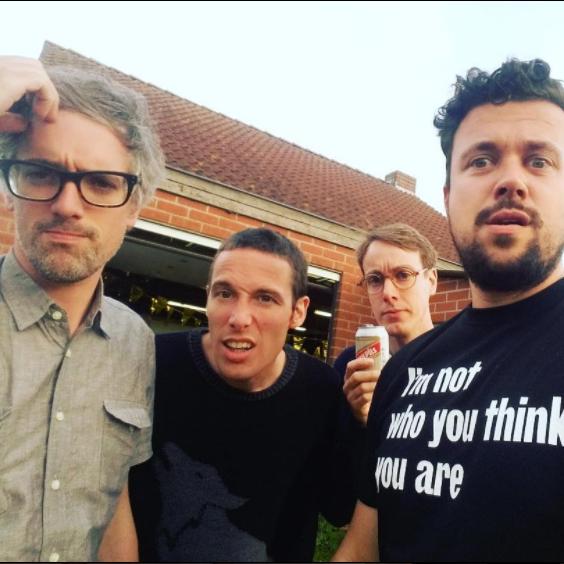
Dragon Rapide

Rock
Indie Rock
Power Pop
 Viberate Rank: 579943
 Viberate Rank: 579943
 Monthly ListenersFollowers
 Subscribers
 Followers
 Followers
 FansTop Spotify Songs
| Track | 7-Day Streams | |
|---|---|---|
1 | 2 | |
2 | 1 | |
3 | 1 | |
4 | 1 | |
5 | 1 |
Top YouTube VideosMonthly ListenersFeatured in PlaylistsAudience| City | Monthly Listeners | |
|---|---|---|
1 | | 3 |
See full performance history, audience data, playlist activity, rankings, comparisons, and more in Viberate music analytics. Start with a free trial, then continue with a paid plan.
Dragon Rapide’s Spotify BioLet’s cut to the chase, for a change. What do you want from a real rock band? First: style. Second: sound. Third: songs. In no particular order. The rest, my friends, is irrelevant, three sheets to the wind, cold fish and such, nothing but a lame reason for hanging around at the bar. Meanwhile, on stage, Dragon Rapide give it the works. With the tension, the electrifying tension, the high voltage of the trio, of friction, stripped down to the bone. When there’s only three of you, you’re not allowed to go wrong, to take some downtime, to slow down.
They’ve understood it perfectly: Sylvain (guitar/vocals), Jimmy (bass), and POG (drums). They’ve understood it because they’ve learnt, to the point of sweating blood, and even worse, on every (every!) possible stage, from the least likely to the most prestigious. They just got a bit tighter, that’s all. In Clermont-Ferrand, where that kind of lesson is quickly learnt, Dragon Rapide grew, here and there, thankfully in a cellar, but also under… the sun, when the most naked pop quickly takes bright red colours, and even peels a little. The Dragon drank the very substance in one gulp, the one that still gives handsome erections, so as to write the logical follow-up to the great works of Nada Surf, Teenage Fan Club, Travis and other independent rock heroes of the last century, when people knew how to write guitar songs and to shimmy to driving rhythms. However, the mix is subtle...
Hervé Deffontis (translate: Suzy Borello)
Viberate is a music analytics platform built for A&Rs, artist managers, labels, booking agents, marketers, and artists.
It helps music professionals track artist growth, analyze audience data, monitor playlist activity, compare artists, follow song performance, and identify opportunities across the music market.
Public artist pages provide a free preview of selected artist data. Paid plans provide access to deeper analytics, historical data, charts, comparisons, playlist tools, exports, alerts, reports, and additional professional features.
Yes. Public Viberate artist pages provide selected artist analytics and music data for free.
Viberate also offers a 7-day free trial of the full platform. A credit card is required to start the trial. The trial includes access to the complete product so users can test deeper artist analytics, historical views, playlist insights, comparisons, charts, exports, alerts, and reporting features before choosing a paid plan.
Viberate provides artist analytics across streaming, playlists, social media, video, radio airplay, songs, and audience markets.
Users can analyze Spotify performance, Spotify and Apple Music playlists, YouTube activity, TikTok and Instagram growth, radio spins, song performance, audience locations, demographics, rankings, and overall artist momentum.
Artist profiles also connect to music charts, similar artists, and comparison tools, helping users benchmark performance and evaluate artists in context.
Viberate updates key artist and track data daily.
For followed artists and tracks, selected data is refreshed multiple times per day. This helps teams monitor playlist changes, streaming movement, audience growth, releases, and campaign performance with more current data.
Update frequency can vary depending on the metric and data source.
Yes. Viberate lets users compare up to five artists side by side across streaming, social media, audience, and engagement metrics.
Users can compare fanbase growth, audience demographics, locations, Spotify performance, social metrics, and other artist data over selected time periods.
Artist comparison can be used for A&R scouting, benchmarking, booking decisions, campaign planning, and evaluating artists with similar audiences or market positions.