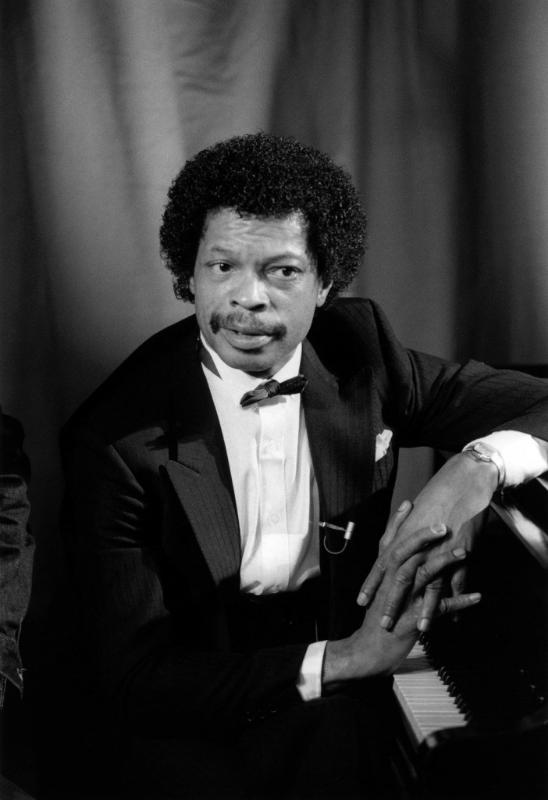
Don Pullen

Jazz
Bebop
Free Jazz
 Viberate Rank: 242895
 Viberate Rank: 242895
 Monthly ListenersFollowers
 Subscribers
 Followers
 Followers
 FansTop Spotify Songs
| Track | 7-Day Streams | |
|---|---|---|
1 | 745 | |
2 | 287 | |
3 | 212 | |
4 | 97 | |
5 | 92 |
Top YouTube VideosMonthly ListenersFeatured in Playlists| Playlist | Followers | |
|---|---|---|
1 |  Blue Note: The Finest In Jazz Since 1939 Blue Note Records | 48.76K |
2 |  Everything Jazz EVERYTHING JAZZ | 35.31K |
3 |  We Are Who We Are | Official HBO | 16.50K |
4 |  Phish Walk-In & Setbreak Music - PART I juliamordaunt | 14.28K |
5 |  SOULECTION TRACKLIST (Updated Regularly) joeyorjohn | 13.40K |
Audience| City | Monthly Listeners | |
|---|---|---|
1 |  | 118 |
2 |  | 105 |
3 | | 70 |
4 |  | 69 |
5 |  | 63 |
See full performance history, audience data, playlist activity, rankings, comparisons, and more in Viberate music analytics. Start with a free trial, then continue with a paid plan.
Don Pullen’s Spotify BioDon Pullen developed a surprisingly accessible way of performing avant-garde jazz. Although he could be quite free harmonically, with dense, dissonant chords, Pullen also utilized catchy rhythms, so even his freest flights generally had a handle for listeners to hang on to. The combination of freedom and rhythm gave him his own unique musical personality.
Pullen, who came from a musical family, studied with Muhal Richard Abrams (with whom he played in the Experimental Band) and, in 1964, made his recording debut with Giuseppi Logan. In the 1960s, he recorded free duets with Milford Graves, led his own bands, and played organ with R&B groups, backing Big Maybelle and Ruth Brown, among others. Although he worked with Nina Simone (1970-1971) and Art Blakey's Jazz Messengers (1974), Pullen became famous as the pianist with Charles Mingus' last great group (1973-1975). From 1979-1988, he co-led a notable inside/outside quartet with tenor saxophonist George Adams that was in some ways an… extension of Mingus' band. In later years, Pullen led his African-Brazilian Connection and recorded with Kip Hanrahan, Roots, John Scofield, David Murray, Mingus Dynasty, and Jane Bunnett, among others. His last project found the always searching pianist seeking to fuse jazz with traditional Native American music. Although his life was too short, Don Pullen fortunately did make a fair amount of recordings as a leader, including for Sackville (1974), Horo, Black Saint, Atlantic (his funky "Big Alice" became a near-standard), and Blue Note. ~ Scott Yanow, Rovi
Viberate is a music analytics platform built for A&Rs, artist managers, labels, booking agents, marketers, and artists.
It helps music professionals track artist growth, analyze audience data, monitor playlist activity, compare artists, follow song performance, and identify opportunities across the music market.
Public artist pages provide a free preview of selected artist data. Paid plans provide access to deeper analytics, historical data, charts, comparisons, playlist tools, exports, alerts, reports, and additional professional features.
Yes. Public Viberate artist pages provide selected artist analytics and music data for free.
Viberate also offers a 7-day free trial of the full platform. A credit card is required to start the trial. The trial includes access to the complete product so users can test deeper artist analytics, historical views, playlist insights, comparisons, charts, exports, alerts, and reporting features before choosing a paid plan.
Viberate provides artist analytics across streaming, playlists, social media, video, radio airplay, songs, and audience markets.
Users can analyze Spotify performance, Spotify and Apple Music playlists, YouTube activity, TikTok and Instagram growth, radio spins, song performance, audience locations, demographics, rankings, and overall artist momentum.
Artist profiles also connect to music charts, similar artists, and comparison tools, helping users benchmark performance and evaluate artists in context.
Viberate updates key artist and track data daily.
For followed artists and tracks, selected data is refreshed multiple times per day. This helps teams monitor playlist changes, streaming movement, audience growth, releases, and campaign performance with more current data.
Update frequency can vary depending on the metric and data source.
Yes. Viberate lets users compare up to five artists side by side across streaming, social media, audience, and engagement metrics.
Users can compare fanbase growth, audience demographics, locations, Spotify performance, social metrics, and other artist data over selected time periods.
Artist comparison can be used for A&R scouting, benchmarking, booking decisions, campaign planning, and evaluating artists with similar audiences or market positions.