Dobrinka Tabakova

Classical
Classical Crossover
 Viberate Rank: 276430
 Viberate Rank: 276430
 Monthly ListenersFollowers
 Subscribers
 Followers
 Followers
 FansTop Spotify Songs
| Track | 7-Day Streams | |
|---|---|---|
1 | 5.83K | |
2 | 2.70K | |
3 | 1.83K | |
4 | 1.70K | |
5 | 1.70K |
Top YouTube VideosMonthly ListenersFeatured in Playlists| Playlist | Followers | |
|---|---|---|
1 |  Best Classical Music Peaceful Classics | 857.63K |
2 |  Choir Classics Spotify | 302.05K |
3 |  Classical Music to Boost Your Brain Power 🎹🧠🎻 LunaMusicRadio | 86.22K |
4 |  VIOLONCELLO Barko | 37.73K |
5 |  Creative flow music /painting /sketching / drawing / writing Doorway Music | 28.55K |
Audience| City | Monthly Listeners | |
|---|---|---|
1 | | 874 |
2 |  | 513 |
3 |  | 477 |
4 | | 465 |
5 |  | 429 |
See full performance history, audience data, playlist activity, rankings, comparisons, and more in Viberate music analytics. Start with a free trial, then continue with a paid plan.
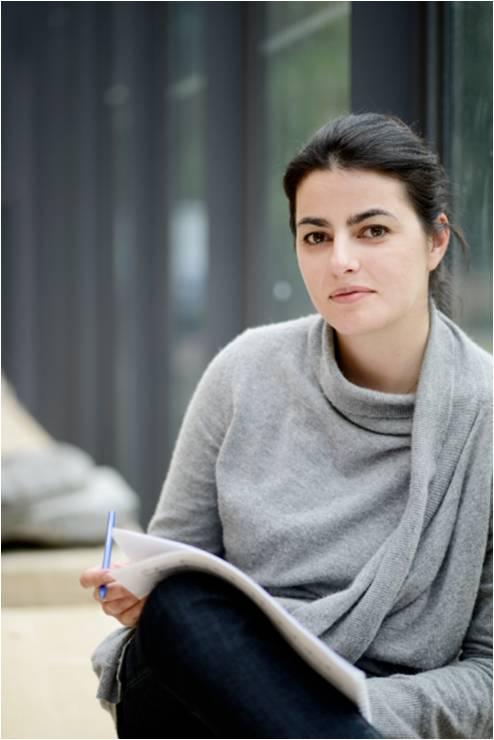
Dobrinka Tabakova’s Spotify BioComposer Dobrinka Tabakova won her first award for composition when she was just 14. Now, she receives commissions from top musicians and ensembles.
Tabakova was born in Plovdiv, Bulgaria, in 1980. Her parents were both medical physicists. In 1991, she moved to London and enrolled at Alleyn's School in London. She went on to the Junior Department of the Royal Academy of Music, and when she was 14, one of her compositions won the Jean-Frederic Perrenoud Prize of the Fourth International Competition of Music in Vienna. Tabakova won several more prizes as a student at London's Guildhall School of Music and Drama (the Lutosławski Composition Prize in 1999) and then King's College, London (the Adam Prize for Sonnets to Sundry Notes of Music in 2007), where she earned a PhD. She rounded out her education with summer courses in Paris, Prague, and Milan. Tabakova's principal composition teachers were Simon Bainbridge, Andrew Schultz, and Diana Burrell; she also took master classes with John… Adams, Iannis Xenakis, and Louis Andriessen, among others. An early breakthrough came when one of her anthems, Praise, was performed at the Golden Jubilee ceremonies for Queen Elizabeth II in 2002. Her compositions began to appear on recordings on such labels as Avie, BIS, and Hyperion, and in 2013, ECM released an album, String Paths, devoted entirely to her music. Another laurel came her way in 2011 when she won the first prize and medal of the Sorel Organization's choral competition in New York.
Tabakova's music is eclectic, drawing variously on minimalism, Renaissance and Baroque styles, and Bulgarian folk music. Among the organizations from which she has received commissions are the Royal Philharmonic Society, BBC Radio 3, and the Three Choirs Festival, and she has worked with various orchestras in Britain and beyond, including the Academy of St. Martin in the Fields, the Kammerorchester des Bayerischen Rundfunks, the Orchestra of the Swan, and the BBC National Orchestra of Wales. Her works have been performed at festivals around Britain, the U.S., and continental Europe, including Bulgaria and Russia. She has held high-profile residencies at the Utrecht International Chamber Music Festival, the Kremerata Baltica Festival in Latvia, and the Lockenhaus Chamber Music Festival in Austria. Tabakova has continued to garner awards; her Swarm Fanfares for youth orchestra received an Ivor Novello Award nomination at the Ivors Classical Awards. By that time, more than 25 of her compositions -- mostly orchestral works, choral pieces, and chamber music -- had been recorded. ~ James Manheim, Rovi
Viberate is a music analytics platform built for A&Rs, artist managers, labels, booking agents, marketers, and artists.
It helps music professionals track artist growth, analyze audience data, monitor playlist activity, compare artists, follow song performance, and identify opportunities across the music market.
Public artist pages provide a free preview of selected artist data. Paid plans provide access to deeper analytics, historical data, charts, comparisons, playlist tools, exports, alerts, reports, and additional professional features.
Yes. Public Viberate artist pages provide selected artist analytics and music data for free.
Viberate also offers a 7-day free trial of the full platform. A credit card is required to start the trial. The trial includes access to the complete product so users can test deeper artist analytics, historical views, playlist insights, comparisons, charts, exports, alerts, and reporting features before choosing a paid plan.
Viberate provides artist analytics across streaming, playlists, social media, video, radio airplay, songs, and audience markets.
Users can analyze Spotify performance, Spotify and Apple Music playlists, YouTube activity, TikTok and Instagram growth, radio spins, song performance, audience locations, demographics, rankings, and overall artist momentum.
Artist profiles also connect to music charts, similar artists, and comparison tools, helping users benchmark performance and evaluate artists in context.
Viberate updates key artist and track data daily.
For followed artists and tracks, selected data is refreshed multiple times per day. This helps teams monitor playlist changes, streaming movement, audience growth, releases, and campaign performance with more current data.
Update frequency can vary depending on the metric and data source.
Yes. Viberate lets users compare up to five artists side by side across streaming, social media, audience, and engagement metrics.
Users can compare fanbase growth, audience demographics, locations, Spotify performance, social metrics, and other artist data over selected time periods.
Artist comparison can be used for A&R scouting, benchmarking, booking decisions, campaign planning, and evaluating artists with similar audiences or market positions.