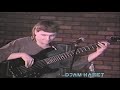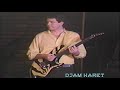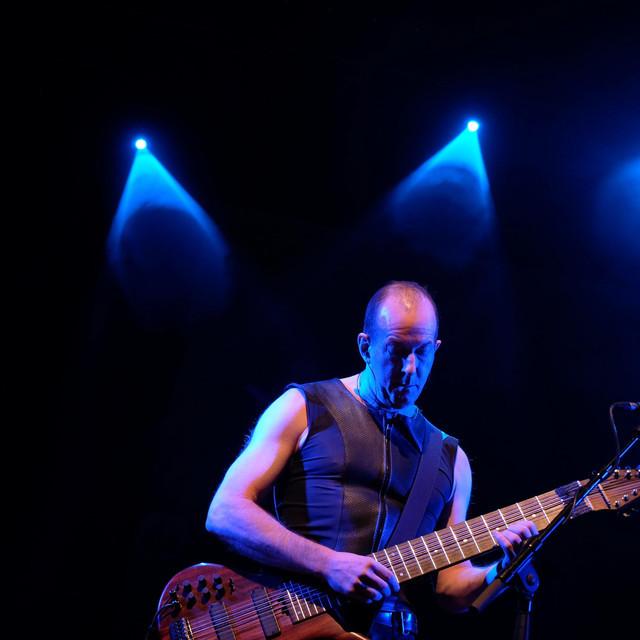
Djam Karet

Rock
Progressive Rock
 Viberate Rank: 518087
 Viberate Rank: 518087
 Monthly ListenersFollowers
 Subscribers
 Followers
 Followers
 FansTop Spotify Songs
| Track | 7-Day Streams | |
|---|---|---|
1 | 18 | |
2 | 16 | |
3 | 11 | |
4 | 11 | |
5 | 8 |
Top YouTube VideosMonthly ListenersFeatured in Playlists| Playlist | Followers | |
|---|---|---|
1 | Jazz Fusion, Progressive Rock, & Jam Bands Curator Seedpicker | 7.16K |
2 | Rock Progresivo Jota Bueno | 4.73K |
3 |  Prog Rock: Wondrous Stories - a 57 year Chronology of Prog classics & obscure gems. rwilliamson.family | 1.15K |
Audience| City | Monthly Listeners | |
|---|---|---|
1 |  | 10 |
2 |  | 5 |
3 | | 3 |
4 | | 3 |
5 | | 3 |
See full performance history, audience data, playlist activity, rankings, comparisons, and more in Viberate music analytics. Start with a free trial, then continue with a paid plan.
Djam Karet’s Spotify BioDjam Karet is an all instrumental progressive rock, proto-jam band. As evidenced by their sizable catalog of recordings, whose varied sounds and compositions owe to early prog bands such as King Crimson, Soft Machine, and Pink Floyd, and jam rockers the Grateful Dead, they also hold several traits in common with peer explorers Porcupine Tree and Ozric Tentacles. Founded in 1984 in the Los Angeles area, the group's "trademark" sound is characterized by a shapeshifting meld of blistering guitar solos, ambient and atmospheric sonic passages, organic and electronic drums, and prodigious use of old-school prog rock keyboards alongside postmodern sampling technologies. But their complex aesthetic also weaves new age, jazz, and global fusion, hard rock, and metal, mutant blues, and even surf into an ever-evolving mix. Simultaneously released in 1991, Burning the Hard City and Suspension & Displacement won them accolades as one of the more important prog bands of the era. After signing with Cu…neiform in 1997, Djam Karet only increased their productivity in the studio and on the road internationally, releasing breakthrough albums such as 2003's A Night for Baku, and 2010's The Heavy Soul Sessions, which showcased an increased and forward-thinking use of electronica.
Djam Karet were formed in 1984 in Los Angeles, California by a group of musicians who wanted to play improvisational rock music: Gayle Ellett (guitar), Mike Henderson (guitar), Chuck Oken, Jr. (drums), and Henry Osborne (bass). Although the band never lost interest in instrumental progressive rock, they would later expand and experiment with droning ambient music that was years ahead of the explosion of similar styles in the late '90s. The group returned to their unique brand of atmospheric progressive rock in the late '90s, and by the end of the decade were among the most respected modern progressive acts.
Djam Karet began their career by playing various art openings and Los Angeles-area colleges, mixing instrumental rock with Eastern drone influences. Their first record, the cassette-only No Commercial Potential, was released in 1985 and was completely improvised and recorded without overdubs. After spending a period working on musical concepts in 1986, the band returned to live gigging, adding various synthesizers to their sound. The 1987 live album The Ritual Continues brought the band more recognition, but it was 1989's Reflections from the Firepool that brought them into the spotlight. The record found Djam Karet embracing studio technology and utilizing overdubs for the first time in their career, while exploring both progressive and ambient music. Released on CD, the eclectic record garnered several good reviews, including being named the number two Independent Album of the Year by Rolling Stone.
The all-instrumental Burning the Hard City (1991) was a darker album, at times psychedelic, heavy, and jazzy. It was released at the same time as Suspension & Displacement, which was an experimental all-ambient record. Released in 1994, the haunting Collaborator found Ellett and Osborne completing musical sketches sent to them by various electronic musicians. The band returned to their progressive rock instrumental roots with 1997's The Devouring. The following tour was captured on Live at Orion in 1999, a year that also saw the release of the limited-edition Still No Commercial Potential, a completely improvised record in the manner of their first release.
Djam Karet showed a remarkable amount of activity at the beginning of the next decade, releasing two new progressive rock albums in 2001: New Dark Age and the more accessible and ethnically influenced Ascension. The group has also scored music for television programs on ESPN and ABC, as well as various infomercials and radio commercials. Arriving in 2003, the more keyboard-oriented A Night for Baku served as the introduction for new bandmember Aaron Kenyon on bass and also featured an appearance from Steve Roach. Two years later, Djam Karet returned with Recollection Harvest, a double album whose first disc focused on fairly dense, jazzy melodicism while the second offered a more textured acoustic approach.
Adding new guitarist Mike Murray to the mix (allowing Ellett to focus almost exclusively on keyboards) for a 2009 headlining set at the Crescendo Festival in Bordeaux, the group returned to the States to employ this expanded lineup in the studio, resulting in 2010's The Heavy Soul Sessions. Once again reverting to their live, no-overdubs method, these sessions were also notable for using no compressors or limiters to augment the band's sound. Released in 2013, The Trip contained a single lengthy track of spacy, psych-oriented rock. With 2014's Regenerator 3017, Djam Karet celebrated their 30th anniversary as a band, offering a set with a decidedly vintage, classic prog sound. Released in 2017, the evocative Sonic Celluloid was based on the concept of "sound as cinema," with each of the ten tracks acting as its own miniature film soundtrack. ~ Geoff Orens, Rovi
Viberate is a music analytics platform built for A&Rs, artist managers, labels, booking agents, marketers, and artists.
It helps music professionals track artist growth, analyze audience data, monitor playlist activity, compare artists, follow song performance, and identify opportunities across the music market.
Public artist pages provide a free preview of selected artist data. Paid plans provide access to deeper analytics, historical data, charts, comparisons, playlist tools, exports, alerts, reports, and additional professional features.
Yes. Public Viberate artist pages provide selected artist analytics and music data for free.
Viberate also offers a 7-day free trial of the full platform. A credit card is required to start the trial. The trial includes access to the complete product so users can test deeper artist analytics, historical views, playlist insights, comparisons, charts, exports, alerts, and reporting features before choosing a paid plan.
Viberate provides artist analytics across streaming, playlists, social media, video, radio airplay, songs, and audience markets.
Users can analyze Spotify performance, Spotify and Apple Music playlists, YouTube activity, TikTok and Instagram growth, radio spins, song performance, audience locations, demographics, rankings, and overall artist momentum.
Artist profiles also connect to music charts, similar artists, and comparison tools, helping users benchmark performance and evaluate artists in context.
Viberate updates key artist and track data daily.
For followed artists and tracks, selected data is refreshed multiple times per day. This helps teams monitor playlist changes, streaming movement, audience growth, releases, and campaign performance with more current data.
Update frequency can vary depending on the metric and data source.
Yes. Viberate lets users compare up to five artists side by side across streaming, social media, audience, and engagement metrics.
Users can compare fanbase growth, audience demographics, locations, Spotify performance, social metrics, and other artist data over selected time periods.
Artist comparison can be used for A&R scouting, benchmarking, booking decisions, campaign planning, and evaluating artists with similar audiences or market positions.