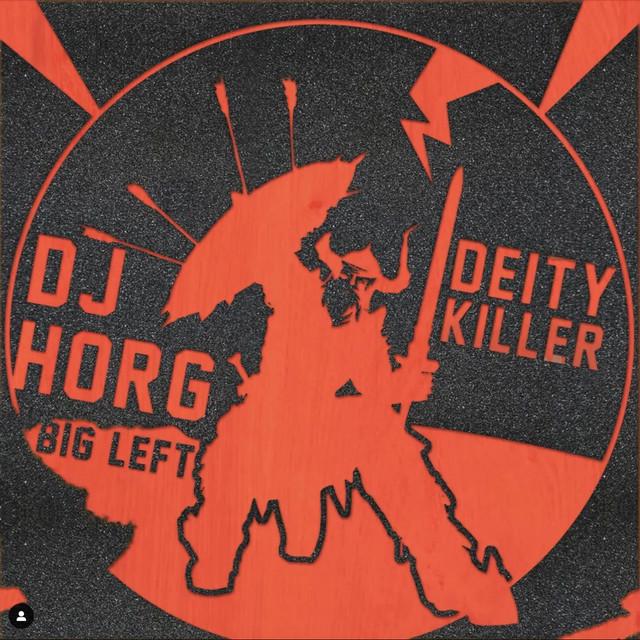
DJ Horg

Hip Hop
Contemporary Hip Hop
 Viberate Rank: 368534
 Viberate Rank: 368534
 Monthly ListenersFollowers
 Subscribers
 Followers
 Followers
 FansTop Spotify Songs
| Track | 7-Day Streams | |
|---|---|---|
1 | 245 | |
2 | 211 | |
3 | 194 | |
4 | 152 | |
5 | 105 |
Top YouTube VideosMonthly ListenersFeatured in Playlists| Playlist | Followers | |
|---|---|---|
1 |  New Rap & Trap Hits RADIO PLUG PRO | 2.13K |
2 | Kasi underground Rap samkelo "ViiNWEG" Van kotie | 1.23K |
3 |  RAP QUÉB CLASSICS: 90s-00s Tony Sawyer | 1.21K |
4 |  This Is Sans Pression Spotify | 687 |
5 |  Abstract Trip hip-hop 🎧 Mouchkin404© | 275 |
Audience| City | Monthly Listeners | |
|---|---|---|
1 | | 1.22K |
2 | | 210 |
3 | | 111 |
4 | | 72 |
5 | | 55 |
See full performance history, audience data, playlist activity, rankings, comparisons, and more in Viberate music analytics. Start with a free trial, then continue with a paid plan.
DJ Horg’s Spotify BioFélix-Antoine Leroux, better known as DJ Horg, is a DJ, music producer, and rapper from Quebec, Canada. The start of his musical career is producing the album KZ Kombination (1997) by Karnageez N' Kombinn Lakaill. In Quebec, the album is viewed as a classic, and regionally it is the first full-length album in Haitian Creole.
Ever since he worked prolifically with hip-hop artists from Quebec. Nevertheless, it is his long-standing collaboration with rapper Samian that got him the most praise. Leroux produced Samiam’s first three albums Face à soi-même (2007), Face à la musique (2011), and Enfants de la terre (2014). At l'ADISQ (Quebec's gala to recognize achievements in the music industry), in the best hip-hop album category, the first and third albums were nominated, while the second one won.
Other notable works which he produced that were nominated at l’ADISQ are Un gars de même (2005) by Sir Pathétik, Et7era (2010) by Anodajay, Radiothérapie (2014) by Dramatik, and Grosso modo (2018)… with his duo Séba et Horg.
Viberate is a music analytics platform built for A&Rs, artist managers, labels, booking agents, marketers, and artists.
It helps music professionals track artist growth, analyze audience data, monitor playlist activity, compare artists, follow song performance, and identify opportunities across the music market.
Public artist pages provide a free preview of selected artist data. Paid plans provide access to deeper analytics, historical data, charts, comparisons, playlist tools, exports, alerts, reports, and additional professional features.
Yes. Public Viberate artist pages provide selected artist analytics and music data for free.
Viberate also offers a 7-day free trial of the full platform. A credit card is required to start the trial. The trial includes access to the complete product so users can test deeper artist analytics, historical views, playlist insights, comparisons, charts, exports, alerts, and reporting features before choosing a paid plan.
Viberate provides artist analytics across streaming, playlists, social media, video, radio airplay, songs, and audience markets.
Users can analyze Spotify performance, Spotify and Apple Music playlists, YouTube activity, TikTok and Instagram growth, radio spins, song performance, audience locations, demographics, rankings, and overall artist momentum.
Artist profiles also connect to music charts, similar artists, and comparison tools, helping users benchmark performance and evaluate artists in context.
Viberate updates key artist and track data daily.
For followed artists and tracks, selected data is refreshed multiple times per day. This helps teams monitor playlist changes, streaming movement, audience growth, releases, and campaign performance with more current data.
Update frequency can vary depending on the metric and data source.
Yes. Viberate lets users compare up to five artists side by side across streaming, social media, audience, and engagement metrics.
Users can compare fanbase growth, audience demographics, locations, Spotify performance, social metrics, and other artist data over selected time periods.
Artist comparison can be used for A&R scouting, benchmarking, booking decisions, campaign planning, and evaluating artists with similar audiences or market positions.