Disco Doom

Rock
Indie Rock
Alternative Rock
 Viberate Rank: 420955
 Viberate Rank: 420955
 Monthly ListenersFollowers
 Subscribers
 Followers
 Followers
 FansTop Spotify Songs
| Track | 7-Day Streams | |
|---|---|---|
1 | 3 |
Top YouTube VideosMonthly ListenersFeatured in Playlists| Playlist | Followers | |
|---|---|---|
1 |  SRF 3 «Sounds!»: Die lange Playlist für lange Nächte SRF 3 | 1.97K |
2 |  BUILT TO SPILL OPENERS built to spill | 1.70K |
3 |  Treefort 2023 treefortfest | 1.29K |
4 |  CAN YOU BELIEVE IT'S BEEN THIRTEEN YEARS OF EXPLODING IN SOUND RECORDS?!? Exploding In Sound Records | 1.10K |
Audience| City | Monthly Listeners | |
|---|---|---|
1 | | 4 |
See full performance history, audience data, playlist activity, rankings, comparisons, and more in Viberate music analytics. Start with a free trial, then continue with a paid plan.
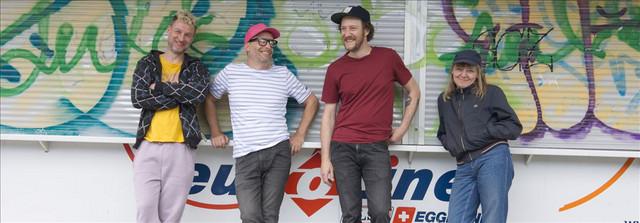
Disco Doom’s Spotify BioZurich, Switzerland’s Disco Doom craft songs that are heavily influenced by the twisted melodies, off-kilter guitars, and rule-breaking song construction of '90s indie rock of groups like Sonic Youth, 18th Dye, and Pavement. The band add high-wire energy and a sense of gleeful adventurism to this formula on early albums like 2003's Binary Stars, gave it a pop sheen on 2008's Dream Electric, then spent the time after that tinkering with the formula like mad scientists. By the time of 2022's Mt. Surreal, they were making records as enticingly weird and sonically impressive as those of their inspirations.
The band formed in 1996 are the core duo of guitarist/vocalist Gabriele De Mario and guitarist/bassist Anita Rufer. After a long incubation period spent touring and getting their sound together, they debuted with a pair of albums -- RRKR (2002) and Binary Stars (2003) -- laid the experimental, guitar-heavy groundwork for Disco Doom's sound. 2008’s Dream Electric, which toned down the… harshness of previous albums and introduced more melody and electronics, was their breakthrough album. They supported Built to Spill on a U.S. tour, then headed to Seattle, Washington to record with BTS members Jim Roth (producer) and Jason Albertini (drums); the results became 2011’s Trux Reverb, which featured Scott Plouf on drums reintroduced the band’s more experimental nature. After this the band relocated to N.Y.C. for a bit, played an EU tour with Built to Spill in 2013, and recorded another album. Featuring bassist Flo Götte and drums by Seattle legend Scott Plouf, Numerals further explored the guitar noise, Motorik rhythms, and shattered songcraft of that previous albums had. It was released in 2014 by longtime label Exploding in Sound. De Mario and Rufer had also been performing together as J&L Defer, a project that also delved into post-rock sounds in a less structured manner. They released their debut album No Map for Exploding in Sound in late 2016. In the years that followed both of the duo's groups kept up a heavy touring schedule, but no Disco Doom recordings surfaced until a 2020 split single with Brazilian psychedelic band Oruã. They had begun work on an album in 2018 though, both on their own and with live band drummer Mario Kummer and bassist Mathias Vetter. In the end the final version was mostly the work of De Mario and Rufer, with small contributions from Kummer, Vetter and former band members Götte (bass) and Domi Chansorn (drums). The album, 2022's Mt. Surreal, has a claustrophobic, home-cooked feel that sounds almost like a deconstructed, reconstituted version of the sound of previous album. As with most of their work, it was issued by Exploding in Sound. ~ Heather Phares & Tim Sendra, Rovi
Viberate is a music analytics platform built for A&Rs, artist managers, labels, booking agents, marketers, and artists.
It helps music professionals track artist growth, analyze audience data, monitor playlist activity, compare artists, follow song performance, and identify opportunities across the music market.
Public artist pages provide a free preview of selected artist data. Paid plans provide access to deeper analytics, historical data, charts, comparisons, playlist tools, exports, alerts, reports, and additional professional features.
Yes. Public Viberate artist pages provide selected artist analytics and music data for free.
Viberate also offers a 7-day free trial of the full platform. A credit card is required to start the trial. The trial includes access to the complete product so users can test deeper artist analytics, historical views, playlist insights, comparisons, charts, exports, alerts, and reporting features before choosing a paid plan.
Viberate provides artist analytics across streaming, playlists, social media, video, radio airplay, songs, and audience markets.
Users can analyze Spotify performance, Spotify and Apple Music playlists, YouTube activity, TikTok and Instagram growth, radio spins, song performance, audience locations, demographics, rankings, and overall artist momentum.
Artist profiles also connect to music charts, similar artists, and comparison tools, helping users benchmark performance and evaluate artists in context.
Viberate updates key artist and track data daily.
For followed artists and tracks, selected data is refreshed multiple times per day. This helps teams monitor playlist changes, streaming movement, audience growth, releases, and campaign performance with more current data.
Update frequency can vary depending on the metric and data source.
Yes. Viberate lets users compare up to five artists side by side across streaming, social media, audience, and engagement metrics.
Users can compare fanbase growth, audience demographics, locations, Spotify performance, social metrics, and other artist data over selected time periods.
Artist comparison can be used for A&R scouting, benchmarking, booking decisions, campaign planning, and evaluating artists with similar audiences or market positions.