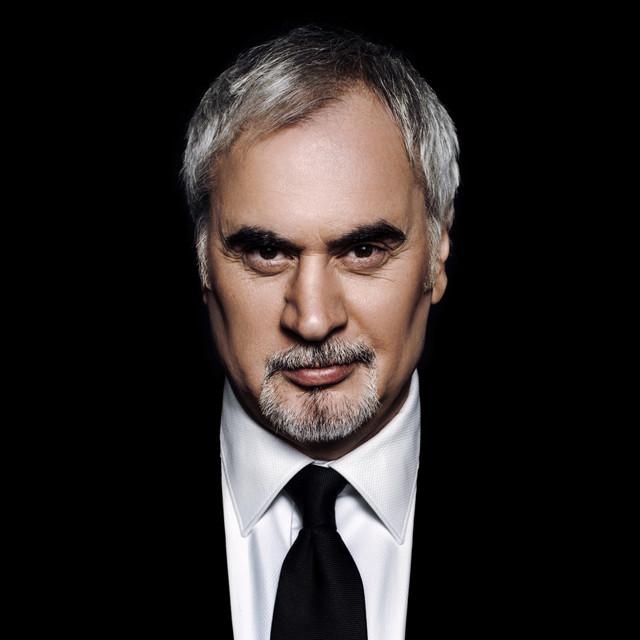
Dima Bilan

Pop
Mainstream Pop
Dance
 Viberate Rank: 4986
 Viberate Rank: 4986
 Monthly ListenersFollowers
 Subscribers
 Followers
 Followers
 FansTop Spotify Songs
| Track | 7-Day Streams | |
|---|---|---|
1 | 149.29K | |
2 | 36.98K | |
3 | 35.30K | |
4 | 34.52K | |
5 | 34.42K |
Top YouTube Videos| Video | 7-Day Views | |
|---|---|---|
1 | 130.70K | |
2 | 62.38K | |
3 | 47.93K | |
4 | 26.73K | |
5 | 24.20K |
Monthly ListenersFeatured in Playlists| Playlist | Followers | |
|---|---|---|
1 | Russian Party Hits🇷🇺🎶 marschmi | 131.38K |
2 |  Eurovision Winners Spotify | 109.32K |
3 | Русские Хиты 🇷🇺 Популярные Песни Russian Hits 2024 cindyfelker | 66.75K |
4 |  hot russian songs abc | 58.02K |
5 |  Ностальгия 2016, 2017, 2018,2019 LeLivenn | 48.04K |
Audience| City | Monthly Listeners | |
|---|---|---|
1 |  | 29.88K |
2 |  | 28.72K |
3 |  | 28.36K |
4 | | 22.29K |
5 |  | 20.01K |
See full performance history, audience data, playlist activity, rankings, comparisons, and more in Viberate music analytics. Start with a free trial, then continue with a paid plan.
Dima Bilan’s Spotify BioDima Bilan, whose real name is Viktor Belan, was one of the most successful Russian pop singers of the mid-2000s. Originating from the Karachai-Cherkess Republic, Dima Bilan finished music school in Kabardino-Balkaria and then completed his studies at the famous Gnesins Musical College in Moscow. A good-looking graduate with a sweet voice, he attracted the attention of a prosperous producer, Yury Aizenshpis, well known for his work with Kino, Technologia, Vlad Stashevsky, and many other Russian pop groups and artists. With an inherent grasp of potential openings in the Russian pop music market, Aizenshpis created an image for Bilan that was romantic, rowdy, strong, courageous, and tender at the same time. Dima Bilan debuted at the 2002 New Wave International Song Contest in Latvia and took fourth place, and his first albums, Nochnoi Khuligan (Night Hooligan) and Na Beregu Neba (On the Heaven's Shore), released in 2003 and 2004, respectively, gained wide public admiration.
During 2005… Bilan won a number of pop music awards. His songs and image were similar to Vlad Stashevsky's, but since Stashevsky had stopped musical activity in 1999 and had thus been largely forgotten by the general public, this comparison did little to affect Bilan's career. Simple melodious songs of love, coupled with Bilan's pleasant voice and appearance, allowed him to climb to the top of the charts -- despite his sometimes weak vocals and simple lyrics and melodies. After Yury Aizenshpis' sudden death in September 2005, his successors decided to end their support for Bilan -- nevertheless, Bilan's previous huge commercial success helped him to gain the attention of young producer Yana Rudkovskaya. In 2006 Dima Bilan won second place at the Eurovision Song Contest and issued his third album, Vremya Reka (Time River), despite the fact that he and producer Rudkovskaya were subjected to court challenges regarding their use of the Dima Bilan "brand." ~ Dmitriy Tselikov
Viberate is a music analytics platform built for A&Rs, artist managers, labels, booking agents, marketers, and artists.
It helps music professionals track artist growth, analyze audience data, monitor playlist activity, compare artists, follow song performance, and identify opportunities across the music market.
Public artist pages provide a free preview of selected artist data. Paid plans provide access to deeper analytics, historical data, charts, comparisons, playlist tools, exports, alerts, reports, and additional professional features.
Yes. Public Viberate artist pages provide selected artist analytics and music data for free.
Viberate also offers a 7-day free trial of the full platform. A credit card is required to start the trial. The trial includes access to the complete product so users can test deeper artist analytics, historical views, playlist insights, comparisons, charts, exports, alerts, and reporting features before choosing a paid plan.
Viberate provides artist analytics across streaming, playlists, social media, video, radio airplay, songs, and audience markets.
Users can analyze Spotify performance, Spotify and Apple Music playlists, YouTube activity, TikTok and Instagram growth, radio spins, song performance, audience locations, demographics, rankings, and overall artist momentum.
Artist profiles also connect to music charts, similar artists, and comparison tools, helping users benchmark performance and evaluate artists in context.
Viberate updates key artist and track data daily.
For followed artists and tracks, selected data is refreshed multiple times per day. This helps teams monitor playlist changes, streaming movement, audience growth, releases, and campaign performance with more current data.
Update frequency can vary depending on the metric and data source.
Yes. Viberate lets users compare up to five artists side by side across streaming, social media, audience, and engagement metrics.
Users can compare fanbase growth, audience demographics, locations, Spotify performance, social metrics, and other artist data over selected time periods.
Artist comparison can be used for A&R scouting, benchmarking, booking decisions, campaign planning, and evaluating artists with similar audiences or market positions.