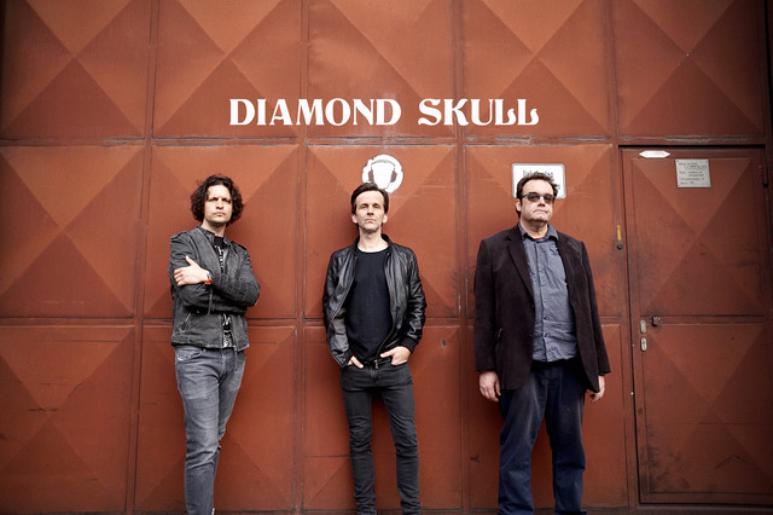
Diamond Skull

Rock
Hard Rock
Stoner Rock
Psychedelic Rock
 Viberate Rank: 733422
 Viberate Rank: 733422
 Monthly ListenersFollowers
 Subscribers
 Followers
 Followers
 FansTop Spotify Songs
| Track | 7-Day Streams | |
|---|---|---|
1 | 41 | |
2 | 38 | |
3 | 10 | |
4 | 8 | |
5 | 6 |
Top YouTube VideosMonthly ListenersFeatured in Playlists| Playlist | Followers | |
|---|---|---|
1 |  Stoner Rock & Psychedelic Space Rock StonerRock.Space | 36.07K |
2 |  Psychedelic / Stoner / Desert Rock 🍄 Jaimy | 20.25K |
3 |  Psychedelic / Stoner / Desert Rock Molten Universe | 8.13K |
4 |  Weedian (Worldwide) Dom Riso | 2.65K |
5 |  Stoner Rock Radio gfletch32 | 2.35K |
Audience| City | Monthly Listeners | |
|---|---|---|
1 | | 11 |
2 |  | 5 |
3 |  | 4 |
4 | | 4 |
5 |  | 4 |
See full performance history, audience data, playlist activity, rankings, comparisons, and more in Viberate music analytics. Start with a free trial, then continue with a paid plan.
Diamond Skull’s Spotify BioCan you hear all the angels sing or is it just the hell we´re in? Drive through fire, meet the demons,
wait for the night, when blood will run.
Diamond Skull are a heavy stoner rock trio, born 2015 in Vienna, Austria, crafting a sound that is equally straight forward, dark and hypnotic.
Hard edged bluesy riffs with a mesmerizing groove, and flat out ass-kicking swagger. Join in on the insomnia of rock n´roll paradise, you don´t want to wake to a reality void of Diamond Skull..
(Bucky Brown, Doom Charts / The Ripple Effect)
The band consisting of members Thomas Ranosz (guitar/keys/vocals), Markus Schmitt (bass) and Alex Dostal (drums) take their inspiration from hardrock, metal, doom and other styles.
In 2016, they began to record their first sessions which would evolve into their debut album „Sleepless“. After their first single „Cocaine“, the album was released on the 15th of April 2018 via Electric Fire Records. After some touring and support shows for Lucifer, Duel, Nightstalker they band… took a little break.
Their latest single „The Deal“ dropped in February 2022 and is a dark hypnotic midtempo stomper
about the deal with the devil and all its mysteries.
Viberate is a music analytics platform built for A&Rs, artist managers, labels, booking agents, marketers, and artists.
It helps music professionals track artist growth, analyze audience data, monitor playlist activity, compare artists, follow song performance, and identify opportunities across the music market.
Public artist pages provide a free preview of selected artist data. Paid plans provide access to deeper analytics, historical data, charts, comparisons, playlist tools, exports, alerts, reports, and additional professional features.
Yes. Public Viberate artist pages provide selected artist analytics and music data for free.
Viberate also offers a 7-day free trial of the full platform. A credit card is required to start the trial. The trial includes access to the complete product so users can test deeper artist analytics, historical views, playlist insights, comparisons, charts, exports, alerts, and reporting features before choosing a paid plan.
Viberate provides artist analytics across streaming, playlists, social media, video, radio airplay, songs, and audience markets.
Users can analyze Spotify performance, Spotify and Apple Music playlists, YouTube activity, TikTok and Instagram growth, radio spins, song performance, audience locations, demographics, rankings, and overall artist momentum.
Artist profiles also connect to music charts, similar artists, and comparison tools, helping users benchmark performance and evaluate artists in context.
Viberate updates key artist and track data daily.
For followed artists and tracks, selected data is refreshed multiple times per day. This helps teams monitor playlist changes, streaming movement, audience growth, releases, and campaign performance with more current data.
Update frequency can vary depending on the metric and data source.
Yes. Viberate lets users compare up to five artists side by side across streaming, social media, audience, and engagement metrics.
Users can compare fanbase growth, audience demographics, locations, Spotify performance, social metrics, and other artist data over selected time periods.
Artist comparison can be used for A&R scouting, benchmarking, booking decisions, campaign planning, and evaluating artists with similar audiences or market positions.