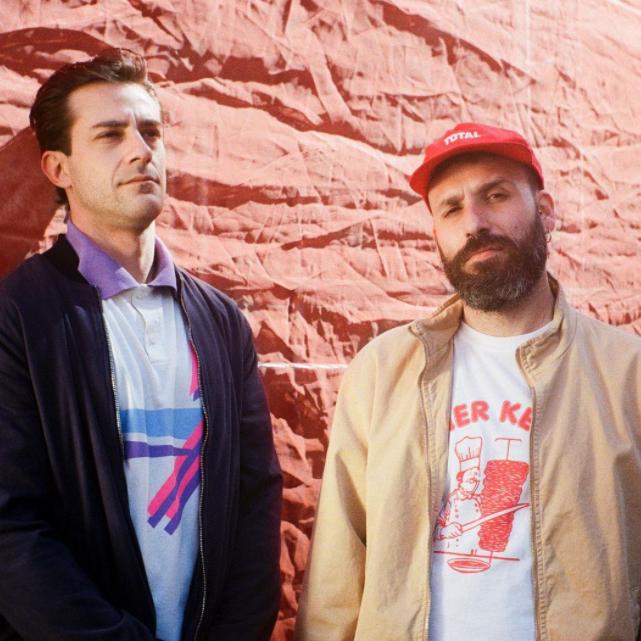
Depaart

Electronic
House
Indie Dance
 Viberate Rank: 400526
 Viberate Rank: 400526
 Monthly ListenersFollowers
 Subscribers
 Followers
 Followers
 FansTop Spotify Songs
| Track | 7-Day Streams | |
|---|---|---|
1 | 32 | |
2 | 13 | |
3 | 10 | |
4 | 7 | |
5 | 6 |
Top YouTube VideosMonthly ListenersFeatured in Playlists| Playlist | Followers | |
|---|---|---|
1 |  Diynamic Releases Diynamic | 15.11K |
2 |  EXPLOITED RELEASES Exploited | 12.24K |
3 |  Progressive House Selection (Sasha, Guy J, Quivver, Eric Prydz, Dixon, Ame a.o.) Onno van Kemenade | 8.11K |
4 |  Dusky DJ Selections duskyofficial | 3.74K |
5 |  Paraíso Festival 2022 Paraíso Festival | 3.36K |
Audience| City | Monthly Listeners | |
|---|---|---|
1 |  | 15 |
2 | | 14 |
3 |  | 10 |
4 |  | 7 |
5 |  | 5 |
See full performance history, audience data, playlist activity, rankings, comparisons, and more in Viberate music analytics. Start with a free trial, then continue with a paid plan.
Depaart’s Spotify BioBorn as a label, fed as a party, grown as a collective and cured as an artist. The history of Depaart is not common.
Depaart became a reality first as a label in 2012. Created by Georgeous and Moliner, it was after Easy Kid and Fran Zaragoza’s first releases two years later when they all became the hardcore of the crew and brought Depaart to a further stage. In 2014 they started to host label nights across Madrid and Spain where only they played and focused on releasing exclusively their own music.
In 2016 Guille from Easy Kid and Fran Zaragoza begin to make music under the name of Depaart with ‘Flamma’ as their first single out and a live format between -still- the four of them for which they produced 14 tracks. In 2017 Fran and Guille take over the production and leadership of the artistic side of Depaart becoming a duo.
Guille and Fran started to play together in 2009, and from 2012 they’ve remixed each other and released music combined. Between the two of them they’ve released more… than 60 tracks and played more than 200 gigs. After sharing parties, sets, live acts, studio hours, rehearsals, and life, now they finally share a musical identity.
This new era of Depaart kicks off in 2018 with ‘Blowing Smoke’, a first full EP at Sasha’s Last Night On Earth, and ‘Los Chicos Del Ruido’ released by Stil Vor Talent.
Viberate is a music analytics platform built for A&Rs, artist managers, labels, booking agents, marketers, and artists.
It helps music professionals track artist growth, analyze audience data, monitor playlist activity, compare artists, follow song performance, and identify opportunities across the music market.
Public artist pages provide a free preview of selected artist data. Paid plans provide access to deeper analytics, historical data, charts, comparisons, playlist tools, exports, alerts, reports, and additional professional features.
Yes. Public Viberate artist pages provide selected artist analytics and music data for free.
Viberate also offers a 7-day free trial of the full platform. A credit card is required to start the trial. The trial includes access to the complete product so users can test deeper artist analytics, historical views, playlist insights, comparisons, charts, exports, alerts, and reporting features before choosing a paid plan.
Viberate provides artist analytics across streaming, playlists, social media, video, radio airplay, songs, and audience markets.
Users can analyze Spotify performance, Spotify and Apple Music playlists, YouTube activity, TikTok and Instagram growth, radio spins, song performance, audience locations, demographics, rankings, and overall artist momentum.
Artist profiles also connect to music charts, similar artists, and comparison tools, helping users benchmark performance and evaluate artists in context.
Viberate updates key artist and track data daily.
For followed artists and tracks, selected data is refreshed multiple times per day. This helps teams monitor playlist changes, streaming movement, audience growth, releases, and campaign performance with more current data.
Update frequency can vary depending on the metric and data source.
Yes. Viberate lets users compare up to five artists side by side across streaming, social media, audience, and engagement metrics.
Users can compare fanbase growth, audience demographics, locations, Spotify performance, social metrics, and other artist data over selected time periods.
Artist comparison can be used for A&R scouting, benchmarking, booking decisions, campaign planning, and evaluating artists with similar audiences or market positions.