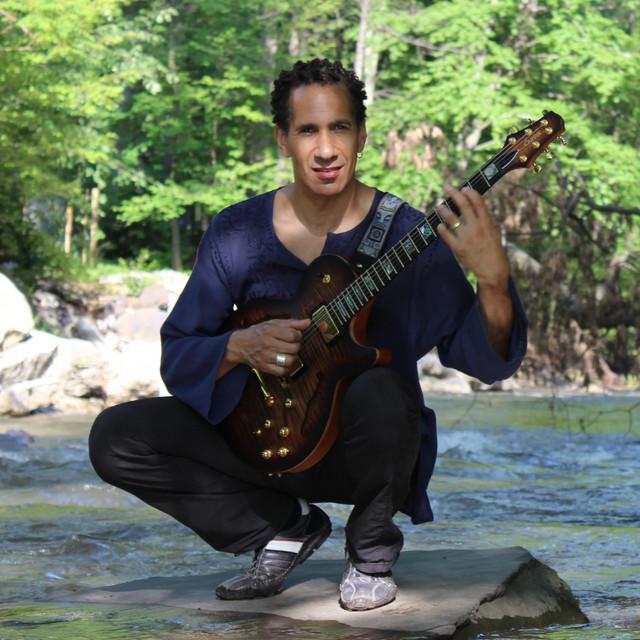
David Gilmore

Jazz
Jazz Fusion
Smooth Jazz
 Viberate Rank: 308944
 Viberate Rank: 308944
 Monthly ListenersFollowers
 Subscribers
 Followers
 Followers
 FansTop Spotify Songs
| Track | 7-Day Streams | |
|---|---|---|
1 | 560 | |
2 | 115 | |
3 | 60 | |
4 | 50 | |
5 | 35 |
Top YouTube Videos| Video | 7-Day Views | |
|---|---|---|
1 | 310 | |
2 | 119 | |
3 | 36 | |
4 | 23 | |
5 | 22 |
Monthly ListenersFeatured in Playlists| Playlist | Followers | |
|---|---|---|
1 |  Instrumental Jazz Valdemar Bille-Lauridsen | 45.25K |
2 | Burning Jazz-rock Fusion fusionprogguy | 8.92K |
3 |  RADIO SWISS JAZZ johannesreimer | 5.41K |
4 | JAZZ DRUMS SOLO Juan Juan | 4.78K |
5 |  jjaazzzz pgoonghang | 1.14K |
Audience| City | Monthly Listeners | |
|---|---|---|
1 |  | 11 |
2 |  | 11 |
3 | | 9 |
4 | | 8 |
5 |  | 5 |
See full performance history, audience data, playlist activity, rankings, comparisons, and more in Viberate music analytics. Start with a free trial, then continue with a paid plan.
David Gilmore’s Spotify Biob. 5 February 1964, Cambridge, Massachusetts, USA. Gilmore was born into a musical family, his father being a classical percussionist. At first, he followed his father but in his early teens the guitar began to supersede drums, the latter instrument being taken up by his brother, Marque Gilmore. He was listening to and leaning towards pop and funk but began to move into jazz, an inclination accentuated during a period of study with John Baboian and Randy Roos. Gilmore’s influences at this time included John McLaughlin’s Mahavishnu Orchestra and Chick Corea’s Return To Forever. He also studied at New York University with Joe Lovano and Jim McNeely. It was in New York that Gilmore worked with Steve Coleman’s M-Base Collective, where his interest in playing music in unusual metres was enhanced.
Among numerous artists in many genres with whom Gilmore has worked over the years have been Muhal Richard Abrams, Geri Allen, Cindy Blackman, Ron Blake, Randy Brecker, Don Byron, Uri Caine, Steve… Coleman, Alice Coltrane, Jack DeJohnette, Dave Douglas, Melissa Etheridge, Robin Eubanks, Rachelle Ferrell, Trilok Gurtu, Isaac Hayes, Graham Haynes, Roland Shannon Jackson, Cyndi Lauper, Lost Tribe, Branford Marsalis, Wynton Marsalis, Meshell Ndegéocello, Joan Osborne, Greg Osby, Lonnie Plaxico, Dianne Reeves, Sam Rivers, David Sanborn, Boz Scaggs, Wayne Shorter, Mavis Staples, Joss Stone, Steve Williamson and Cassandra Wilson. In 2003 he premiered his composition, ‘African Continuum’, written with the benefit of a Chamber Music America New Works Composer grant.
Gilmore has formed a number of bands, one from the early 00s being Kindred Spirits in which his sidemen were Matthew Garrison (bass), Aref Durvesh (tabla), and Marque Gilmore (drums). He also worked with Claudia Acuña, Ravi Coltrane, Christian McBride and Jeff Watts, recording Unified Presence in 2006. Working fluidly in both improvisational and composed music, Gilmore is noted especially for his exploration of the infinite possibilities of rhythmic variations. (NB: Not to be confused with the English rock guitarist David Gilmour.)
Viberate is a music analytics platform built for A&Rs, artist managers, labels, booking agents, marketers, and artists.
It helps music professionals track artist growth, analyze audience data, monitor playlist activity, compare artists, follow song performance, and identify opportunities across the music market.
Public artist pages provide a free preview of selected artist data. Paid plans provide access to deeper analytics, historical data, charts, comparisons, playlist tools, exports, alerts, reports, and additional professional features.
Yes. Public Viberate artist pages provide selected artist analytics and music data for free.
Viberate also offers a 7-day free trial of the full platform. A credit card is required to start the trial. The trial includes access to the complete product so users can test deeper artist analytics, historical views, playlist insights, comparisons, charts, exports, alerts, and reporting features before choosing a paid plan.
Viberate provides artist analytics across streaming, playlists, social media, video, radio airplay, songs, and audience markets.
Users can analyze Spotify performance, Spotify and Apple Music playlists, YouTube activity, TikTok and Instagram growth, radio spins, song performance, audience locations, demographics, rankings, and overall artist momentum.
Artist profiles also connect to music charts, similar artists, and comparison tools, helping users benchmark performance and evaluate artists in context.
Viberate updates key artist and track data daily.
For followed artists and tracks, selected data is refreshed multiple times per day. This helps teams monitor playlist changes, streaming movement, audience growth, releases, and campaign performance with more current data.
Update frequency can vary depending on the metric and data source.
Yes. Viberate lets users compare up to five artists side by side across streaming, social media, audience, and engagement metrics.
Users can compare fanbase growth, audience demographics, locations, Spotify performance, social metrics, and other artist data over selected time periods.
Artist comparison can be used for A&R scouting, benchmarking, booking decisions, campaign planning, and evaluating artists with similar audiences or market positions.