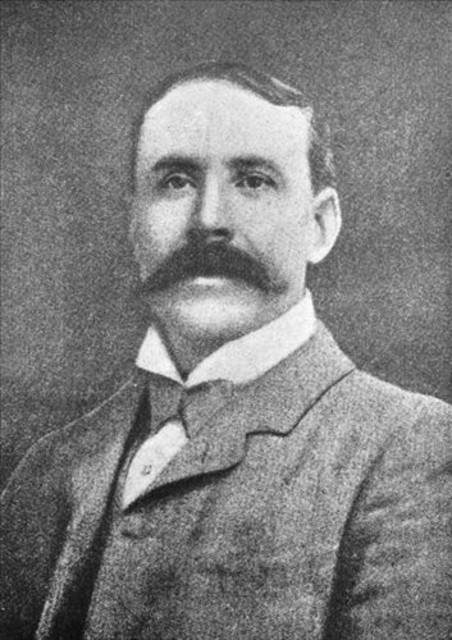
Daniel Harding

Classical
Orchestral
Chamber Music
 Viberate Rank: 117299
 Viberate Rank: 117299
 Monthly ListenersFollowers
 Subscribers
 Followers
 Followers
 FansTop Spotify Songs
| Track | 7-Day Streams | |
|---|---|---|
1 | 130.68K | |
2 | 43.31K | |
3 | 9.90K | |
4 | 4.21K | |
5 | 3.41K |
Top YouTube VideosMonthly ListenersFeatured in Playlists| Playlist | Followers | |
|---|---|---|
1 |  Classical Essentials Spotify | 3.82M |
2 |  Best Classical Music Peaceful Classics | 857.56K |
3 |  Classical Reading Spotify | 634.31K |
4 |  Opera Classics Spotify | 605.42K |
5 |  This Is Tchaikovsky Spotify | 371.34K |
Audience| City | Monthly Listeners | |
|---|---|---|
1 |  | 9.79K |
2 |  | 6.62K |
3 |  | 5.87K |
4 |  | 5.45K |
5 |  | 4.70K |
See full performance history, audience data, playlist activity, rankings, comparisons, and more in Viberate music analytics. Start with a free trial, then continue with a paid plan.
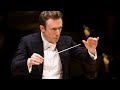
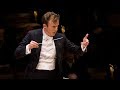
Daniel Harding’s Spotify BioConductor Daniel Harding was a prodigy, earning worldwide renown while still in his teens. His early record of success continues in adulthood, with major conducting positions and a large catalog of recordings.
Harding was born in Oxford on August 31, 1975. Taking recorder lessons as a child, he attended Chetham's School of Music as a trumpeter and joined Britain's National Youth Orchestra at 13. The following year, Harding set his sights on a career as a conductor. He assembled an orchestra from among his fellow students, and when he was 17, he conducted them in Schoenberg's Pierrot Lunaire, not a simple score for a conductor. The performance went off well, and Harding brashly sent a tape to famed conductor Simon Rattle. Although at first, by his own testimony, Rattle thought Harding was crazy, but went to see a performance by the ambitious youngster and was favorably impressed. Harding became Rattle's assistant at the City of Birmingham Symphony Orchestra and made his debut in 1994… with that orchestra. Word got around about the precocious conductor's talents. He was hired by composer Hans Werner Henze to assist with preparations for the Munich Biennial Festival, and he took a conducting master class with Pierre Boulez.
For the 1995-1996 season, he became the assistant conductor of the legendary Berlin Philharmonic under Claudio Abbado. When scheduled conductor Franz Welser-Möst fell ill, Harding stepped in without rehearsal to lead the orchestra in a difficult program of music by Berlioz, Brahms, and Dvořák, earning critical acclaim and international attention. He became the youngest conductor ever to lead a BBC Proms Concert in 1996, and the following year his career was launched as he took on conducting positions at the Trondheim Symphony Orchestra in Norway and the Deutsche Kammerphilharmonie in Bremen, Germany. Leaving the latter group in 2003, he was appointed principal guest conductor of the London Symphony Orchestra the following year. Harding became the principal conductor of the Swedish Radio Symphony Orchestra in 2007, remaining in that position as of the early 2020s. He also held chief conductor positions with the Mahler Chamber Orchestra from 2003 to 2011 (staying on as laureate) and with the Orchestre de Paris from 2015 to 2018. Harding held a variety of major guest conducting positions not only with orchestras but also at opera houses, including Italy's La Scala.
Harding has recorded prolifically with almost all of the orchestras with which he has been associated, issuing albums on Virgin, EMI, Harmonia Mundi, and other major labels. In 2020, he led the Swedish Radio Symphony Orchestra in performances of Schoenberg's Violin Concerto and Verklärte Nacht, featuring violinist Isabelle Faust. In addition to his busy conducting schedule, Harding maintains his status as a licensed airline pilot, flying part-time for Air France as of the early 2020s. ~ James Manheim, Rovi
Viberate is a music analytics platform built for A&Rs, artist managers, labels, booking agents, marketers, and artists.
It helps music professionals track artist growth, analyze audience data, monitor playlist activity, compare artists, follow song performance, and identify opportunities across the music market.
Public artist pages provide a free preview of selected artist data. Paid plans provide access to deeper analytics, historical data, charts, comparisons, playlist tools, exports, alerts, reports, and additional professional features.
Yes. Public Viberate artist pages provide selected artist analytics and music data for free.
Viberate also offers a 7-day free trial of the full platform. A credit card is required to start the trial. The trial includes access to the complete product so users can test deeper artist analytics, historical views, playlist insights, comparisons, charts, exports, alerts, and reporting features before choosing a paid plan.
Viberate provides artist analytics across streaming, playlists, social media, video, radio airplay, songs, and audience markets.
Users can analyze Spotify performance, Spotify and Apple Music playlists, YouTube activity, TikTok and Instagram growth, radio spins, song performance, audience locations, demographics, rankings, and overall artist momentum.
Artist profiles also connect to music charts, similar artists, and comparison tools, helping users benchmark performance and evaluate artists in context.
Viberate updates key artist and track data daily.
For followed artists and tracks, selected data is refreshed multiple times per day. This helps teams monitor playlist changes, streaming movement, audience growth, releases, and campaign performance with more current data.
Update frequency can vary depending on the metric and data source.
Yes. Viberate lets users compare up to five artists side by side across streaming, social media, audience, and engagement metrics.
Users can compare fanbase growth, audience demographics, locations, Spotify performance, social metrics, and other artist data over selected time periods.
Artist comparison can be used for A&R scouting, benchmarking, booking decisions, campaign planning, and evaluating artists with similar audiences or market positions.