Daniel Guichard

European
French Folk
 Viberate Rank: 35799
 Viberate Rank: 35799
 Monthly ListenersFollowers
 Subscribers
 Followers
 Followers
 FansTop Spotify Songs
| Track | 7-Day Streams | |
|---|---|---|
1 | 92.68K | |
2 | 26.70K | |
3 | 22.34K | |
4 | 6.12K | |
5 | 5.17K |
Top YouTube VideosMonthly ListenersFeatured in Playlists| Playlist | Followers | |
|---|---|---|
1 |  Tubes Français 70 Spotify | 628.91K |
2 | Chanson française - best of Pierre-Alexandre De Cartier d'Yves | 40.88K |
3 |  Je me souviens: années 70 Spotify | 30.36K |
4 | Variété Française nicolaslanglois | 17.07K |
5 |  #NOPLP - N'oubliez pas les paroles Georges Liénard | 15.75K |
Audience| City | Monthly Listeners | |
|---|---|---|
1 | | 11.31K |
2 |  | 5.55K |
3 | | 5.01K |
4 | | 4.57K |
5 |  | 2.67K |
See full performance history, audience data, playlist activity, rankings, comparisons, and more in Viberate music analytics. Start with a free trial, then continue with a paid plan.
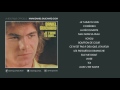
Daniel Guichard’s Spotify BioDaniel Guichard was born in 1948, raised in Paris in the '50s, and has actually dragged out the image of an old-fashioned Parisian boy, including every cliché about it, starting with a strong accent. His gentle personality was quite well reflected in his songs, most of which are about tenderness, loss, love, and nostalgia. He started singing in Montmartre cabarets in the '60s, covering Bruant, Edith Piaf, and other French legends, and got signed pretty quickly by Barclay, for which he had been working as a packer. He got to perform for the first time at the Olympia in 1972, as an opening act to Mireille Matthieu, alongside Gérard Lenorman, and would happen to perform there again on numerous occasions through the years. His popularity was at its peak between 1971 and 1974, the year he got rewarded with a Caméra d'Or. From 1975 to 1985, he got to create his own record label (Kuldos), as well as a radio station (Radio Bocal). In 1985, he gathered a bunch of recording artists to set up a… series of live shows destined to raise funds for scientific research against cancer. Musically, Guichard has managed to leave his trace with a few hit singles, including two highlights: 1971's "La Tendresse" and 1974's "Mon Vieux" (music by Jean Ferrat). ~ Olivier Duboc, Rovi
Viberate is a music analytics platform built for A&Rs, artist managers, labels, booking agents, marketers, and artists.
It helps music professionals track artist growth, analyze audience data, monitor playlist activity, compare artists, follow song performance, and identify opportunities across the music market.
Public artist pages provide a free preview of selected artist data. Paid plans provide access to deeper analytics, historical data, charts, comparisons, playlist tools, exports, alerts, reports, and additional professional features.
Yes. Public Viberate artist pages provide selected artist analytics and music data for free.
Viberate also offers a 7-day free trial of the full platform. A credit card is required to start the trial. The trial includes access to the complete product so users can test deeper artist analytics, historical views, playlist insights, comparisons, charts, exports, alerts, and reporting features before choosing a paid plan.
Viberate provides artist analytics across streaming, playlists, social media, video, radio airplay, songs, and audience markets.
Users can analyze Spotify performance, Spotify and Apple Music playlists, YouTube activity, TikTok and Instagram growth, radio spins, song performance, audience locations, demographics, rankings, and overall artist momentum.
Artist profiles also connect to music charts, similar artists, and comparison tools, helping users benchmark performance and evaluate artists in context.
Viberate updates key artist and track data daily.
For followed artists and tracks, selected data is refreshed multiple times per day. This helps teams monitor playlist changes, streaming movement, audience growth, releases, and campaign performance with more current data.
Update frequency can vary depending on the metric and data source.
Yes. Viberate lets users compare up to five artists side by side across streaming, social media, audience, and engagement metrics.
Users can compare fanbase growth, audience demographics, locations, Spotify performance, social metrics, and other artist data over selected time periods.
Artist comparison can be used for A&R scouting, benchmarking, booking decisions, campaign planning, and evaluating artists with similar audiences or market positions.