Dalto

Pop
Latin Pop
Nova MPB
 Viberate Rank: 45280
 Viberate Rank: 45280
 Monthly ListenersFollowers
 Subscribers
 Followers
 Followers
 FansTop Spotify Songs
| Track | 7-Day Streams | |
|---|---|---|
1 | 200.86K | |
2 | 25.69K | |
3 | 21.75K | |
4 | 17.72K | |
5 | 8.47K |
Top YouTube VideosMonthly ListenersFeatured in Playlists| Playlist | Followers | |
|---|---|---|
1 |  MPB anos 70, 80, 90, 2000, 2026 - AS MELHORES Under | 249.09K |
2 |  ANOS 80, 90 e 2000 NACIONAL Leandro | 216.23K |
3 |  Selton Mello FM Selton Mello | 60.63K |
4 |  Anos 80/90 Nacionais Nostalgia KaaH | 47.08K |
5 | Jovem Guarda. antonioalvesfilho2112 | 34.44K |
Audience| City | Monthly Listeners | |
|---|---|---|
1 | | 80.86K |
2 | | 38.63K |
3 | | 29.81K |
4 | | 20.75K |
5 | | 20.53K |
See full performance history, audience data, playlist activity, rankings, comparisons, and more in Viberate music analytics. Start with a free trial, then continue with a paid plan.
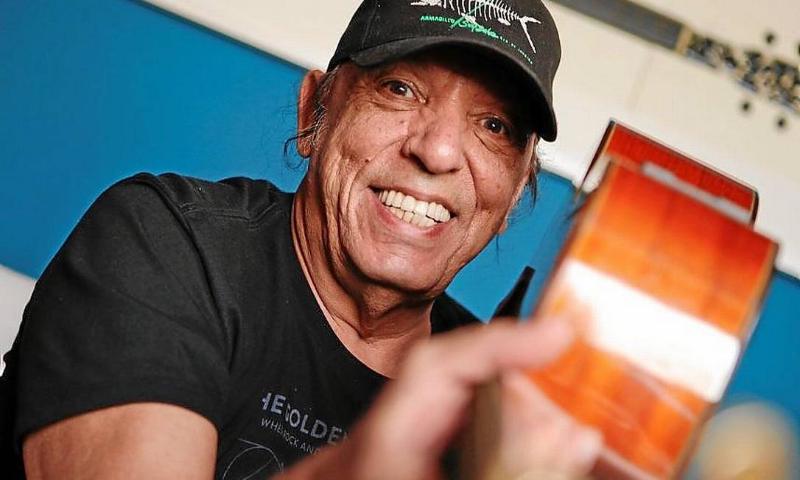
Dalto’s Spotify BioComposer of the hits "Bem Te Vi," "Leão Ferido," and "Muito Estranho," Dalto had his songs recorded by Biafra, Roupa Nova, Ray Conniff, Zizi Possi, and Marina Lima. Several of his compositions were used in soap opera soundtracks. Dalto started his career in the early '70s as the lead vocalist of the experimental rock group Os Lobos, with which he recorded successfully the singles Fanny (Dalto/Cláudio Rabello) and Santa Teresa (Luís Carlos Sá), and the LP Miragem. In 1974, he started his solo career, recording a single with "Leila Ly" and "Flash Back" (both written with Cláudio Rabello). In spite of the relative success of the latter, Dalto decided to leave the music scene to finish his medical school studies. In 1981, he had his first hit as a composer with "Bem-Te-Vi" (with Cláudio Rabello), recorded by Renato Terra; 250,000 copies were sold. In 1982, he had a smash as a composer and interpreter with "Muito Estranho (Cuida Bem de Mim)," that sold 1,500,000 copies and reached the top… positions in the charts. He also had other successes as a composer, like "Leão Ferido" (with Biafra), recorded by Biafra in 1982; and, in the following year, "Anjo" (with Renato Correia and Cláudio Rabello), recorded by Roupa Nova. In 1994, he launched the CD Guru, that had some success with "Quase Dá Pra Ser Feliz." ~ Alvaro Neder
Viberate is a music analytics platform built for A&Rs, artist managers, labels, booking agents, marketers, and artists.
It helps music professionals track artist growth, analyze audience data, monitor playlist activity, compare artists, follow song performance, and identify opportunities across the music market.
Public artist pages provide a free preview of selected artist data. Paid plans provide access to deeper analytics, historical data, charts, comparisons, playlist tools, exports, alerts, reports, and additional professional features.
Yes. Public Viberate artist pages provide selected artist analytics and music data for free.
Viberate also offers a 7-day free trial of the full platform. A credit card is required to start the trial. The trial includes access to the complete product so users can test deeper artist analytics, historical views, playlist insights, comparisons, charts, exports, alerts, and reporting features before choosing a paid plan.
Viberate provides artist analytics across streaming, playlists, social media, video, radio airplay, songs, and audience markets.
Users can analyze Spotify performance, Spotify and Apple Music playlists, YouTube activity, TikTok and Instagram growth, radio spins, song performance, audience locations, demographics, rankings, and overall artist momentum.
Artist profiles also connect to music charts, similar artists, and comparison tools, helping users benchmark performance and evaluate artists in context.
Viberate updates key artist and track data daily.
For followed artists and tracks, selected data is refreshed multiple times per day. This helps teams monitor playlist changes, streaming movement, audience growth, releases, and campaign performance with more current data.
Update frequency can vary depending on the metric and data source.
Yes. Viberate lets users compare up to five artists side by side across streaming, social media, audience, and engagement metrics.
Users can compare fanbase growth, audience demographics, locations, Spotify performance, social metrics, and other artist data over selected time periods.
Artist comparison can be used for A&R scouting, benchmarking, booking decisions, campaign planning, and evaluating artists with similar audiences or market positions.