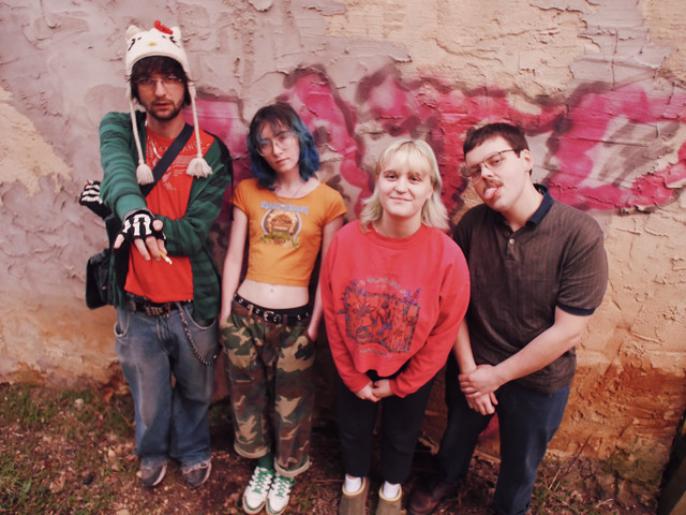
Cusp

Rock
Indie Rock
 Viberate Rank: 188743
 Viberate Rank: 188743
 Monthly ListenersFollowers
 Subscribers
 Followers
 Followers
 FansTop Spotify Songs
| Track | 7-Day Streams | |
|---|---|---|
1 | 18.44K | |
2 | 9.07K | |
3 | 6.76K | |
4 | 5.41K | |
5 | 3.62K |
Top YouTube VideosMonthly ListenersFeatured in Playlists| Playlist | Followers | |
|---|---|---|
1 |  shoegaze collection nana | 12.43K |
2 |  David Dean Burkhart Mirror.FM | 7.67K |
3 |  Glitch&Gold Radio Glitch&Gold | 3.93K |
4 |  Alex G 2.0 Kelsie x The Yellow Button | 3.24K |
5 |  Infinite Indie Rock Pop Folk 🎸♾ François Maillard | 2.06K |
Audience| City | Monthly Listeners | |
|---|---|---|
1 | | 1.99K |
2 | | 1.71K |
3 | | 1.52K |
4 | | 1.21K |
5 | | 1.17K |
See full performance history, audience data, playlist activity, rankings, comparisons, and more in Viberate music analytics. Start with a free trial, then continue with a paid plan.
Cusp’s Spotify BioEvery album is a product of the environment in which it was created, and nowhere is that more pertinent than on Cusp’s second album, What I Want Doesn't Want Me Back. While the band’s excellent 2023 debut You Can Do It All was written in transition while they relocated from Rochester, NY to Chicago, WIWDWMB comes much more from a place of stability–of roots beginning to form. “With that feeling of being settled comes the space to ask myself new questions about myself and choices I’ve made,” guitarist/vocalist Jen Bender says. As a result, the album feels like both a maturation and a reinvention, with every aspect of Cusp’s sound tweaked and pushed to find new boundaries, and to fill new spaces.
After moving to Chicago, Cusp became the fully-formed and settled five-piece of Bender, Gaelen Bates (guitar), Matt Manes (bass), Tommy Moore (drums, percussion, vocals) and Tessa O’Connell (synths, piano, vocals). This iteration of the band, finally able to all get in a room together, cemented… the ideas and energy they’d been honing live on stage over the previous couple of years. The result of these subtle changes to their form comes to fruition on the thrilling What I Want Doesn't Want Me Back. Recorded almost entirely live at Electrical Audio, a number of these 10 tracks peel back the layers on what it means to write songs, and the actual process of music making and being in a band: how and why we seek validation, and the shapeshifting nature of legitimacy.
Viberate is a music analytics platform built for A&Rs, artist managers, labels, booking agents, marketers, and artists.
It helps music professionals track artist growth, analyze audience data, monitor playlist activity, compare artists, follow song performance, and identify opportunities across the music market.
Public artist pages provide a free preview of selected artist data. Paid plans provide access to deeper analytics, historical data, charts, comparisons, playlist tools, exports, alerts, reports, and additional professional features.
Yes. Public Viberate artist pages provide selected artist analytics and music data for free.
Viberate also offers a 7-day free trial of the full platform. A credit card is required to start the trial. The trial includes access to the complete product so users can test deeper artist analytics, historical views, playlist insights, comparisons, charts, exports, alerts, and reporting features before choosing a paid plan.
Viberate provides artist analytics across streaming, playlists, social media, video, radio airplay, songs, and audience markets.
Users can analyze Spotify performance, Spotify and Apple Music playlists, YouTube activity, TikTok and Instagram growth, radio spins, song performance, audience locations, demographics, rankings, and overall artist momentum.
Artist profiles also connect to music charts, similar artists, and comparison tools, helping users benchmark performance and evaluate artists in context.
Viberate updates key artist and track data daily.
For followed artists and tracks, selected data is refreshed multiple times per day. This helps teams monitor playlist changes, streaming movement, audience growth, releases, and campaign performance with more current data.
Update frequency can vary depending on the metric and data source.
Yes. Viberate lets users compare up to five artists side by side across streaming, social media, audience, and engagement metrics.
Users can compare fanbase growth, audience demographics, locations, Spotify performance, social metrics, and other artist data over selected time periods.
Artist comparison can be used for A&R scouting, benchmarking, booking decisions, campaign planning, and evaluating artists with similar audiences or market positions.