Cristy Lane

Country
Contemporary Country
Christian Music
 Viberate Rank: 98408
 Viberate Rank: 98408
 Monthly ListenersFollowers
 Subscribers
 Followers
 Followers
 FansTop Spotify Songs
| Track | 7-Day Streams | |
|---|---|---|
1 | 16.48K | |
2 | 3.96K | |
3 | 3.71K | |
4 | 2.76K | |
5 | 2.29K |
Top YouTube VideosMonthly ListenersFeatured in Playlists| Playlist | Followers | |
|---|---|---|
1 | Mat Young | 67.68K |
2 |  Traditional Gospel Hymns Bret-&-Sarah | 20.58K |
3 |  Country Gospel Classics slrolfes | 10.58K |
4 |  Seventh-Day Adventist Music Sherie Kuizon | 9.60K |
5 | 1980s Country Super Hits (Exhaustive) ulyssessuperlative | 9.52K |
Audience| City | Monthly Listeners | |
|---|---|---|
1 |  | 2.24K |
2 | | 1.36K |
3 | | 913 |
4 |  | 833 |
5 |  | 693 |
See full performance history, audience data, playlist activity, rankings, comparisons, and more in Viberate music analytics. Start with a free trial, then continue with a paid plan.
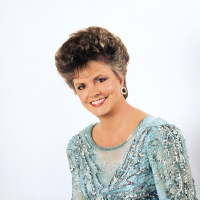
Cristy Lane’s Spotify BioCristy Lane is best remembered for her 1979 single "One Day at a Time," a gospel song that blended Protestant fervor with the language of self-help in a seamless, heartfelt whole. She is also noteworthy as one of the builders of the Branson, MO, live-entertainment phenomenon. Lane was born Eleanor Johnston to a family of 12 in Peoria, IL. Married before she was 20, she had three children by 1964. Her husband, Lee Stoller, a salesman, encouraged her to sing professionally, but she was painfully shy. After some tentative attempts, she landed several nightclub appearances and then a guest slot on Chicago's WLS Barn Dance radio program in 1968. She took her stage name from that of a Peoria DJ, Chris Lane.
Several early attempts to break into country music in Nashville came to nothing, and Lane struggled with the pressures of the performing career her husband was urging upon her. She attempted to commit suicide twice in the late '60s, once after a difficult 1969 tour of Vietnam, organized by… Stoller during which Lane performed 120 shows and was involved in a helicopter crash that left her stranded in the midst of a battle. Lane and Stoller returned to Peoria and opened a pair of nightclubs that featured Lane as the marquee attraction.
In 1972, the Stoller family moved to a Nashville suburb and continued its attempts to get Lane's career off the ground. The reaction from established label executives ranged from indifference to sexual come-ons for Lane, and finally Stoller formed his own label, LS, in the mid-'70s. He was tireless in promoting Lane's career, and his efforts were rewarded when the label's debut single, "Tryin' to Forget About You," and its follow-up, "Sweet Deceiver," made the charts in 1977. That year she also made it to the Top Ten and the Top 20 with "Let Me Down Easy" and "Shake Me, I Rattle," respectively. Lane scored three more hits the following year and in 1979 was named New Vocalist of the Year by the Academy of Country Music. During the awards ceremony Lane sang "I Just Can't Stay Married to You," which later became a Top Five hit. In late 1979, Lane was signed to United Artists Records and had three more hits. But the label balked at releasing the song Lane and Stoller had planned for their next single, "One Day at a Time."
That song was a several-years-old entry from Kris Kristofferson's catalog of compositions; co-written with Nashville veteran Marijohn Wilkin, it was of a piece with other religious songs (such as "Why Me, Lord?") the hard-living Kristofferson had written in soberer moments. Shortly before Lane's version appeared, the song had topped British charts in a version by vocalist Lena Martell. For country radio in 1980, it was an unorthodox song, but Lane and Stoller correctly estimated its powerful impact. After it hit number one on the country charts, Lane released "Sweet Sexy Eyes," her final Top Ten hit. Her career hit the skids temporarily when Stoller was imprisoned on racketeering charges in 1982, but the couple bounced back after Stoller observed the spectacular success yodeler-crooner Slim Whitman had experienced after beginning direct television marketing of his music.
By 1986 Lane and Stoller had put together a strong pair of linked materials: a One Day at a Time album and a Lane autobiography of the same name. Marketed through television advertising and later on the World Wide Web, these items sold well for years and kept Lane's name before a demographic just waiting to be tapped: that of country fans in late middle age. As Branson began to emerge as a major entertainment destination in the late '80s and early '90s, Lane and Stoller jumped on the bandwagon. Their Cristy Lane Theatre became a major Branson attraction, hosting not only Lane's own performances but also early appearances by Branson stars-to-be such as Yakov Smirnoff (in 1992). Lane sold her Branson theater in the mid-'90s but remained active as a performer. She has recorded several albums of gospel and sentimental standards for marketing through her website and elsewhere. Plans were laid in the early 2000s for a film depicting Lane's life story. ~ James Manheim, Rovi
Viberate is a music analytics platform built for A&Rs, artist managers, labels, booking agents, marketers, and artists.
It helps music professionals track artist growth, analyze audience data, monitor playlist activity, compare artists, follow song performance, and identify opportunities across the music market.
Public artist pages provide a free preview of selected artist data. Paid plans provide access to deeper analytics, historical data, charts, comparisons, playlist tools, exports, alerts, reports, and additional professional features.
Yes. Public Viberate artist pages provide selected artist analytics and music data for free.
Viberate also offers a 7-day free trial of the full platform. A credit card is required to start the trial. The trial includes access to the complete product so users can test deeper artist analytics, historical views, playlist insights, comparisons, charts, exports, alerts, and reporting features before choosing a paid plan.
Viberate provides artist analytics across streaming, playlists, social media, video, radio airplay, songs, and audience markets.
Users can analyze Spotify performance, Spotify and Apple Music playlists, YouTube activity, TikTok and Instagram growth, radio spins, song performance, audience locations, demographics, rankings, and overall artist momentum.
Artist profiles also connect to music charts, similar artists, and comparison tools, helping users benchmark performance and evaluate artists in context.
Viberate updates key artist and track data daily.
For followed artists and tracks, selected data is refreshed multiple times per day. This helps teams monitor playlist changes, streaming movement, audience growth, releases, and campaign performance with more current data.
Update frequency can vary depending on the metric and data source.
Yes. Viberate lets users compare up to five artists side by side across streaming, social media, audience, and engagement metrics.
Users can compare fanbase growth, audience demographics, locations, Spotify performance, social metrics, and other artist data over selected time periods.
Artist comparison can be used for A&R scouting, benchmarking, booking decisions, campaign planning, and evaluating artists with similar audiences or market positions.