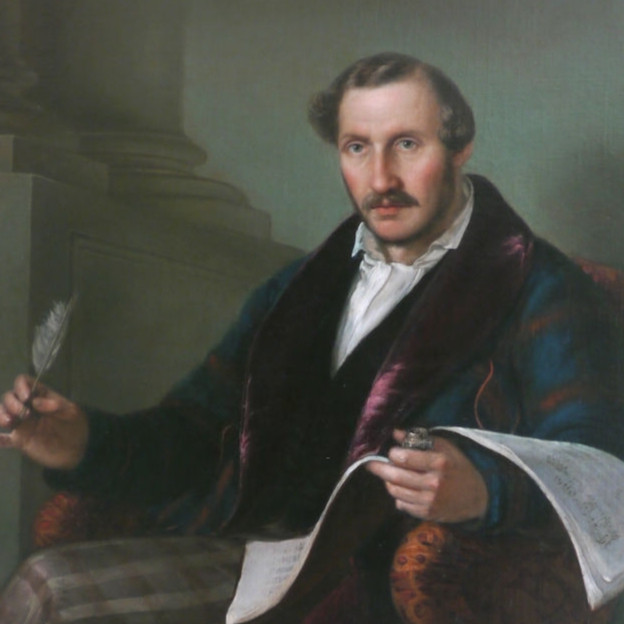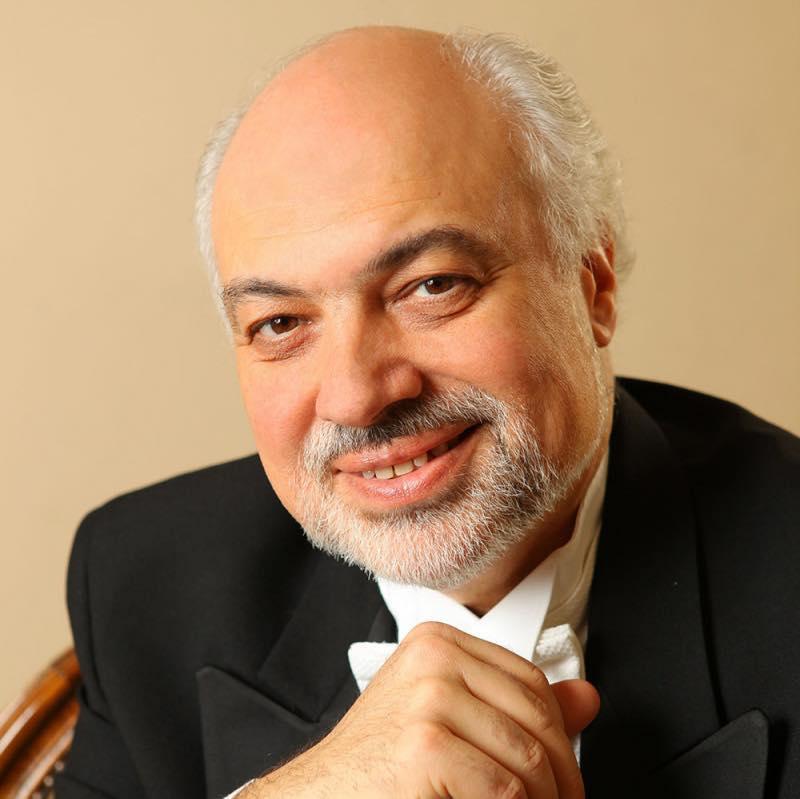
Constantine Orbelian

Classical
Orchestral
Opera
 Viberate Rank: 129828
 Viberate Rank: 129828
 Monthly ListenersFollowers
 Subscribers
 Followers
 Followers
 FansTop Spotify Songs
| Track | 7-Day Streams | |
|---|---|---|
1 | 8.99K | |
2 | 7.19K | |
3 | 6.19K | |
4 | 4.39K | |
5 | 2.96K |
Top YouTube VideosMonthly ListenersFeatured in Playlists| Playlist | Followers | |
|---|---|---|
1 |  Classical Crossover Spotify | 437.33K |
2 |  Lo MEJOR de la MUSICA CLASICA 🎹 🔱 THEOCIDE STUDIOS 🔱 | 100.67K |
3 | OPERAS FAMOSAS ❤️ bananaboba | 94.39K |
4 |  vintage soviet music ☭ armitta⋆˚࿔ | 82.91K |
5 |  ÓPERAS FAMOSAS Opera Playlist | 63.70K |
Audience| City | Monthly Listeners | |
|---|---|---|
1 |  | 3.02K |
2 |  | 1.94K |
3 |  | 1.75K |
4 |  | 1.18K |
5 | | 1.10K |
See full performance history, audience data, playlist activity, rankings, comparisons, and more in Viberate music analytics. Start with a free trial, then continue with a paid plan.
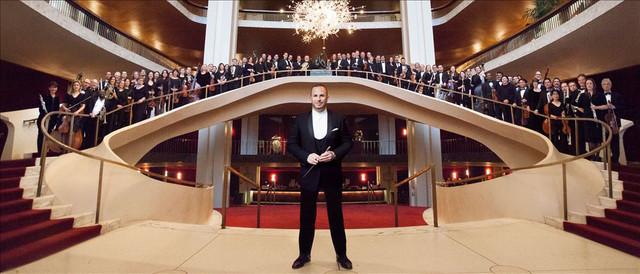
Constantine Orbelian’s Spotify BioConductor Constantine Orbelian is among the few conductors to have maintained flourishing careers in the U.S. and Russia. Orbelian began his career as a pianist.
Orbelian was born in San Francisco on August 27, 1956. His parents were immigrants, his father was Armenian, and his mother was Ukrainian. His father's brother was a major Armenian composer, and both parents were passionate music lovers. As a child, Orbelian hobnobbed with such visitors as Sviatoslav Richter, Emil Gilels, and Vladimir Ashkenazy. He took up the piano and was giving public concerts by age five. At 11, he made his debut with the San Francisco Symphony Orchestra. Orbelian studied in the U.S. with Alexander Lieberman, and he traveled to Armenia, then part of the Soviet Union, on a scholarship for studies there and in Moscow with Anaida Sumbatian; he was one of very few Americans to have studied in the Soviet Union before its collapse. Returning to the U.S., Orbelian studied with Nina Svetlanova and Nadia Reisenberg …at the Juilliard School in New York, graduating in 1980. He enjoyed a successful career as a concert pianist in the 1980s, appearing with such groups as the Boston Symphony, Detroit Symphony, and Moscow State Symphony Orchestras. In 1987, he made a recording of Khachaturian's Piano Concerto with the Scottish Chamber Orchestra and conductor Neeme Järvi.
Orbelian occasionally conducted from the keyboard, and it was this ability that brought him to the attention of the Moscow Chamber Orchestra, which had just suffered the death of its conductor, Andrei Korsakov. Orbelian was appointed music director in 1991, becoming the first American to hold a prominent music directorship with a Russian orchestra. Orbelian and his wife, violinist Maria Safariants, founded the Palaces of St. Petersburg Festival the following year. In 1999, he and the Moscow Chamber Orchestra inaugurated a long relationship with the Delos label, releasing an album of tangos by Astor Piazzolla. Orbelian took the Moscow Chamber Orchestra on several American tours, and in 2004, he was given the Honored Artist of Russia award by President Vladimir Putin; he was the first non-Russian artist so honored. Orbelian served as the music director of the Philharmonia of Russia and, from 2014, the Kaunas City Symphony Orchestra in Lithuania. He also holds the position of permanent guest conductor of the Moscow Philharmonic. Orbelian has released some 60 albums of orchestral music and opera, many with the Moscow Chamber Orchestra and the Kaunas City Symphony; with the latter group and an international group of singers, he issued a performance of Bellini's opera I Puritani in 2021. That year, he was named music director and principal conductor of the New York City Opera. ~ James Manheim, Rovi
Viberate is a music analytics platform built for A&Rs, artist managers, labels, booking agents, marketers, and artists.
It helps music professionals track artist growth, analyze audience data, monitor playlist activity, compare artists, follow song performance, and identify opportunities across the music market.
Public artist pages provide a free preview of selected artist data. Paid plans provide access to deeper analytics, historical data, charts, comparisons, playlist tools, exports, alerts, reports, and additional professional features.
Yes. Public Viberate artist pages provide selected artist analytics and music data for free.
Viberate also offers a 7-day free trial of the full platform. A credit card is required to start the trial. The trial includes access to the complete product so users can test deeper artist analytics, historical views, playlist insights, comparisons, charts, exports, alerts, and reporting features before choosing a paid plan.
Viberate provides artist analytics across streaming, playlists, social media, video, radio airplay, songs, and audience markets.
Users can analyze Spotify performance, Spotify and Apple Music playlists, YouTube activity, TikTok and Instagram growth, radio spins, song performance, audience locations, demographics, rankings, and overall artist momentum.
Artist profiles also connect to music charts, similar artists, and comparison tools, helping users benchmark performance and evaluate artists in context.
Viberate updates key artist and track data daily.
For followed artists and tracks, selected data is refreshed multiple times per day. This helps teams monitor playlist changes, streaming movement, audience growth, releases, and campaign performance with more current data.
Update frequency can vary depending on the metric and data source.
Yes. Viberate lets users compare up to five artists side by side across streaming, social media, audience, and engagement metrics.
Users can compare fanbase growth, audience demographics, locations, Spotify performance, social metrics, and other artist data over selected time periods.
Artist comparison can be used for A&R scouting, benchmarking, booking decisions, campaign planning, and evaluating artists with similar audiences or market positions.