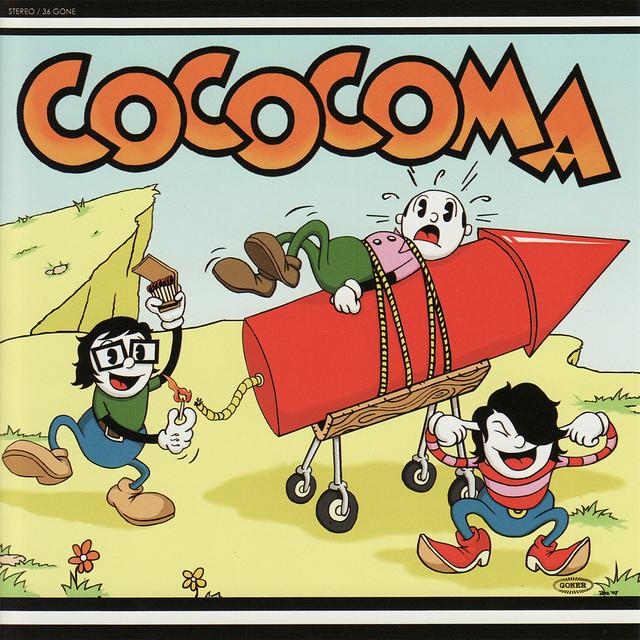
CoCoComa

Rock
Noise Rock
 Viberate Rank: 824270
 Viberate Rank: 824270
 Monthly ListenersFollowers
 Subscribers
 Followers
 Followers
 FansTop Spotify Songs
| Track | 7-Day Streams | |
|---|---|---|
1 | 18 | |
2 | 9 | |
3 | 6 | |
4 | 4 | |
5 | 3 |
Top YouTube VideosMonthly ListenersFeatured in Playlists| Playlist | Followers | |
|---|---|---|
1 |  Garage Punk / Lo-Fi Nick Seaney | 5.40K |
2 |  ⊛ beach goth ⊛ Thuỳ Dang | 1.89K |
3 |  The Best Show on WFMU Jared Duncan | 1.51K |
4 |  Pop Punk Underground Compilation ( 800+ Bands of 3 Chord Catchy Punk ) Khris Stranger | 1.30K |
Audience| City | Monthly Listeners | |
|---|---|---|
1 | | 7 |
2 |  | 3 |
See full performance history, audience data, playlist activity, rankings, comparisons, and more in Viberate music analytics. Start with a free trial, then continue with a paid plan.
CoCoComa’s Spotify BioBill and Lisa Roe are a couple who clearly love rock & roll; they run a small label, Trouble in Mind Records, and front the garage punk band CoCoComa when they're not busy with day jobs and looking after their young daughter. Based out of Chicago, the Roes formed CoCoComa in 2005, with Bill on drums and lead vocals, Lisa on guitar and backing vocals, and Mike Fitzpatrick on bass, organ, and backing vocals. In 2006 CoCoComa released a fistful of 7" singles and split EPs on a variety of labels, and in 2007 they hooked up with Memphis-based Goner Records to issue their self-titled debut album. In 2008, the future seemed iffy for the band -- Fitzpatrick left CoCoComa to move to New York state, and as Lisa discovered she was pregnant, the Roes debated the wisdom of continuing the group. However, as Bill and Lisa stockpiled a batch of new songs, they decided they should make another album, and recruited two new bandmates, Anthony Cozzi on guitar and organ and Tyler Brock on bass. The new… edition of CoCoComa cut 2009's Things Are Not All Right, and enthusiastic response from fans and critics encouraged the Roes to keep the band going. (They also discovered that their baby daughter didn't mind traveling, making touring less problematic than expected.) As Bill and Lisa squeezed additional touring (in America and overseas) with their bandmates alongside parenthood, work, and running Trouble in Mind, they assembled a compilation album, 2010's Spectrum of Sounds, which features material from CoCoComa's early singles and EPs and well as unreleased tunes and live recordings. ~ Mark Deming, Rovi
Viberate is a music analytics platform built for A&Rs, artist managers, labels, booking agents, marketers, and artists.
It helps music professionals track artist growth, analyze audience data, monitor playlist activity, compare artists, follow song performance, and identify opportunities across the music market.
Public artist pages provide a free preview of selected artist data. Paid plans provide access to deeper analytics, historical data, charts, comparisons, playlist tools, exports, alerts, reports, and additional professional features.
Yes. Public Viberate artist pages provide selected artist analytics and music data for free.
Viberate also offers a 7-day free trial of the full platform. A credit card is required to start the trial. The trial includes access to the complete product so users can test deeper artist analytics, historical views, playlist insights, comparisons, charts, exports, alerts, and reporting features before choosing a paid plan.
Viberate provides artist analytics across streaming, playlists, social media, video, radio airplay, songs, and audience markets.
Users can analyze Spotify performance, Spotify and Apple Music playlists, YouTube activity, TikTok and Instagram growth, radio spins, song performance, audience locations, demographics, rankings, and overall artist momentum.
Artist profiles also connect to music charts, similar artists, and comparison tools, helping users benchmark performance and evaluate artists in context.
Viberate updates key artist and track data daily.
For followed artists and tracks, selected data is refreshed multiple times per day. This helps teams monitor playlist changes, streaming movement, audience growth, releases, and campaign performance with more current data.
Update frequency can vary depending on the metric and data source.
Yes. Viberate lets users compare up to five artists side by side across streaming, social media, audience, and engagement metrics.
Users can compare fanbase growth, audience demographics, locations, Spotify performance, social metrics, and other artist data over selected time periods.
Artist comparison can be used for A&R scouting, benchmarking, booking decisions, campaign planning, and evaluating artists with similar audiences or market positions.