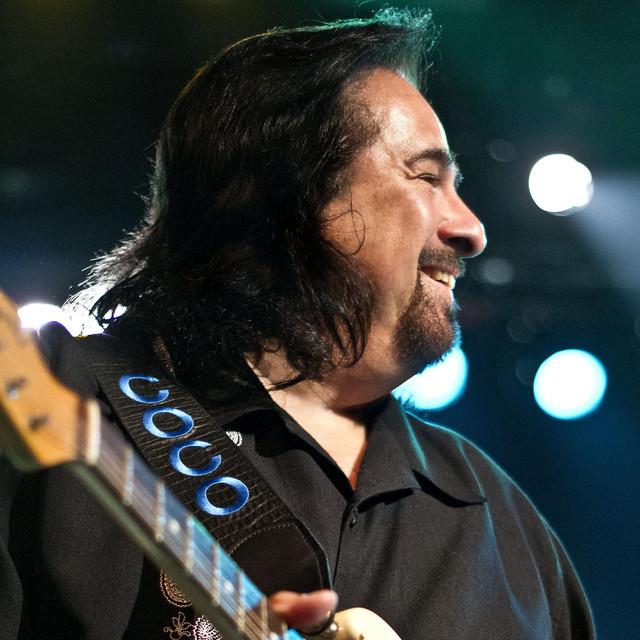
Coco Montoya

Blues
Blues Rock
Contemporary Blues
 Viberate Rank: 96030
 Viberate Rank: 96030
 Monthly ListenersFollowers
 Subscribers
 Followers
 Followers
 FansTop Spotify Songs
| Track | 7-Day Streams | |
|---|---|---|
1 | 10.03K | |
2 | 7.67K | |
3 | 6.34K | |
4 | 5.56K | |
5 | 5.14K |
Top YouTube VideosMonthly ListenersFeatured in Playlists| Playlist | Followers | |
|---|---|---|
1 |  Sexy Blues Jarel Kingsberry | 47.35K |
2 |  Blues Ballads/ Slow Blues Joar Fosså | 39.54K |
3 |  Reacher: Official Playlist Prime Video | 34.20K |
4 |  The Best of Slow Blues Eduardo Alves | 33.96K |
5 |  True Blood Sountrack Seasons 1 – 7 Carolyn Hall | 32.16K |
Audience| City | Monthly Listeners | |
|---|---|---|
1 |  | 954 |
2 |  | 857 |
3 | | 719 |
4 |  | 666 |
5 | | 653 |
See full performance history, audience data, playlist activity, rankings, comparisons, and more in Viberate music analytics. Start with a free trial, then continue with a paid plan.
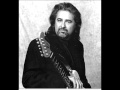
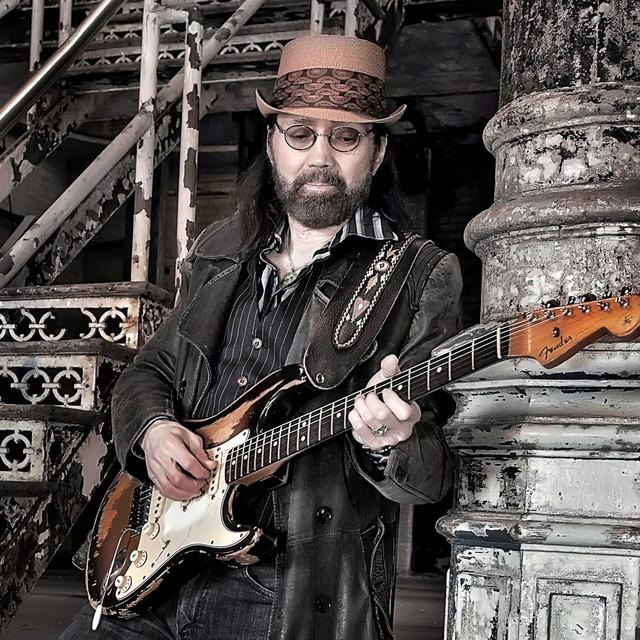
Coco Montoya’s Spotify BioThough he grew up a drummer raised on rock & roll, Coco Montoya is an outstanding blues-rock guitarist. Over a five-decade-plus career he has proven an influential, charting, award-winning technician, and songwriter. He established his reputation during the 1990s playing in the bands of Albert Collins and John Mayall. Known for a biting tone melding raucous, melodic Chicago blues and vintage R&B with soulful vocals, his left-handed playing style brings funky Latin rhythms, roots rock, and jazz into his approach to electric blues. His Silvertone solo debut, Gotta Mind to Travel from 1995, won the W.C. Handy award for "Best New Artist." 1996's Ya Think I'd Know Better, made the blues Top Ten. After signing with Alligator Records in 2000, 2002's Can't Look Back and 2007's Dirty Deal and 2019's Coming in Hot also charted inside the blues Top Five. In 2023 Montoya returned to studio recording with Writing on the Wall.
Born Henry Montoya in Santa Monica, California in 1951, his childhood home… was a treasure trove of music thanks to an enormous family record collection curated equally by his father and siblings. They listened to everything from big-band records to rock & roll and doo wop singles that flooded AM radio. During the early '60s, English musicians including John Mayall and Eric Clapton were redeveloping the electric blues style based on hearing American bluesmen such as Muddy Waters, Howlin' Wolf, and Sonny Boy Williamson. Montoya credits hearing Clapton play Freddie King's "Hideaway" as his initiation to electric blues. As a teen, he taught himself the guitar to voice feelings he couldn’t verbalize. It was his second instrument -- the first was a drum kit. Montoya played in local rock bands and established a rep as a rock-solid player. In 1969 he attended a concert to see Iron Butterfly and Creedence Clearwater. Between sets, Albert King performed. Montoya witnessed him playing "Watermelon Man," and it changed his life: he later said it was the first time he heard music that came straight from the heart.
In the '70s, Texas guitar slinger Albert Collins was booked to play a matinee at a small club in Culver City that Montoya had played the previous night. The club owner gave Collins permission to use his drums. Montoya arrived to pick up his gear and noticed someone had been playing his kit. He was irritated with the club owner. After being informed of this, Collins called him at the club; he was as gracious as he was apologetic. Montoya caught his gig and later told an interviewer "…it just tore my head off. The thing that I had seen and felt with Albert King came pouring back on me when I saw Albert Collins."
A few months later, Collins needed a drummer for a tour of the American Northwest. He remembered Montoya and called him. During the tour, the guitarist took his young charge under his wing, teaching him about blues music and road life. Montoya remained with Collins' band for five years. During that period, the younger man began doubling on guitar. Collins went out of his way to teach him while killing time in hotel rooms. The elder man would have Montoya play along to changes and develop leads organically, asking him not to think, but feel his way through the music. The pair became so close he referred to Montoya as his "son." After leaving the band, the pair remained close until the older man's death from cancer in 1993.
Montoya was back in the small-time nightclub business, by the early '80s bartending and playing guitar with regional bands. During a show he discovered that John Mayall was in the audience celebrating his birthday. In tribute, Montoya launched into a cover of Otis Rush's "All Your Love (I Miss Loving)." Impressed, Mayall left the club with a soundboard tape of Montoya's performance. When he decided to re-form the Bluesbreakers after a 16-year hiatus, he called Montoya. Despite the enormous pressure of filling a spot held previously by Clapton and Peter Green, Montoya grabbed the opportunity. Mayall had not released an album in five years, but the 1985 revival set Behind the Iron Curtain proved the British bluesman's continued viability, thanks in large part to the fiery axe work of Montoya. He remained with the Bluesbreakers for a decade before striking out on his own. Montoya made his leader debut with the 1995 Gotta Mind to Travel for Silvertone in the U.K. and Blind Pig in the U.S. It featured guest spots from Collins (his final recorded performance), Mayall, Debbie Davies, and Al Kooper, and garnered an award in the Best New Blues Artist category at the following year's W.C. Handy Awards. After that, Montoya became not only a popular artist among blues fans, critics, and radio programmers, but a mainstay and draw on the scene. He released two more albums for Blind Pig, 1996's Ya' Think I'd Know Better, and 1997's Just Let Go (both charted) before signing to Chicago's Alligator Records for Suspicion in 2000; it reached number ten. Montoya's profile expanded exponentially as his road band toured the globe for more than a year. Upon returning, he recorded 2002's Can't Look Back; it reached number two as the band hit the road for more than three years. After a long break he hit the touring circuit again and in late 2006, he re-entered the recording studio, emerging with Dirty Deal in 2007; it peaked at number two. As his road presence increased, he began headlining European and Asian music festivals. To that end he signed a European deal with Germany's Ruf Records issuing 2010's I Want It All Back (number four) and his first live offering, the double-length Songs from the Road in 2014 (number 15), promoting it with a U.S. tour of festivals and clubs. Montoya returned to Alligator for 2017's Hard Truth, which climbed to number five on the blues charts. After a short tour of festival sheds, Montoya returned to the studio to emerge with Coming in Hot in August of 2019. The set included songs by the teams of Montoya and Dave Steen as well as Tom Hambridge and Richard Fleming. It also included tunes by Warren Haynes, Frankie Miller, Jeff Paris, and Collins. The guitarist's backing band included bassists Bob Glaub and Mike Mennell, keyboardist Mike Finnigan, rhythm guitarists Billy Watts and Johnny Lee Schell, and drummer Tony Braunagel, who produced the album.
Following tours of festivals in the U.S. and Europe, Montoya, like every other traveling performer, was sidelined by the COVID-19 pandemic. He resumed touring in 2021, and in early 2023 entered Jeff's Garage, keyboardist and co-producer (with Braunagel) Jeff Paris's studio with clutch of songs -- including five originals -- and a quartet that included Paris, bassist Nathan Brown, and drummer Rena Beavers, as well as a handful of guests that included Braunagel playing drums selectively, and alternating guitarists Lee Roy Parnell, Ronnie Baker Brooks, and Dave Steen (who also contributed two songs to the set). Titled Writing on the Wall, it appeared in September as his sixth outing for Alligator. ~ Thom Jurek, Rovi
Viberate is a music analytics platform built for A&Rs, artist managers, labels, booking agents, marketers, and artists.
It helps music professionals track artist growth, analyze audience data, monitor playlist activity, compare artists, follow song performance, and identify opportunities across the music market.
Public artist pages provide a free preview of selected artist data. Paid plans provide access to deeper analytics, historical data, charts, comparisons, playlist tools, exports, alerts, reports, and additional professional features.
Yes. Public Viberate artist pages provide selected artist analytics and music data for free.
Viberate also offers a 7-day free trial of the full platform. A credit card is required to start the trial. The trial includes access to the complete product so users can test deeper artist analytics, historical views, playlist insights, comparisons, charts, exports, alerts, and reporting features before choosing a paid plan.
Viberate provides artist analytics across streaming, playlists, social media, video, radio airplay, songs, and audience markets.
Users can analyze Spotify performance, Spotify and Apple Music playlists, YouTube activity, TikTok and Instagram growth, radio spins, song performance, audience locations, demographics, rankings, and overall artist momentum.
Artist profiles also connect to music charts, similar artists, and comparison tools, helping users benchmark performance and evaluate artists in context.
Viberate updates key artist and track data daily.
For followed artists and tracks, selected data is refreshed multiple times per day. This helps teams monitor playlist changes, streaming movement, audience growth, releases, and campaign performance with more current data.
Update frequency can vary depending on the metric and data source.
Yes. Viberate lets users compare up to five artists side by side across streaming, social media, audience, and engagement metrics.
Users can compare fanbase growth, audience demographics, locations, Spotify performance, social metrics, and other artist data over selected time periods.
Artist comparison can be used for A&R scouting, benchmarking, booking decisions, campaign planning, and evaluating artists with similar audiences or market positions.