Clara Rockmore

Classical
Classical Crossover
Other Electronic Music
 Viberate Rank: 224331
 Viberate Rank: 224331
 Monthly ListenersFollowers
 Subscribers
 Followers
 Followers
 FansTop Spotify Songs
| Track | 7-Day Streams | |
|---|---|---|
1 | 3.47K | |
2 | 1.24K | |
3 | 826 | |
4 | 571 | |
5 | 509 |
Top YouTube VideosMonthly ListenersFeatured in Playlists| Playlist | Followers | |
|---|---|---|
1 |  The Sound of Everything The Sounds of Spotify | 53.82K |
2 |  waltzing in a ballroom lia wang | 44.09K |
3 |  Twin Peaks Vibes 📺 maddie f | 36.94K |
4 |  ASSTRONOMY 202 caneronwinter | 30.87K |
5 |  NPR All Songs Considered - The Bob Boilen years (unofficial) Fri Tsch | 30.02K |
Audience| City | Monthly Listeners | |
|---|---|---|
1 | | 367 |
2 | | 362 |
3 |  | 359 |
4 |  | 301 |
5 | | 291 |
See full performance history, audience data, playlist activity, rankings, comparisons, and more in Viberate music analytics. Start with a free trial, then continue with a paid plan.
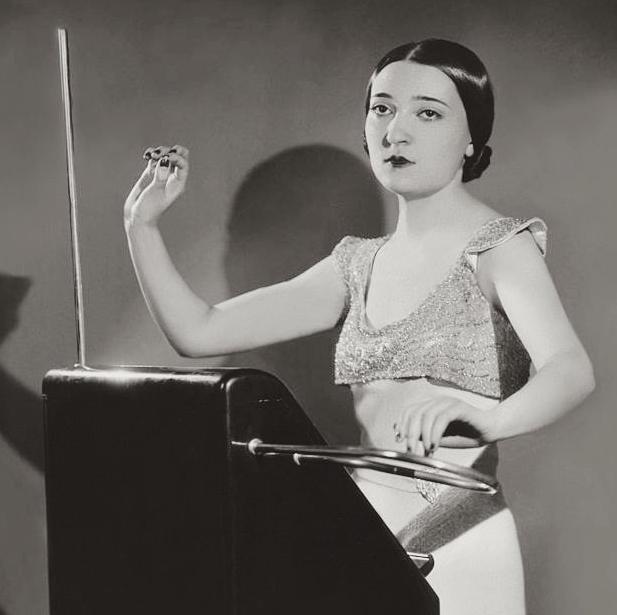
Clara Rockmore’s Spotify BioThe hypnotic, undulating cadence of the theremin has graced the soundtrack of a number of horror film soundtracks -- and at least one classic rock and roll tune, the Beach Boys' "Good Vibrations"). But the instrument has not inspired a large contingent of full-time adherents; it has mostly been used as a means of generating sound effects. The instrument's inventor, the Russian inventor Leon Theremin, envisioned his creation as a serious musical instrument, however. The theremin's preeminent virtuoso is by most accounts the first, a contemporary of Theremin himself named Clara Rockmore. She developed a formidable technique on the inherently microtonal instrument; in her hands, the theremin was capable of playing almost in equal temperament. Born Clara Reisenberg, Rockmore was a child prodigy on the violin, and was accepted to the Imperial Conservatory of Music in St. Petersburg, Russia at the age of four. Rockmore moved to the United States while still a child, settling in New York… City; from 1925 to 1928 she studied with the celebrated Hungarian violinist Leopold Auer. Muscular and joint problems threatened her career as a violinist, but she fortunately made the acquaintance of Theremin in New York, and worked with him between 1932 and 1934. From that point, the theremin, which is played without direct physical contact, became her primary instrument. Rockmore gave a legendary public performance on the theremin at New York's Town Hall on October 27, 1938, at which she played, among other works, a transcription of Franck's Violin Sonata. She went on to a distinguished career as an orchestral soloist and recitalist. Rockmore made what is arguably her most historically significant recording in 1977, The Art of the Theremin -- Clara Rockmore, on which she performed transcriptions of compositions by Ravel, Stravinsky, and Rachmaninov, to name just a few. A trend toward the revival of early electronic instruments in the 1980s caused the spotlight to fall on her anew; electronic music pioneer Robert Moog helped to bring about the filming of a television documentary about Rockmore, The Art of the Theremin, which aired on the CBS network. She was also featured in the 1994 film, Theremin: An Electronic Odyssey.
Viberate is a music analytics platform built for A&Rs, artist managers, labels, booking agents, marketers, and artists.
It helps music professionals track artist growth, analyze audience data, monitor playlist activity, compare artists, follow song performance, and identify opportunities across the music market.
Public artist pages provide a free preview of selected artist data. Paid plans provide access to deeper analytics, historical data, charts, comparisons, playlist tools, exports, alerts, reports, and additional professional features.
Yes. Public Viberate artist pages provide selected artist analytics and music data for free.
Viberate also offers a 7-day free trial of the full platform. A credit card is required to start the trial. The trial includes access to the complete product so users can test deeper artist analytics, historical views, playlist insights, comparisons, charts, exports, alerts, and reporting features before choosing a paid plan.
Viberate provides artist analytics across streaming, playlists, social media, video, radio airplay, songs, and audience markets.
Users can analyze Spotify performance, Spotify and Apple Music playlists, YouTube activity, TikTok and Instagram growth, radio spins, song performance, audience locations, demographics, rankings, and overall artist momentum.
Artist profiles also connect to music charts, similar artists, and comparison tools, helping users benchmark performance and evaluate artists in context.
Viberate updates key artist and track data daily.
For followed artists and tracks, selected data is refreshed multiple times per day. This helps teams monitor playlist changes, streaming movement, audience growth, releases, and campaign performance with more current data.
Update frequency can vary depending on the metric and data source.
Yes. Viberate lets users compare up to five artists side by side across streaming, social media, audience, and engagement metrics.
Users can compare fanbase growth, audience demographics, locations, Spotify performance, social metrics, and other artist data over selected time periods.
Artist comparison can be used for A&R scouting, benchmarking, booking decisions, campaign planning, and evaluating artists with similar audiences or market positions.