Cipriano de Rore

Classical
Choral
Chamber Music
 Viberate Rank: 526839
 Viberate Rank: 526839
 Monthly ListenersFollowers
 Subscribers
 Followers
 Followers
 FansTop Spotify SongsTop YouTube VideosMonthly ListenersFeatured in Playlists
| Playlist | Followers | |
|---|---|---|
1 |  Renaissance, Baroque, Medieval, & Other Early Music Andrew T. Lane | 13.44K |
2 |  Kalm met Klassiek NPO Klassiek | 4.96K |
3 | KEXP ~ PACIFIC NOTIONS Hush Hush Records | 4.16K |
4 |  Dungeons and Dragons Tabletop Playlist kingslayer133 | 3.87K |
5 | Choral and Sacred Music Geoffrey Kruse-Safford | 3.83K |
Audience| City | Monthly Listeners | |
|---|---|---|
1 |  | 113 |
2 |  | 92 |
3 |  | 89 |
4 |  | 75 |
5 |  | 63 |
See full performance history, audience data, playlist activity, rankings, comparisons, and more in Viberate music analytics. Start with a free trial, then continue with a paid plan.
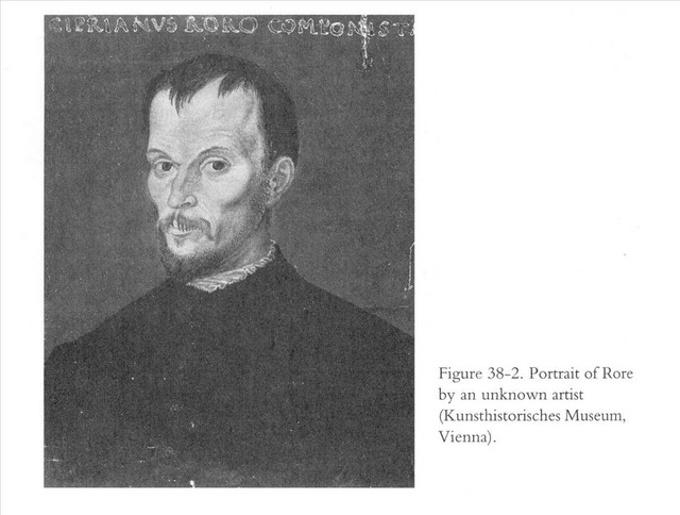
Cipriano de Rore’s Spotify BioHe was known while still alive as il divino Cipriano. He directed two of the finest musical chapels in Italy. Aristocrats across Europe -- the Emperor Charles V, the Count of Egmont, Duke Albrecht V of Bavaria -- asked him to compose for them. His music not only provided one of the first single-composer madrigal prints ever, but it was also republished after his death for an astonishing 40 years. A generation of madrigal composers looked to him for inspiration, and no less a figure than Giulio Cesare Monteverdi named him as innovator of the secunda prattica, the foundation of the Baroque style. This was Cipriano de Rore, truly a musical legend in his own time.
Rore was born to a minor noble family in Flemish Ronse (Renaix). Very little information survives about his early education, musical or otherwise. By 1542, however, he had moved from the Low countries to Italy (specifically Brescia), seeking musical fame. He might have studied with Willaert at Venice's San Marco; he quickly became… familiar with the man and his "circle." By the early 1540s, he was already composing heavily in both motets and madrigals; the dedications of several works indicate his ambition to serve some great Italian court. In 1546, he won the prestigious job of chapelmaster to Duke Ercole II d'Este of Ferrara. For decades Este Ferrara and nearby Mantua had maintained some of the finest musicians of the Renaissance; Rore's appointment secured him a highly visible position. He rose to the challenge, composing nearly half of all his extant music in the first decade of Ferrarese employment. Fully five books of his madrigals date from this period, including works in which his style shifted toward more radical and chromatic text-painting devices. This later Ferrarese style cemented Rore's European fame, as well as his influence upon a new generation.
In 1558, however, Rore seems to have attempted to resign from court life. He received permission to travel back to his hometown, though the town had been razed during a recent war. He lost his job in Ferrara upon the Duke's death, replaced it briefly with work for the smaller Farnese court of Parma, and finally took over the late Willaert's prestigious Venetian post of maestro di cappella for San Marco in 1563. Unfortunately, this employment failed for unknown reasons, and Rore returned to Parma in 1564. He died shortly thereafter, his reputation happily untarnished.
Viberate is a music analytics platform built for A&Rs, artist managers, labels, booking agents, marketers, and artists.
It helps music professionals track artist growth, analyze audience data, monitor playlist activity, compare artists, follow song performance, and identify opportunities across the music market.
Public artist pages provide a free preview of selected artist data. Paid plans provide access to deeper analytics, historical data, charts, comparisons, playlist tools, exports, alerts, reports, and additional professional features.
Yes. Public Viberate artist pages provide selected artist analytics and music data for free.
Viberate also offers a 7-day free trial of the full platform. A credit card is required to start the trial. The trial includes access to the complete product so users can test deeper artist analytics, historical views, playlist insights, comparisons, charts, exports, alerts, and reporting features before choosing a paid plan.
Viberate provides artist analytics across streaming, playlists, social media, video, radio airplay, songs, and audience markets.
Users can analyze Spotify performance, Spotify and Apple Music playlists, YouTube activity, TikTok and Instagram growth, radio spins, song performance, audience locations, demographics, rankings, and overall artist momentum.
Artist profiles also connect to music charts, similar artists, and comparison tools, helping users benchmark performance and evaluate artists in context.
Viberate updates key artist and track data daily.
For followed artists and tracks, selected data is refreshed multiple times per day. This helps teams monitor playlist changes, streaming movement, audience growth, releases, and campaign performance with more current data.
Update frequency can vary depending on the metric and data source.
Yes. Viberate lets users compare up to five artists side by side across streaming, social media, audience, and engagement metrics.
Users can compare fanbase growth, audience demographics, locations, Spotify performance, social metrics, and other artist data over selected time periods.
Artist comparison can be used for A&R scouting, benchmarking, booking decisions, campaign planning, and evaluating artists with similar audiences or market positions.