Christopher Hogwood

Classical
Chamber Music
 Viberate Rank: 73026
 Viberate Rank: 73026
 Monthly ListenersFollowers
 Subscribers
 Followers
 Followers
 FansTop Spotify Songs
| Track | 7-Day Streams | |
|---|---|---|
1 | 26.91K | |
2 | 26.40K | |
3 | 26.38K | |
4 | 14.43K | |
5 | 9.76K |
Top YouTube VideosMonthly ListenersFeatured in Playlists| Playlist | Followers | |
|---|---|---|
1 |  Best Classical Music Peaceful Classics | 857.62K |
2 |  This Is Bach Spotify | 720.77K |
3 |  Opera Classics Spotify | 605.55K |
4 |  This Is Vivaldi Spotify | 477.38K |
5 |  Classical Moments in Movies Spotify | 445.79K |
Audience| City | Monthly Listeners | |
|---|---|---|
1 |  | 7.87K |
2 | | 6.87K |
3 |  | 6.80K |
4 |  | 5.06K |
5 |  | 4.92K |
See full performance history, audience data, playlist activity, rankings, comparisons, and more in Viberate music analytics. Start with a free trial, then continue with a paid plan.
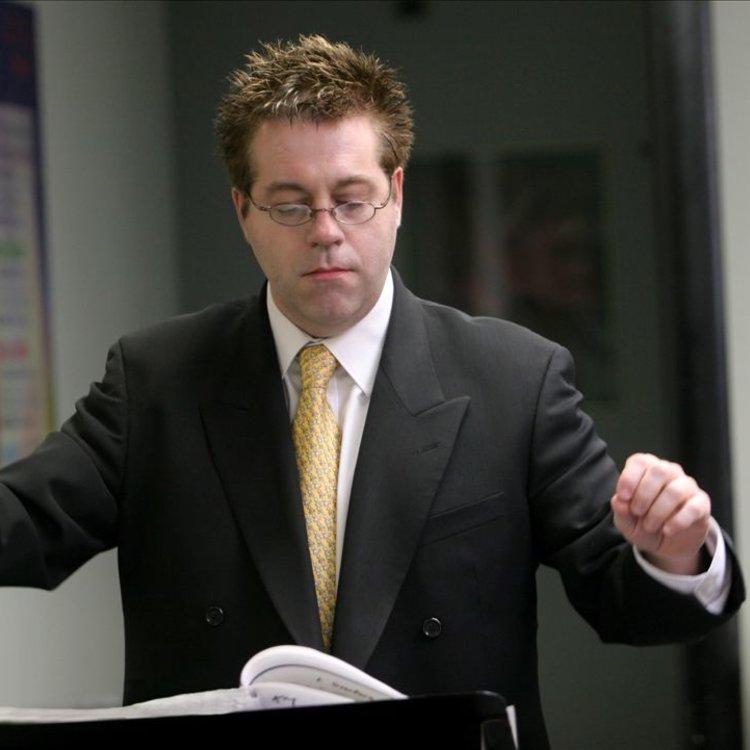
Christopher Hogwood’s Spotify BioA pioneering figure in the historical performance movement, conductor Christopher Hogwood became one of its most prominent figures and retained that status for many years. He was best known as the director of the Academy of Ancient Music, an ensemble that he founded in 1973 and that still exists, but he also conducted modern orchestras and was active in other fields as well, including teaching and musicology. Hogwood's recording catalog was vast, and his performances continued to appear in reissues after his death in 2014.
Hogwood was born on September 10, 1941, in Nottingham. He attended the Skinners' School and went on to Pembroke College at Oxford University. There, he studied music and classics, graduating in 1964. Even at that point, he was interested in early music, a rare specialty in those days, and he studied harpsichord with Gustav Leonhardt and Rafael Puyana. Hogwood was also influenced by harpsichordist Thurston Dart and conductor Raymond Leppard (with whom he took… conducting classes), both major figures in the budding early music scene. He spent a year in Prague on a British Council scholarship, studying with harpsichordist Zuzana Růžičková. Back in Britain, Hogwood, with multi-instrumentalist David Munrow, Hogwood organized the Early Music Consort, which specialized in medieval music, in 1967. The earliest of Hogwood's many LP recordings date from this period. Hogwood struck out on his own in 1973 with a new group, the Academy of Ancient Music, located in Cambridge and specializing in music of the Baroque and Classical eras. He remained its director until 2006, and it is still flourishing under the directorship of Laurence Cummings. Hogwood took the name from an 18th century London music organization.
As the historical performance movement (Hogwood preferred the term "historically informed performance" to "authentic performance" or "historical performance") entered the musical mainstream, Hogwood was both prolific and popular. He issued eight recordings in 1984 alone, outdoing himself with nine in 1989. He and the Academy of Ancient Music often recorded for the Decca label in Britain and L'Oiseau-Lyre in France. Beginning in the early '80s, Hogwood branched out increasingly often into conducting orchestras with conventional instruments, often shaping his performances according to principles he had developed in the early music world. He combined Baroque works with 20th century neoclassic pieces by the likes of Stravinsky and Michael Tippett in concert.
In the U.S., Hogwood was music director of the Saint Paul Chamber Orchestra from 1987 to 1992. In 1994, he conducted Boston's Handel and Haydn Society orchestra in a re-creation of the 1808 concert where Beethoven's Symphony No. 5 in C minor, Op. 67, and Symphony No. 6 in F major, Op. 68 ("Pastoral") were premiered. Hogwood stepped down as conductor of the Academy of Ancient Music in 2006 in favor of Richard Egarr but remained as conductor emeritus and led new performances annually. He taught at Cornell University and at Gresham College London, delivering a series of free public lectures at the latter. His books include a popular biography of Handel. Hogwood made many performing editions of early music. He died of a brain tumor on September 24, 2014, in Cambridge. ~ James Manheim, Rovi
Viberate is a music analytics platform built for A&Rs, artist managers, labels, booking agents, marketers, and artists.
It helps music professionals track artist growth, analyze audience data, monitor playlist activity, compare artists, follow song performance, and identify opportunities across the music market.
Public artist pages provide a free preview of selected artist data. Paid plans provide access to deeper analytics, historical data, charts, comparisons, playlist tools, exports, alerts, reports, and additional professional features.
Yes. Public Viberate artist pages provide selected artist analytics and music data for free.
Viberate also offers a 7-day free trial of the full platform. A credit card is required to start the trial. The trial includes access to the complete product so users can test deeper artist analytics, historical views, playlist insights, comparisons, charts, exports, alerts, and reporting features before choosing a paid plan.
Viberate provides artist analytics across streaming, playlists, social media, video, radio airplay, songs, and audience markets.
Users can analyze Spotify performance, Spotify and Apple Music playlists, YouTube activity, TikTok and Instagram growth, radio spins, song performance, audience locations, demographics, rankings, and overall artist momentum.
Artist profiles also connect to music charts, similar artists, and comparison tools, helping users benchmark performance and evaluate artists in context.
Viberate updates key artist and track data daily.
For followed artists and tracks, selected data is refreshed multiple times per day. This helps teams monitor playlist changes, streaming movement, audience growth, releases, and campaign performance with more current data.
Update frequency can vary depending on the metric and data source.
Yes. Viberate lets users compare up to five artists side by side across streaming, social media, audience, and engagement metrics.
Users can compare fanbase growth, audience demographics, locations, Spotify performance, social metrics, and other artist data over selected time periods.
Artist comparison can be used for A&R scouting, benchmarking, booking decisions, campaign planning, and evaluating artists with similar audiences or market positions.