Chiara String Quartet

Classical
Chamber Music
Classic Blues
 Viberate Rank: 507216
 Viberate Rank: 507216
 Monthly ListenersFollowers
 Subscribers
 Followers
 Followers
 FansTop Spotify SongsTop YouTube VideosMonthly ListenersFeatured in Playlists
| Playlist | Followers | |
|---|---|---|
1 | Late Junction (BBC Radio 3) (2014) elavraam | 1.42K |
Audience| City | Monthly Listeners | |
|---|---|---|
1 |  | 16 |
2 | | 9 |
3 | | 7 |
4 | | 6 |
5 | | 5 |
See full performance history, audience data, playlist activity, rankings, comparisons, and more in Viberate music analytics. Start with a free trial, then continue with a paid plan.
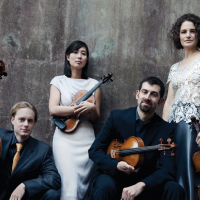
Chiara String Quartet’s Spotify BioThe Chiara String Quartet is known for playing its repertoire from memory. The ensemble was formed in 2000, and after winning a number of grants, it became the Quartet-in-Residence at the University of Nebraska, Lincoln in 2005 and the Blodgett Artists-in-Residence at Harvard University from 2008 to 2014 and at New York's Metropolitan Museum of Art in the 2015-2016 season. Founding members of the quartet are violinists Rebecca Fischer and Hyeyung Julie Yoon, violist Jonah Sirota, and cellist Gregory Beaver.
In addition to playing without printed parts, as demonstrated on the albums Brahms by Heart and Bartók by Heart, the Chiara String Quartet also performs in a variety of unusual venues, such as bars and nightclubs, following its bywords, "Chamber music in any chamber." The ensemble has taught at the Juilliard School of Music, the Greenwood Music Camp, and the Chamber Music Institute of the University of Nebraska. The Chiara String Quartet has recorded on its own New Voice Singles labe…l, as well as on New Amsterdam and Azica Records. Its recording of Jefferson Friedman's String Quartet No. 3 was nominated for a Grammy Award.
The quartet members decided to dissolve the ensemble at the end of the 2017-2018 season, allowing the musicians to expand their own performing and teaching careers. In the spring of 2018, as part of that last season's tour, the Chiara String Quartet and pianist Paul Barnes would premiere a new piano quintet by Philip Glass.
Viberate is a music analytics platform built for A&Rs, artist managers, labels, booking agents, marketers, and artists.
It helps music professionals track artist growth, analyze audience data, monitor playlist activity, compare artists, follow song performance, and identify opportunities across the music market.
Public artist pages provide a free preview of selected artist data. Paid plans provide access to deeper analytics, historical data, charts, comparisons, playlist tools, exports, alerts, reports, and additional professional features.
Yes. Public Viberate artist pages provide selected artist analytics and music data for free.
Viberate also offers a 7-day free trial of the full platform. A credit card is required to start the trial. The trial includes access to the complete product so users can test deeper artist analytics, historical views, playlist insights, comparisons, charts, exports, alerts, and reporting features before choosing a paid plan.
Viberate provides artist analytics across streaming, playlists, social media, video, radio airplay, songs, and audience markets.
Users can analyze Spotify performance, Spotify and Apple Music playlists, YouTube activity, TikTok and Instagram growth, radio spins, song performance, audience locations, demographics, rankings, and overall artist momentum.
Artist profiles also connect to music charts, similar artists, and comparison tools, helping users benchmark performance and evaluate artists in context.
Viberate updates key artist and track data daily.
For followed artists and tracks, selected data is refreshed multiple times per day. This helps teams monitor playlist changes, streaming movement, audience growth, releases, and campaign performance with more current data.
Update frequency can vary depending on the metric and data source.
Yes. Viberate lets users compare up to five artists side by side across streaming, social media, audience, and engagement metrics.
Users can compare fanbase growth, audience demographics, locations, Spotify performance, social metrics, and other artist data over selected time periods.
Artist comparison can be used for A&R scouting, benchmarking, booking decisions, campaign planning, and evaluating artists with similar audiences or market positions.