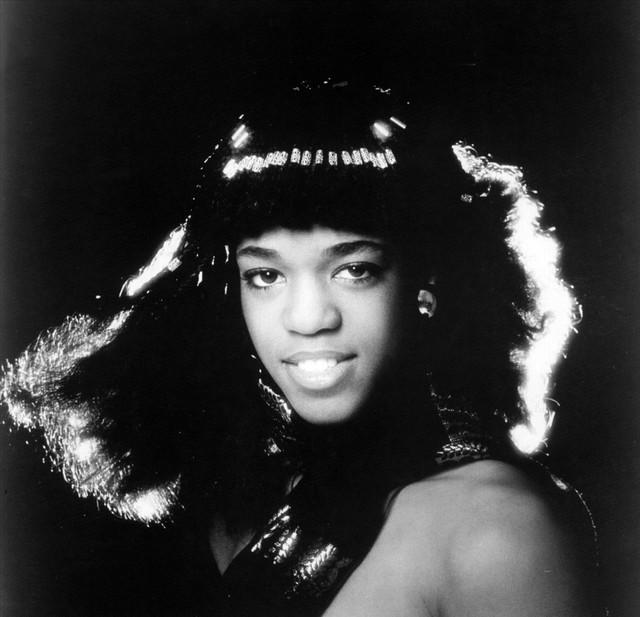
Cherrelle

R&B
Soul
Disco
 Viberate Rank: 39254
 Viberate Rank: 39254
 Monthly ListenersFollowers
 Subscribers
 Followers
 Followers
 FansTop Spotify Songs
| Track | 7-Day Streams | |
|---|---|---|
1 | 175.06K | |
2 | 43.14K | |
3 | 35.38K | |
4 | 18.18K | |
5 | 5.66K |
Top YouTube VideosMonthly ListenersFeatured in Playlists| Playlist | Followers | |
|---|---|---|
1 |  ’80s Jam Session Spotify | 876.49K |
2 | **80s R&B Hits** Chrismix | 119.14K |
3 |  Dance with Roby 🕺🏼 RealRobyn | 97.54K |
4 | 80s Soul Classics Daniel Benton | 68.39K |
5 | BLACK SUMMER COOKOUT King Retro 1 | 66.97K |
Audience| City | Monthly Listeners | |
|---|---|---|
1 | | 22.68K |
2 |  | 11.40K |
3 | | 9.28K |
4 | | 9.01K |
5 | | 8.78K |
See full performance history, audience data, playlist activity, rankings, comparisons, and more in Viberate music analytics. Start with a free trial, then continue with a paid plan.
Cherrelle’s Spotify BioOne of the stars of Clarence Avant's Tabu label, as well as an early beneficiary of producers Jimmy Jam and Terry Lewis, Cherrelle was born Cheryl Norton in 1958 in Los Angeles, California. After her family established a summertime residence in Detroit, Michigan, she met bassist/singer Michael Henderson, who had her appear on "One to One," the closing song on his 1978 album In the Night-Time. Norton subsequently went on tour with Henderson and Luther Vandross.
Early the following decade, Norton recorded a demo that came to the attention of Tabu Records owner Clarence Avant, who signed her through her father, an attorney. She took the stage name of Cherrelle, inspired by her boss at a bank where she had worked, who would yell, "Cher-relle, you're late!" Teamed with producers/songwriters Jimmy Jam and Terry Lewis -- Time members who had hits with Tabu's S.O.S. Band -- Cherrelle started with a steady stream of charting singles and albums. Fragile, released in 1984, produced the singles "I… Didn't Mean to Turn You On" (a Top Ten R&B hit later covered by Robert Palmer) and "Fragile…Handle with Care" (which reached the Top 40 of the same chart). High Priority, released the following year with more guidance from Jam and Lewis, as well as some additional songwriting and production from Cherrelle's romantic partner Randy Ran, featured the number two R&B hit "Saturday Love," a duet with labelmate Alexander O'Neal.
For Cherrelle's third album, Jam and Lewis decided to apply a concept-like LP format as they had with O'Neal's Hearsay -- in this case, a tale of a romantic relationship gone bad. The LP's first single was another Cherrelle/O'Neal duet, "Never Knew Love Like This," which parked at number two R&B for two weeks in early 1988. "Everything I Miss at Home," sporting a loungey jazz-piano feel, went to number one R&B in late 1988. The title track went to number four.
The same year she appeared on her cousin Pebbles' Top 20 R&B hit "Always," she released The Woman I Am, her first album away from Jam and Lewis. Her last charting LP, it featured production by Narada Michael Walden, Heatwave's Derek Bramble, and several others. Three singles charted, with "Tears of Joy" the most successful at number 23 R&B.
Cherrelle appeared on Alexander O'Neal's Love Makes No Sense and Lovers Again albums, and she recorded again with Pebbles on Straight from My Heart, but she didn't release her fifth full-length, the independently released and covers-heavy The Right Time, until 1999. During the 2000s and early 2010s, she continued to tour and frequently performed with O'Neal. Her Tabu albums were given expanded reissue treatments in 2013. ~ Andy Kellman & Ed Hogan, Rovi
Viberate is a music analytics platform built for A&Rs, artist managers, labels, booking agents, marketers, and artists.
It helps music professionals track artist growth, analyze audience data, monitor playlist activity, compare artists, follow song performance, and identify opportunities across the music market.
Public artist pages provide a free preview of selected artist data. Paid plans provide access to deeper analytics, historical data, charts, comparisons, playlist tools, exports, alerts, reports, and additional professional features.
Yes. Public Viberate artist pages provide selected artist analytics and music data for free.
Viberate also offers a 7-day free trial of the full platform. A credit card is required to start the trial. The trial includes access to the complete product so users can test deeper artist analytics, historical views, playlist insights, comparisons, charts, exports, alerts, and reporting features before choosing a paid plan.
Viberate provides artist analytics across streaming, playlists, social media, video, radio airplay, songs, and audience markets.
Users can analyze Spotify performance, Spotify and Apple Music playlists, YouTube activity, TikTok and Instagram growth, radio spins, song performance, audience locations, demographics, rankings, and overall artist momentum.
Artist profiles also connect to music charts, similar artists, and comparison tools, helping users benchmark performance and evaluate artists in context.
Viberate updates key artist and track data daily.
For followed artists and tracks, selected data is refreshed multiple times per day. This helps teams monitor playlist changes, streaming movement, audience growth, releases, and campaign performance with more current data.
Update frequency can vary depending on the metric and data source.
Yes. Viberate lets users compare up to five artists side by side across streaming, social media, audience, and engagement metrics.
Users can compare fanbase growth, audience demographics, locations, Spotify performance, social metrics, and other artist data over selected time periods.
Artist comparison can be used for A&R scouting, benchmarking, booking decisions, campaign planning, and evaluating artists with similar audiences or market positions.