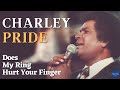
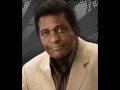
Charley Pride

Country
Contemporary Country
Mainstream Pop
 Viberate Rank: 17138
 Viberate Rank: 17138
 Monthly ListenersFollowers
 Subscribers
 Followers
 Followers
 FansTop Spotify Songs
| Track | 7-Day Streams | |
|---|---|---|
1 | 199.79K | |
2 | 87.06K | |
3 | 25.66K | |
4 | 21.25K | |
5 | 20.47K |
Top YouTube VideosMonthly ListenersFeatured in Playlists| Playlist | Followers | |
|---|---|---|
1 |  Country's Greatest Hits Spotify | 814.57K |
2 |  Classic Country Spotify | 659.18K |
3 |  Supernatural Soundtrack [All Seasons] Solitude Collective | 507.79K |
4 |  60s Country Spotify | 388.01K |
5 |  70s Country Spotify | 320.72K |
Audience| City | Monthly Listeners | |
|---|---|---|
1 |  | 20.71K |
2 | | 17.34K |
3 | | 13.35K |
4 | | 13.14K |
5 | | 9.83K |
See full performance history, audience data, playlist activity, rankings, comparisons, and more in Viberate music analytics. Start with a free trial, then continue with a paid plan.
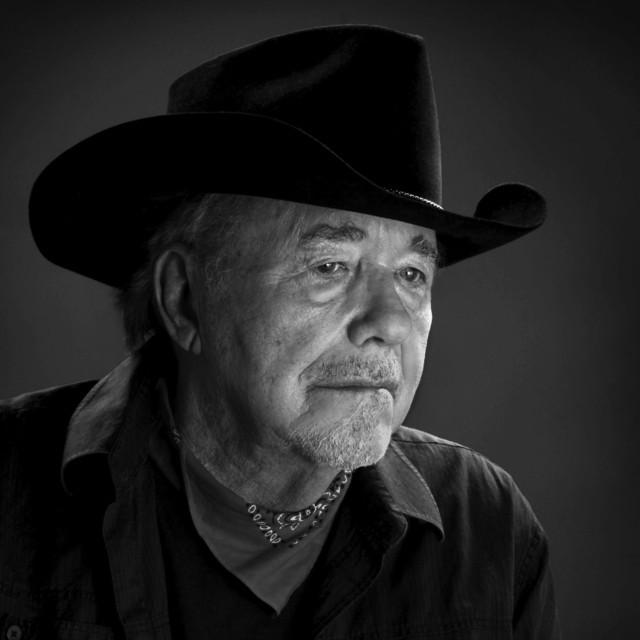
Charley Pride’s Spotify BioWith a warm, strong baritone voice and a knack for phrasing that gave his performances a down-home sincerity and believability, Charley Pride was one of country music's biggest success stories in the late 1960s through the mid-'80s. Most at home with relatable stories of love and life, with tuneful arrangements supporting his vocals, Pride racked up 36 number one country singles and 12 gold albums in his 1966 to 1983 heyday. For a time, Pride was second only to Elvis Presley among RCA Records' biggest-selling acts, and he remained a popular live attraction long after his traditional style fell out of favor on country radio. Part of what made Pride's initial success so remarkable was the fact that he was the first African-American artist to break through to major stardom in country music. In the mid-'60s through the '70s, a time when race was a hot-button issue in America, Pride demonstrated that there was room for Black artists on the Nashville hit parade, and he was the most… consistently successful African-American performer in country music throughout his career.
Pride was born on a cotton farm in Sledge, Mississippi, where his father was a sharecropper. When he was 14 years old, Charley bought a guitar from Sears Roebuck and taught himself to play by listening to country music on the radio. Two years later, he turned his attention to baseball. Pride signed on to play with the Memphis Red Sox, a team in the Negro American League. After playing ball for two years, Pride joined the U.S. Army, where he served for two years. Upon his discharge, he intended to return to baseball, but he sustained injuries that affected his throwing arm. Discouraged that he couldn't qualify for the major leagues, Pride worked construction in Helena, Montana, while still playing in the minors. Eventually, he earned a tryout for the California Angels in 1961, but they turned him down; the following year, the New York Mets rejected him as well.
With his career in baseball seemingly over, Pride turned his attention to music, and in 1963 he sang "Lovesick Blues" for Red Foley and Red Sovine backstage at one of Sovine's concerts. The veteran musicians were impressed and told Charley he should go to Nashville. Heeding their advice, Pride traveled to Music City, but he couldn't break into the industry. However, both of the Reds and Webb Pierce kept recommending the fledgling singer to their associates, and eventually helped him secure a management deal with Jack Johnson. Through Johnson, Pride met producer Jack Clement, who sent a demo tape of Pride's to Chet Atkins at RCA, who signed the vocalist in 1966. Later that year, Pride's debut single, "The Snakes Crawl at Night," was released but was issued without a publicity photograph, since the label was uncertain if radio programmers would support a Black country singer. Both "The Snakes Crawl at Night" and his second single, "Before I Met You," gained a small audience, but it wasn't until "Just Between You and Me" that Charley became a star. Released at the end of 1966, "Just Between You and Me" climbed to number nine and began a virtually uninterrupted streak of Top Ten singles that ran until 1984; out of his 54 singles issued during those 18 years, only three failed to crack the Top Ten.
Though he was praised upon the release of "Just Between You and Me" and won a Grammy Award for the single, there remained resistance in certain quarters of the country audience to a Black performer. Nevertheless, the consistent quality of Pride's music and the support from his fellow musicians helped open doors for him. On January 7, 1967, he became the first Black artist to perform on the Grand Ole Opry since DeFord Bailey in 1925. Over the next two years, his star steadily rose, and between 1969 and 1971 he had six straight number one singles: "All I Have to Offer You (Is Me)," "I'm So Afraid of Losing You Again," "(Is Anybody Going To) San Antone," "Wonder Could I Live There Anymore," "I Can't Believe That You've Stopped Loving Me," and "I'd Rather Love You." All of those singles also charted in the lower regions of the pop charts, giving evidence of his smooth country-pop crossover appeal. "Let Me Live," taken from his gospel album Did You Think to Pray?, temporarily broke his streak of number one singles in the spring of 1971, but it won a Grammy for Best Gospel Performance. Directly after "Let Me Live," two of his biggest hits -- "I'm Just Me" and "Kiss an Angel Good Mornin'" -- arrived, earning him his greatest success on both the country and pop charts.
Throughout the '70s, Pride continued to chart in the upper regions of the country charts, earning number one singles like "It's Gonna Take a Little Bit Longer" (1972), "She's Too Good to Be True" (1972), "A Shoulder to Cry On" (1973), "Then Who Am I" (1975), "She's Just an Old Love Turned Memory" (1977), and "Where Do I Put Her Memory." During this time, he remained loyal to his country-pop style, though he promoted new performers and songwriters like Ronnie Milsap, Gary Stewart, and Kris Kristofferson. Pride's success continued during the first half of the '80s, as he continued to have number one hits like "Honky Tonk Blues" (1980), "Mountain of Love" (1982), "You're So Good When You're Bad" (1982), and "Night Games" (1983). During 1984 and 1985, however, he grew frustrated with RCA Records, which began to promote newer artists at the expense of veteran performers like Pride himself. He left the label at the end of 1986, signing with Opryland's 16th Avenue label, where he returned to working with his old producer, Jerry Bradley.
Pride had a number of minor hits for the label, highlighted by 1988's number five "Shouldn't It Be Easier Than This," before the company went under. Pride moved on to Honest Entertainment in the early '90s, where he released My 6 Latest & 6 Greatest, featuring duets with the likes of Marty Stuart and Travis Tritt. Though he wasn't heard as often on the radio, Pride continued to be a popular concert attraction. On each of his shows, he was supported by his son Dion Pride, who played lead guitar. In 1994, Pride was given the Academy of Country Music's Pioneer Award. While staying busy as a live act, he continued to record occasionally in the 21st century, releasing Choices in 2011 and Music in My Heart in 2018.
In November 2020, the Country Music Association presented Pride with the Willie Nelson Lifetime Achievement Award, with the head of the CMA declaring, "Charley Pride is the epitome of a trailblazer." For the CMA Awards broadcast, he sang "Kiss an Angel Good Mornin'" as a duet with Jimmie Allen. It proved to be Pride's last major public appearance; he died in Dallas on December 12 due to complications from the COVID-19 virus. He was 86 years old. ~ David Vinopal, Rovi
Viberate is a music analytics platform built for A&Rs, artist managers, labels, booking agents, marketers, and artists.
It helps music professionals track artist growth, analyze audience data, monitor playlist activity, compare artists, follow song performance, and identify opportunities across the music market.
Public artist pages provide a free preview of selected artist data. Paid plans provide access to deeper analytics, historical data, charts, comparisons, playlist tools, exports, alerts, reports, and additional professional features.
Yes. Public Viberate artist pages provide selected artist analytics and music data for free.
Viberate also offers a 7-day free trial of the full platform. A credit card is required to start the trial. The trial includes access to the complete product so users can test deeper artist analytics, historical views, playlist insights, comparisons, charts, exports, alerts, and reporting features before choosing a paid plan.
Viberate provides artist analytics across streaming, playlists, social media, video, radio airplay, songs, and audience markets.
Users can analyze Spotify performance, Spotify and Apple Music playlists, YouTube activity, TikTok and Instagram growth, radio spins, song performance, audience locations, demographics, rankings, and overall artist momentum.
Artist profiles also connect to music charts, similar artists, and comparison tools, helping users benchmark performance and evaluate artists in context.
Viberate updates key artist and track data daily.
For followed artists and tracks, selected data is refreshed multiple times per day. This helps teams monitor playlist changes, streaming movement, audience growth, releases, and campaign performance with more current data.
Update frequency can vary depending on the metric and data source.
Yes. Viberate lets users compare up to five artists side by side across streaming, social media, audience, and engagement metrics.
Users can compare fanbase growth, audience demographics, locations, Spotify performance, social metrics, and other artist data over selected time periods.
Artist comparison can be used for A&R scouting, benchmarking, booking decisions, campaign planning, and evaluating artists with similar audiences or market positions.