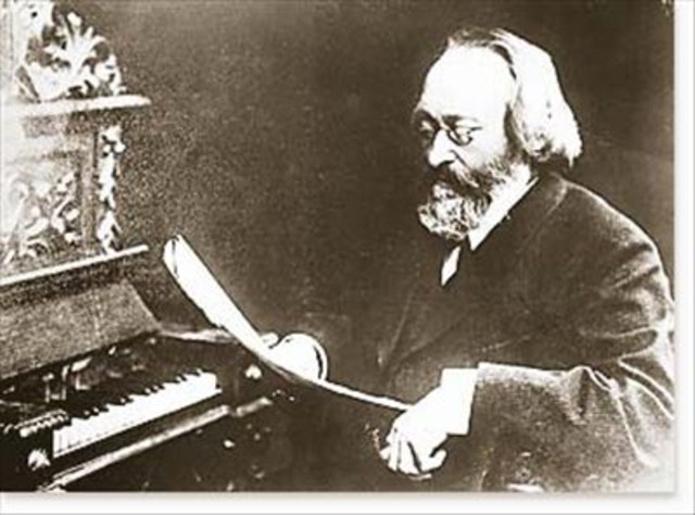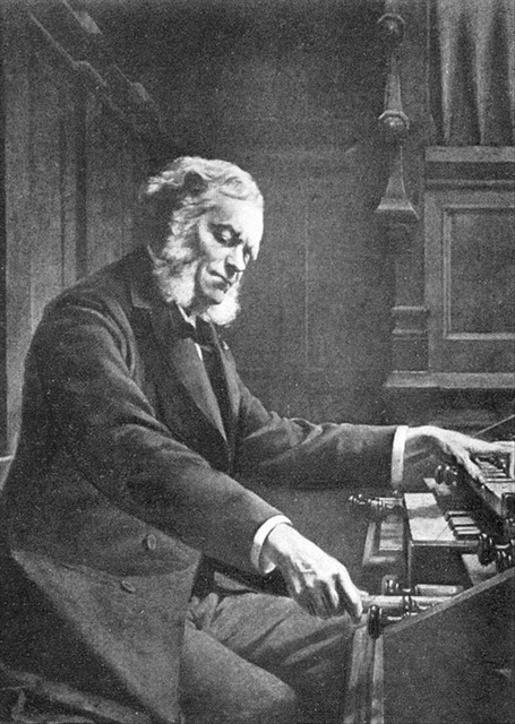
César Franck

Classical
Chamber Music
 Viberate Rank: 103220
 Viberate Rank: 103220
 Monthly ListenersFollowers
 Subscribers
 Followers
 Followers
 FansTop Spotify Songs
| Track | 7-Day Streams | |
|---|---|---|
1 | 8.31K | |
2 | 7.85K | |
3 | 7.71K | |
4 | 5.27K | |
5 | 4.96K |
Top YouTube Videos| Video | 7-Day Views | |
|---|---|---|
1 | 122 | |
2 | 16 | |
3 | 7 | |
4 | 6 | |
5 | 5 |
Monthly ListenersFeatured in Playlists| Playlist | Followers | |
|---|---|---|
1 |  Classical Bangers 🎹🎻 Classical Bangers | 1.25M |
2 |  dark academia ☕️📜 studying and reading instrumentals poets and coffee | 351.76K |
3 |  Classical Music For Studying & Focus Klassieke Muziek by Maestro Music | 326.34K |
4 |  study music that is actually motivating Study Mode Classics | 241.45K |
5 |  This Is Pavarotti Spotify | 238.37K |
Audience| City | Monthly Listeners | |
|---|---|---|
1 |  | 4.41K |
2 |  | 4.19K |
3 |  | 3.99K |
4 |  | 2.69K |
5 |  | 2.57K |
See full performance history, audience data, playlist activity, rankings, comparisons, and more in Viberate music analytics. Start with a free trial, then continue with a paid plan.
César Franck’s Spotify BioCésar Franck was born in Belgium but established his career as a composer, organist, and influential teacher in France, most prestigiously at the Paris Conservatoire and at the church of Sainte-Clotilde. His music was heavily influenced by Liszt and Wagner, as in his Symphony in D minor, one of his most famous compositions. Franck's organ pieces are among the most celebrated Romantic works for that instrument, though his symphonic poems, chamber music (particularly the Sonata for Violin in A), and sacred choral settings are also regularly performed.
Franck was born in Liège (in the French region, which in 1830 became part of a new state, Belgium), on December 10, 1822. He was a keyboard player of extraordinary ability who had a short stint as a touring piano virtuoso before moving to Paris and throwing himself into musical studies. In addition, he was an organist at several major churches during his career, and his skills on the organ accounted in great part for his compositional… interest in that instrument; his organ compositions stand at the apex of the Romantic organ repertoire. For much of his life, Franck was organist at the Paris churches of Saint-Jean-Saint-François and then Sainte-Clotilde, and in 1872 he became a professor at the Paris Conservatoire. He led a group of young composers, among them d'Indy, Duparc, and Dukas, who found much to admire in his highly individual, post-Romantic style, with its rich, innovative harmonies, sometimes terse melodies, and skilled contrapuntal writing. This group, sometimes known as "la bande à Franck," steered French composition toward symphonic and chamber music, finally breaking the stranglehold of the more conservative opera over French music.
Individual and instantly recognizable though Franck's music was, it owes a debt to Liszt and Wagner, especially to the latter's Tristan und Isolde and several other late works. He tended to use rather quick modulations, an inheritance from Wagner, and shifting harmonies. There is a Germanic ponderousness in some of his compositions and a mixture of paradoxical elements so typical of the composer, such as moments of peace and serenity that barely conceal an undercurrent of disquiet. These elements were used to great advantage in the Symphony in D minor of 1888, where Franck also adapts the Lisztian-Wagnerian predilection toward cyclical structure and melodic motto to an abstract symphonic form. Another characteristic of Franck's music is extended homophonic writing, as exemplified in his choral symphonic poem Psyché.
Franck was a man of strong religious convictions throughout his life, which often motivated him to compose works based on biblical texts or on other church sources, yet his choral works were slightly less successful than his organ works. However, his religious, solo vocal piece Panis Angelicus (1872) is highly popular and frequently recorded. Franck's most lastingly successful and recognizable composition is his Violin Sonata in A (1886), which shares characteristics with the Symphony and has been transcribed for a multitude of other instruments. Franck died in Paris on November 8, 1890. By the turn of the century, he had become the leading figure associated with the "old school" in France, while Debussy came to represent the "progressive" forces. ~ TiVo Staff, Rovi
Viberate is a music analytics platform built for A&Rs, artist managers, labels, booking agents, marketers, and artists.
It helps music professionals track artist growth, analyze audience data, monitor playlist activity, compare artists, follow song performance, and identify opportunities across the music market.
Public artist pages provide a free preview of selected artist data. Paid plans provide access to deeper analytics, historical data, charts, comparisons, playlist tools, exports, alerts, reports, and additional professional features.
Yes. Public Viberate artist pages provide selected artist analytics and music data for free.
Viberate also offers a 7-day free trial of the full platform. A credit card is required to start the trial. The trial includes access to the complete product so users can test deeper artist analytics, historical views, playlist insights, comparisons, charts, exports, alerts, and reporting features before choosing a paid plan.
Viberate provides artist analytics across streaming, playlists, social media, video, radio airplay, songs, and audience markets.
Users can analyze Spotify performance, Spotify and Apple Music playlists, YouTube activity, TikTok and Instagram growth, radio spins, song performance, audience locations, demographics, rankings, and overall artist momentum.
Artist profiles also connect to music charts, similar artists, and comparison tools, helping users benchmark performance and evaluate artists in context.
Viberate updates key artist and track data daily.
For followed artists and tracks, selected data is refreshed multiple times per day. This helps teams monitor playlist changes, streaming movement, audience growth, releases, and campaign performance with more current data.
Update frequency can vary depending on the metric and data source.
Yes. Viberate lets users compare up to five artists side by side across streaming, social media, audience, and engagement metrics.
Users can compare fanbase growth, audience demographics, locations, Spotify performance, social metrics, and other artist data over selected time periods.
Artist comparison can be used for A&R scouting, benchmarking, booking decisions, campaign planning, and evaluating artists with similar audiences or market positions.