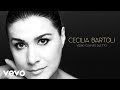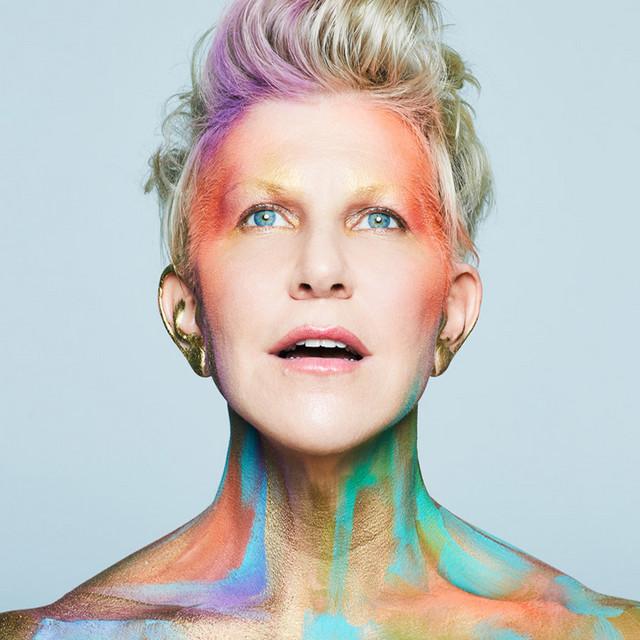
Cecilia Bartoli

Classical
Opera
 Viberate Rank: 40097
 Viberate Rank: 40097
 Monthly ListenersFollowers
 Subscribers
 Followers
 Followers
 FansTop Spotify SongsTop YouTube VideosMonthly ListenersFeatured in Playlists
| Playlist | Followers | |
|---|---|---|
1 |  Opera Classics Spotify | 605.42K |
2 |  Opera Classics Decca Records US | 376.27K |
3 |  Andrea Bocelli Essential Playlist Andrea Bocelli | 95.71K |
4 | OPERAS FAMOSAS ❤️ bananaboba | 94.31K |
5 |  1000 Recordings to Hear Before You Die (Tom Moon): Album Index Ulysses' Classical | 94.30K |
Audience| City | Monthly Listeners | |
|---|---|---|
1 |  | 6.47K |
2 |  | 5.46K |
3 |  | 4.64K |
4 | | 3.54K |
5 |  | 3.31K |
See full performance history, audience data, playlist activity, rankings, comparisons, and more in Viberate music analytics. Start with a free trial, then continue with a paid plan.
Cecilia Bartoli’s Spotify BioIn the late '90s, mezzo-soprano Cecilia Bartoli was one of the world's most popular singers, for several years eclipsed in album sales only by Luciano Pavarotti, and she remains a beloved figure. Her repertory runs from the Baroque through Mozart and the bel canto roles of the first third of the 19th century. Bartoli's performances and recordings are well-researched as well as beautifully sung, and for a singer of her stature, she has recorded a good deal of little-known music. A new Bartoli compilation, Casta Diva, appeared in 2024.
Bartoli was born in Rome on June 4, 1966. Her parents were both professional singers, and she made her stage debut at nine as a shepherd boy in Puccini's Tosca. Bartoli attended the Santa Cecilia Conservatory in Rome, studying trombone and flirting with a career as a flamenco dancer; her only long-term voice teacher had been her mother. She made her Zurich Opera House debut in 1989 as Cherubino in Mozart's Le nozze di Figaro under conductor Nikolaus… Harnoncourt, a frequent collaborator. That year also saw the release of Bartoli's debut album, Rossini Arias, on the London label. Her star rose rapidly in the early '90s; her debut in New York, where she remains extraordinarily popular, came at a 1990 Mostly Mozart Festival concert. In 1992, she would return to that festival for three sold-out shows.
Charismatic, musically intelligent, and vocally agile (singing both mezzo-soprano and soprano roles), Bartoli made her debut on the coveted stage at Milan, Italy's La Scala, in 1991. Bartoli has called herself a child of the 18th century and has been able to combine vocally spectacular Baroque roles, several times in Vivaldi's comparatively underexposed operas, with limpid Mozart melodies and bel canto through much of her career. Bartoli's Metropolitan Opera debut came in 1996 as Despina in Mozart's Così fan tutte, returning in 1997 in the lead role in Rossini's La Cenerentola, and once again in 1998 as Susanna in Le nozze di Figaro. In the mid-2000s, she devoted herself mostly to Baroque opera, appearing as Cleopatra in Handel's Giulio Cesare, and then to bel canto toward the end of the decade, issuing the album Maria, which investigated the career of famed soprano Maria Malibran. The pace of Bartoli's stage appearances and recordings slowed somewhat in the 2010s but remained vigorous. Bartoli became the artistic director of the Salzburg Whitsun Festival in 2012; her appearances there as Cleopatra in Handel's Giulio Cesare (2012) and in the title roles of Bellini's Norma (2013) and La Cenerentola (2014), as well as her programming decisions, resulted in record ticket sales for the formerly academically oriented festival.
On recordings, Bartoli has been associated mostly with the London and Decca labels; crossover albums have been notably absent from her large catalog. Bartoli's 2011 album Sacrificium won a Grammy Award for Best Classical Vocal Performance; it was her fifth Grammy. Some of her albums have included music by lesser-known composers such as Antonio Salieri and Agostino Steffani; her concept album Mission (2012) covered the music and career of the latter. On Decca, she released Antonio Vivaldi, a collection of arias, in 2018. The following year saw the release of Farinelli, an homage to the 18th century castrato singer, on the cover of which Bartoli appeared in drag. Bartoli's 2021 album Unreleased consisted of an unissued 2013 album featuring arias by Beethoven, Josef Mysliveček, Mozart, and Haydn, all written for leading divas of the era. Her 2024 release Casta Diva was a collection of classic and newly recorded Bartoli material; by that time, her recording catalog comprised well over 50 items, many of them complete operas. Bartoli was inducted into the French Order of Arts and Letters in 1995. She has lived with her husband, baritone Oliver Widmer, in Switzerland on Lake Zurich, in Rome, and in Monaco. ~ James Manheim, Rovi
Viberate is a music analytics platform built for A&Rs, artist managers, labels, booking agents, marketers, and artists.
It helps music professionals track artist growth, analyze audience data, monitor playlist activity, compare artists, follow song performance, and identify opportunities across the music market.
Public artist pages provide a free preview of selected artist data. Paid plans provide access to deeper analytics, historical data, charts, comparisons, playlist tools, exports, alerts, reports, and additional professional features.
Yes. Public Viberate artist pages provide selected artist analytics and music data for free.
Viberate also offers a 7-day free trial of the full platform. A credit card is required to start the trial. The trial includes access to the complete product so users can test deeper artist analytics, historical views, playlist insights, comparisons, charts, exports, alerts, and reporting features before choosing a paid plan.
Viberate provides artist analytics across streaming, playlists, social media, video, radio airplay, songs, and audience markets.
Users can analyze Spotify performance, Spotify and Apple Music playlists, YouTube activity, TikTok and Instagram growth, radio spins, song performance, audience locations, demographics, rankings, and overall artist momentum.
Artist profiles also connect to music charts, similar artists, and comparison tools, helping users benchmark performance and evaluate artists in context.
Viberate updates key artist and track data daily.
For followed artists and tracks, selected data is refreshed multiple times per day. This helps teams monitor playlist changes, streaming movement, audience growth, releases, and campaign performance with more current data.
Update frequency can vary depending on the metric and data source.
Yes. Viberate lets users compare up to five artists side by side across streaming, social media, audience, and engagement metrics.
Users can compare fanbase growth, audience demographics, locations, Spotify performance, social metrics, and other artist data over selected time periods.
Artist comparison can be used for A&R scouting, benchmarking, booking decisions, campaign planning, and evaluating artists with similar audiences or market positions.