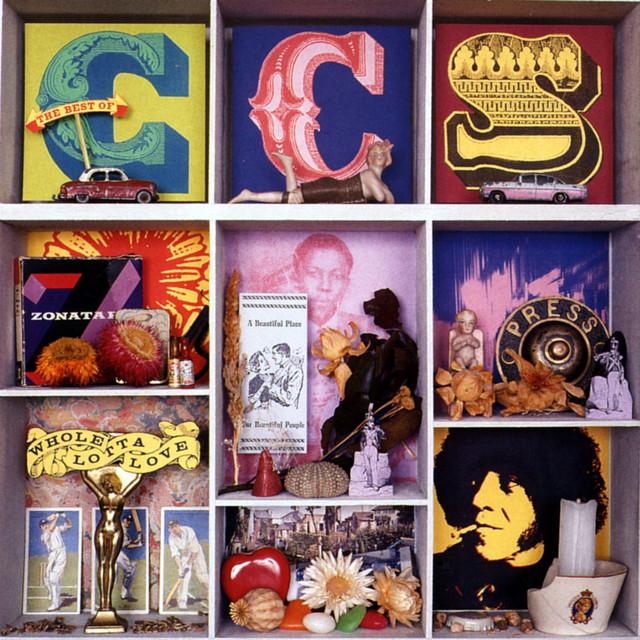
C.C.S.

Blues
Blues Rock
Hard Rock
 Viberate Rank: 66818
 Viberate Rank: 66818
 Monthly ListenersFollowers
 Subscribers
 Followers
 Followers
 FansTop Spotify Songs
| Track | 7-Day Streams | |
|---|---|---|
1 | 1.80K | |
2 | 1.19K | |
3 | 824 | |
4 | 824 | |
5 | 547 |
Top YouTube VideosMonthly ListenersFeatured in Playlists| Playlist | Followers | |
|---|---|---|
1 |  60s 70s 80s 90s 00s Greatest Hits and Songs Diestro Music | 51.95K |
2 |  Seventies Hits 1970-1979 Victor Legerstee | 22.46K |
3 | 1970s GLAM Rich-Spanning-Time | 19.05K |
4 |  Ekdom's Platenkast Gerard Ekdom | 16.15K |
5 |  Living In My Headphones James Lavelle (UNKLE) | 16.04K |
Audience| City | Monthly Listeners | |
|---|---|---|
1 | | 655 |
2 |  | 356 |
3 | | 289 |
4 | | 252 |
5 | | 201 |
See full performance history, audience data, playlist activity, rankings, comparisons, and more in Viberate music analytics. Start with a free trial, then continue with a paid plan.
C.C.S.’s Spotify BioCCS - Collective Consciousness Society - was an unlikely collaboration between blues traditionalist Alexis Korner (b. 19 April 1928, Paris, France, d. 1 January 1984, London, England; vocals/guitar), producer Mickie Most (b. Michael Peter Hayes, 20 June 1938, Aldershot, Hampshire, England, d. 30 May 2003, London, England), and arranger John Cameron (b. 1944, England). Formed in 1970, the unit revolved around Korner and long-time associate Peter Thorup (b. 14 December 1948, d. 3 August 2007; vocals), plus several of Britain’s leading jazz musicians, including Harry Beckett, Henry Lowther, Kenny Wheeler, Les Condon (trumpets), Johnnie Watson, Don Lusher (trombones), Ronnie Ross, Danny Moss (saxophones), Ray Warleigh (flute), Herbie Flowers, Spike Heatley (basses), Barry Morgan and Tony Carr (drums) and Bill Le Sage (tuned percussion). Although the exact line-up was determined by availability, the unit’s commercial, brass-laden sound remained intact over three albums. CCS enjoyed… several hit singles, each of which was marked by Korner’s distinctive growl. Their version of Led Zeppelin’s ‘Whole Lotta Love’, which served as the theme to BBC television’s Top Of The Pops, reached number 13 in 1970, and the following year they enjoyed two UK Top 10 entries with ‘Walkin’’ and ‘Tap Turns On The Water’. CCS was dissolved in 1973 when Korner and Thorup formed Snape with Boz Burrell (bass) and Ian Wallace (drums), two former members of King Crimson.
Viberate is a music analytics platform built for A&Rs, artist managers, labels, booking agents, marketers, and artists.
It helps music professionals track artist growth, analyze audience data, monitor playlist activity, compare artists, follow song performance, and identify opportunities across the music market.
Public artist pages provide a free preview of selected artist data. Paid plans provide access to deeper analytics, historical data, charts, comparisons, playlist tools, exports, alerts, reports, and additional professional features.
Yes. Public Viberate artist pages provide selected artist analytics and music data for free.
Viberate also offers a 7-day free trial of the full platform. A credit card is required to start the trial. The trial includes access to the complete product so users can test deeper artist analytics, historical views, playlist insights, comparisons, charts, exports, alerts, and reporting features before choosing a paid plan.
Viberate provides artist analytics across streaming, playlists, social media, video, radio airplay, songs, and audience markets.
Users can analyze Spotify performance, Spotify and Apple Music playlists, YouTube activity, TikTok and Instagram growth, radio spins, song performance, audience locations, demographics, rankings, and overall artist momentum.
Artist profiles also connect to music charts, similar artists, and comparison tools, helping users benchmark performance and evaluate artists in context.
Viberate updates key artist and track data daily.
For followed artists and tracks, selected data is refreshed multiple times per day. This helps teams monitor playlist changes, streaming movement, audience growth, releases, and campaign performance with more current data.
Update frequency can vary depending on the metric and data source.
Yes. Viberate lets users compare up to five artists side by side across streaming, social media, audience, and engagement metrics.
Users can compare fanbase growth, audience demographics, locations, Spotify performance, social metrics, and other artist data over selected time periods.
Artist comparison can be used for A&R scouting, benchmarking, booking decisions, campaign planning, and evaluating artists with similar audiences or market positions.