Carl Loewe

Classical
Classical Crossover
 Viberate Rank: 589012
 Viberate Rank: 589012
 Monthly ListenersFollowers
 Subscribers
 Followers
 Followers
 FansTop Spotify Songs
| Track | 7-Day Streams | |
|---|---|---|
1 | 202 | |
2 | 76 | |
3 | 75 | |
4 | 75 | |
5 | 67 |
Top YouTube VideosMonthly ListenersFeatured in Playlists| Playlist | Followers | |
|---|---|---|
1 |  NPR Classical NPR Music | 14.43K |
2 |  Chamber Music for Self-Renewal synergy555 | 4.21K |
3 |  HipHop Galaxy AFIF | 2.91K |
4 | Music for Creativity b4endano | 2.88K |
5 | Baritone Arias Evan Gray | 1.77K |
Audience| City | Monthly Listeners | |
|---|---|---|
1 | | 204 |
2 | | 118 |
3 | | 99 |
4 | | 83 |
5 | | 83 |
See full performance history, audience data, playlist activity, rankings, comparisons, and more in Viberate music analytics. Start with a free trial, then continue with a paid plan.
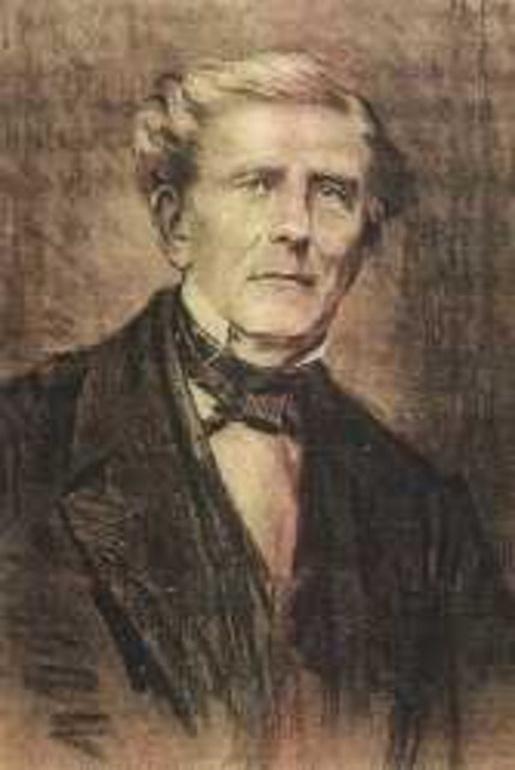
Carl Loewe’s Spotify BioReferred to as "the North German Schubert" during his life, Carl Loewe, like his Austrian counterpart, developed the Romantic ballad for voice and piano into a powerful art form. An excellent singer, he undertook numerous tours performing his own works. Known mostly for his solo songs, Loewe also composed six operas, 17 oratorios, and numerous cantatas, string quartets, and piano works.
Loewe's earliest training was from his father, a schoolmaster, and he sang in the church choir at Cöthen. At age 12, having already published some songs and instrumental pieces, he entered the Gymnasium at Halle, in Thuringia, where the headmaster continued his training. Jerome Bonaparte, the King of Westphalia, heard Loewe sing and was sufficiently impressed to award the boy an annual stipend, enabling Loewe to continue studying music. This support ended abruptly in 1813, when Jerome was deposed; however, the chancellor of the Gymnasium came to Loewe's aid and helped him matriculate in theology at Halle… University.
During 1819-1820, Loewe toured Germany, becoming Kantor and professor at the Stettin Gymnasium and seminary. In 1821, he was appointed Director of Music at Stettin, a position he would hold until 1865. His marriage to Julie von Jacob in 1821 lasted only two years; in 1826 he married Auguste Lange, a singer from Königsberg who often performed Loewe's songs in concert. Between 1820 and 1830, he was especially productive, completing some of this most popular songs and ballads, several piano sonatas, and his first opera, Rudolf der deutsche Herr. Most notable from this era are his settings of Byron's Hebrew Melodies.
By 1835, Loewe was famous throughout German-speaking lands as a conductor and composer as well as a singer. He began to tour internationally in 1844; from Loewe's letters home, it is clear that the trip was a success, bringing him a great deal of acclaim. A trip to London in 1847 was not as successful. In later years, he visited Scandinavia and France. Loewe suffered a stroke in 1864 and had to resign his post at Stettin the next year; he died in Kiel, after another stroke.
Loewe was first and foremost a composer of vocal music; even his Sonata for Piano in E major, Op. 16, contains a song for tenor as the slow movement (a setting of Adolf an Adele). His Op. 1, consisting of three ballads, reflects his varied tastes for poetry: Edward is by an anonymous Scottish poet, Der Wirthin Töchterlein is by Uhland, and his Erlkönig is, of course, by Johann Wolfgang von Goethe, whom Loewe met in 1819 or 1820. The last of these is frequently contrasted with Schubert's famous setting; indeed, the choice of G minor as the key, an agitated piano accompaniment, and use of a recitative-like ending, all make for striking similarities. Loewe's daughter would later state that her father saw Schubert's setting and wished to compose a better one; however, such a scenario is very unlikely.
The narrative Romantic ballad required departure from the standard strophic forms that had dominated the German lied during the late eighteenth century. Loewe addressed this issue by using through-composed forms or modified strophic forms -- contrasting arioso with dramatic, accompanied recitative -- as we find in Der Wirthin Töchterlein.
Loewe's settings of Byron's Hebrew Melodies showcase all of the composer's strengths. His writing for the piano is idiomatic and independent of the voice part without being obtrusive. Quick but masterful key changes often highlight moments of drama in the texts. Tom der Reimer and Der Asra, both dating from 1863, are often cited as his best ballads. Hiob is considered his best oratorio, while Emmy is arguably his finest opera.
Viberate is a music analytics platform built for A&Rs, artist managers, labels, booking agents, marketers, and artists.
It helps music professionals track artist growth, analyze audience data, monitor playlist activity, compare artists, follow song performance, and identify opportunities across the music market.
Public artist pages provide a free preview of selected artist data. Paid plans provide access to deeper analytics, historical data, charts, comparisons, playlist tools, exports, alerts, reports, and additional professional features.
Yes. Public Viberate artist pages provide selected artist analytics and music data for free.
Viberate also offers a 7-day free trial of the full platform. A credit card is required to start the trial. The trial includes access to the complete product so users can test deeper artist analytics, historical views, playlist insights, comparisons, charts, exports, alerts, and reporting features before choosing a paid plan.
Viberate provides artist analytics across streaming, playlists, social media, video, radio airplay, songs, and audience markets.
Users can analyze Spotify performance, Spotify and Apple Music playlists, YouTube activity, TikTok and Instagram growth, radio spins, song performance, audience locations, demographics, rankings, and overall artist momentum.
Artist profiles also connect to music charts, similar artists, and comparison tools, helping users benchmark performance and evaluate artists in context.
Viberate updates key artist and track data daily.
For followed artists and tracks, selected data is refreshed multiple times per day. This helps teams monitor playlist changes, streaming movement, audience growth, releases, and campaign performance with more current data.
Update frequency can vary depending on the metric and data source.
Yes. Viberate lets users compare up to five artists side by side across streaming, social media, audience, and engagement metrics.
Users can compare fanbase growth, audience demographics, locations, Spotify performance, social metrics, and other artist data over selected time periods.
Artist comparison can be used for A&R scouting, benchmarking, booking decisions, campaign planning, and evaluating artists with similar audiences or market positions.