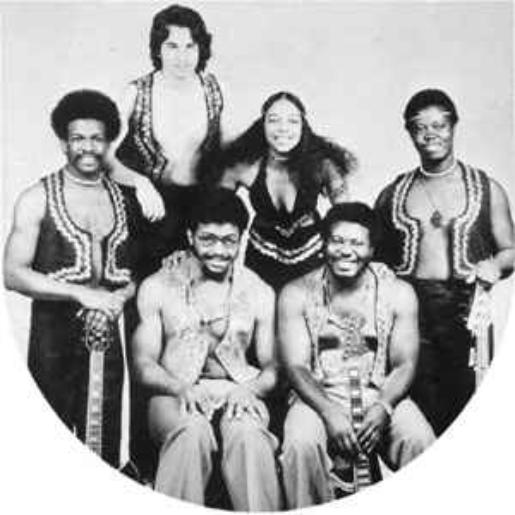
Bumblebee Unlimited

R&B
Soul
Disco
 Viberate Rank: 221384
 Viberate Rank: 221384
 Monthly ListenersFollowers
 Subscribers
 Followers
 Followers
 FansTop Spotify Songs
| Track | 7-Day Streams | |
|---|---|---|
1 | 7.71K | |
2 | 502 | |
3 | 385 | |
4 | 181 | |
5 | 51 |
Top YouTube VideosMonthly ListenersFeatured in Playlists| Playlist | Followers | |
|---|---|---|
1 |  Jayda G's track IDs Spotify | 76.01K |
2 |  Jazz Funk & Groove Guillermo Lanzani Lagomarsino | 36.07K |
3 |  Larry Levan at Paradise Garage Honey-K | 29.29K |
4 |  Living In My Headphones James Lavelle (UNKLE) | 16.04K |
5 |  Dance with Husa Camilla Meng Engström | 15.57K |
Audience| City | Monthly Listeners | |
|---|---|---|
1 |  | 678 |
2 |  | 510 |
3 | | 417 |
4 |  | 408 |
5 | | 326 |
See full performance history, audience data, playlist activity, rankings, comparisons, and more in Viberate music analytics. Start with a free trial, then continue with a paid plan.
Bumblebee Unlimited’s Spotify BioBumblebee Unlimited was a studio-based disco unit helmed by Patrick Adams and Gregory Carmichael. Much like the other groups/artists featuring the handiwork of Adams and/or Carmichael (Cloud One, Universal Robot Band, Inner Life, etc.), Bumblebee Unlimited acted as a bridge between disco and house, stylistically (and sometimes chronologically) forming a wedge between those two forms and thus a precursor to house.
Aside from the undeniable ties to a pair of behind-the-scenes disco legends, Bumblebee Unlimited was probably most known on the dancefloor for their 1976 Red Greg (Carmichael's label) single "Love Bug," an ecstatic mid-tempoed number with vocals sped to a high pitch and swells of strings that mimicked "Flight of the Bumblebee." The vocal trick was used to more extreme effect for 1978's "Lady Bug" single, which took the high-pitched vocals to an almost Chipmunk-like level, though the vocals sounded as if they were coming from bees, not chipmunks (giveaway line: "May I have a… nectar and tonic?").
RCA issued BU's only LP, Sting Like a Bee, in 1979, which included both "Lady Bug" and "Love Bug." Amongst the contributors to the album were longtime Adams/Carmichael associates Leroy Burgess (vocals), Norbert Sloley (bass), and Richard Taninbaum (drums). (Unidisc reissued the album on CD several years later.) BU also recorded for Salsoul later on, including the 1981 single "The Bumblebee Rap." ~ Andy Kellman
Viberate is a music analytics platform built for A&Rs, artist managers, labels, booking agents, marketers, and artists.
It helps music professionals track artist growth, analyze audience data, monitor playlist activity, compare artists, follow song performance, and identify opportunities across the music market.
Public artist pages provide a free preview of selected artist data. Paid plans provide access to deeper analytics, historical data, charts, comparisons, playlist tools, exports, alerts, reports, and additional professional features.
Yes. Public Viberate artist pages provide selected artist analytics and music data for free.
Viberate also offers a 7-day free trial of the full platform. A credit card is required to start the trial. The trial includes access to the complete product so users can test deeper artist analytics, historical views, playlist insights, comparisons, charts, exports, alerts, and reporting features before choosing a paid plan.
Viberate provides artist analytics across streaming, playlists, social media, video, radio airplay, songs, and audience markets.
Users can analyze Spotify performance, Spotify and Apple Music playlists, YouTube activity, TikTok and Instagram growth, radio spins, song performance, audience locations, demographics, rankings, and overall artist momentum.
Artist profiles also connect to music charts, similar artists, and comparison tools, helping users benchmark performance and evaluate artists in context.
Viberate updates key artist and track data daily.
For followed artists and tracks, selected data is refreshed multiple times per day. This helps teams monitor playlist changes, streaming movement, audience growth, releases, and campaign performance with more current data.
Update frequency can vary depending on the metric and data source.
Yes. Viberate lets users compare up to five artists side by side across streaming, social media, audience, and engagement metrics.
Users can compare fanbase growth, audience demographics, locations, Spotify performance, social metrics, and other artist data over selected time periods.
Artist comparison can be used for A&R scouting, benchmarking, booking decisions, campaign planning, and evaluating artists with similar audiences or market positions.